Hot Air Oven Enquiries: Specify Intake-Air Moisture Beyond Relative Humidity
By QUANPIN
A hot air circulation oven enquiry should describe the moisture condition of the incoming air as well as its temperature. Two food-drying trials can use the same temperature setting while receiving air with different water-vapour contents. A relative-humidity percentage alone does not make those conditions comparable.
For a tray dryer used in food development, begin with a named measurement location, simultaneous temperature and humidity observations, and the pressure basis used in calculations. These fields help explain seasonal variation without attributing every difference in drying time to the equipment.
Why the Intake-Air State Belongs in the Enquiry
Relative humidity compares an actual vapour condition with saturation at the same temperature. The National Weather Service explains this temperature dependence in its discussion of humidity. A percentage measured outside the building therefore cannot be assigned unchanged to heated process air.
As a practical enquiry step, label an observation as outdoor air, room air, fresh-air intake, mixed supply or exhaust. These are different locations in the process. A clearly located measurement is more useful than an apparently precise percentage whose origin is unknown.
Name the Temperature Quantity Before Comparing Data
Dry-bulb temperature describes the air temperature. Dew point and wet-bulb temperature describe different aspects of the humid-air state. The National Weather Service’s temperature definitions distinguish these quantities; they are not alternative names for one sensor reading.
Keep the physical quantity in the column heading when building a trial record. A field labelled only temperature leaves the reviewer unable to tell whether the number represents process air, product, a wet bulb or a dew-point output calculated by an instrument.
Five Fields to Preserve in an Air-State Record
Food and preparation
Name the food and its preparation. A sliced vegetable and a food paste spread on a tray require different descriptions of loading and product acceptance, even when the same hot air drying oven is considered.
Air-path location
Record the intake location on a simple air-path drawing. Identify where fresh air enters, where return air joins it and where the proposed observations will be taken. Ask the supplier to confirm the drawing against the proposed configuration.
Time of observation
Store temperature and humidity observations with the same timestamp. Combining a morning temperature with an afternoon humidity value produces a calculated state that may never have existed during the trial.
Pressure basis
Record the relevant pressure basis. The National Weather Service’s mixing-ratio calculation uses temperature, dew point and station pressure. Preserve the pressure input rather than silently accepting a calculator’s default.
Measured and calculated values
Record whether a reported humidity quantity is measured directly or derived by the instrument. Keep the instrument settings and calculation convention with the exported data so that another reviewer can reconstruct the result.
Choose a Clear Moisture Reporting Basis
Humidity ratio expresses water-vapour mass relative to dry-air mass. It gives a useful basis for comparing air streams, but calculating it does not establish the oven’s evaporation capacity or the food’s drying kinetics.
Do not confuse this mass ratio with water vapour per unit volume. A specification should state the numerator, denominator and units, particularly when a report combines data exported from different instruments.
For a proposed air balance, identify which streams are included and whether their flow quantities use compatible reference conditions. An inlet humidity value on its own is not a complete water-removal balance.
Treat a balance as a separate engineering calculation with declared assumptions. Product moisture measurements, air observations and collected condensate, where relevant, answer related questions but should retain their own measurement records.
Check the Meaning and Suitability of Each Measurement
Relative humidity
Use relative humidity with its associated air temperature. The percentage is useful when its conditions are explicit; it becomes ambiguous when detached from the temperature at which it was measured.
Dew point
Use dew point to describe the saturation temperature associated with a vapour condition at a stated pressure. The National Weather Service explanation of dew point shows why a lower relative humidity can coexist with a larger moisture content under different temperature conditions.
Wet-bulb information
Use wet-bulb information only with an appropriate measurement method and interpretation. A wet product temperature is not automatically a valid wet-bulb measurement, and the two labels should not be interchanged in a trial report.
Instrument range
Document the humidity sensor’s operating range against the proposed measurement location. Request suitability information before placing an ambient monitoring instrument in a hot supply duct; a room-air rating does not establish process-air suitability.
Observation procedure
Keep calibration information and the actual observation procedure together. The WMO guide’s humidity-measurement chapter discusses sensor exposure and psychrometer operation, including the importance of airflow and instrument arrangement.
Source scope
Use these sources for humid-air definitions and measurement principles. They are not food-dryer operating instructions, a QUANPIN performance test or evidence that a particular monitoring package is supplied as standard.
Plan the Enquiry, Trial and Comparison
Site conditions for the enquiry
Before requesting a quote, prepare a site-air record covering the proposed intake conditions. Include the dates, operating hours and measurement locations rather than sending an unqualified seasonal humidity range.
If only historical weather data are available, identify them as planning inputs. A weather station observation does not describe air after it has passed through the factory’s ventilation or conditioning system.
Ask the supplier which site conditions are used in the proposed duty assessment. Keep those design inputs distinct from the measurements that will later be taken during an equipment trial.
Records during the food trial
During the trial, preserve the agreed food preparation, tray arrangement and load description. Otherwise a change in exposed area or layer thickness can become mixed into the apparent effect of intake air.
Log supply and intake observations at the agreed locations. Note interruptions, door openings and changes to the agreed configuration as events rather than trying to correct them afterwards from memory.
Keep product acceptance measurements on a separate part of the record. Colour, texture and the agreed moisture endpoint describe the food result; an air-humidity reading does not replace those tests.
Comparison after the trial
When comparing trials, first check that the air variables have the same definitions and locations. Then examine the product and loading records before deciding whether the runs are comparable.
If the inputs differ, report the difference directly. Re-labelling both trials as the same nominal temperature conceals information needed to interpret a changed result.
Use the observations to plan a targeted follow-up trial. Change one agreed condition or use a documented experimental design, with the acceptance tests set before the comparison begins.
Interpret Variation Without Guessing the Cause
A change in weather can be a plausible contributor to a changed intake state, but it is not a diagnosis of every drying deviation. Check sensor records, actual loading and the agreed equipment configuration together.
Do not increase a temperature setting merely to compensate for an unexplained humidity observation. Any revised process condition needs review against the food’s quality targets and the equipment’s approved operating instructions.
Keep recirculation and exhaust arrangements in the equipment discussion. A fresh-air observation describes only one stream; it does not show the condition of air after mixing or contact with the product.
Do not assume that every oven includes dehumidification, humidity control or additional duct instrumentation. Request written confirmation of the proposed scope and distinguish an optional arrangement from a verified supplied feature.
Compare the Assumptions Behind Supplier Proposals
Send the hot air circulation oven manufacturer a concise brief containing the product, preparation, load description, intended quality tests and the site’s air observations. This supports a more specific discussion than a temperature-only enquiry.
When comparing a hot air circulation oven factory proposal with another offer, compare the stated site assumptions and included measurements. Similar nominal temperature ranges do not establish an equivalent proposed duty.
Keep a Reproducible Observation Package
Keep instrument identifiers in the raw export. A copied spreadsheet value without its source cannot show which observation changed when a sensor was replaced or relocated.
Record units consistently and preserve the original export alongside any converted file. Conversion work should leave an audit trail rather than overwrite the only available measurement record.
Name the person responsible for checking the proposed sensor location and access arrangement. The measurement plan should be agreed with the relevant equipment and site personnel before the trial.
Keep direct observations separate from estimated values. If a humidity ratio is calculated from temperature, dew point and pressure, retain those inputs and identify the calculation instead of presenting the output as an independent measurement.
State the period represented by each summary. An average can be useful, but it should not conceal an interruption or a short change that occurred while a particular tray was being processed.
Archive the final air-state description with the food results and equipment configuration. The package should allow a later trial to reproduce the intended conditions without relying on a shorthand recipe name.
Read Equipment Illustrations as References
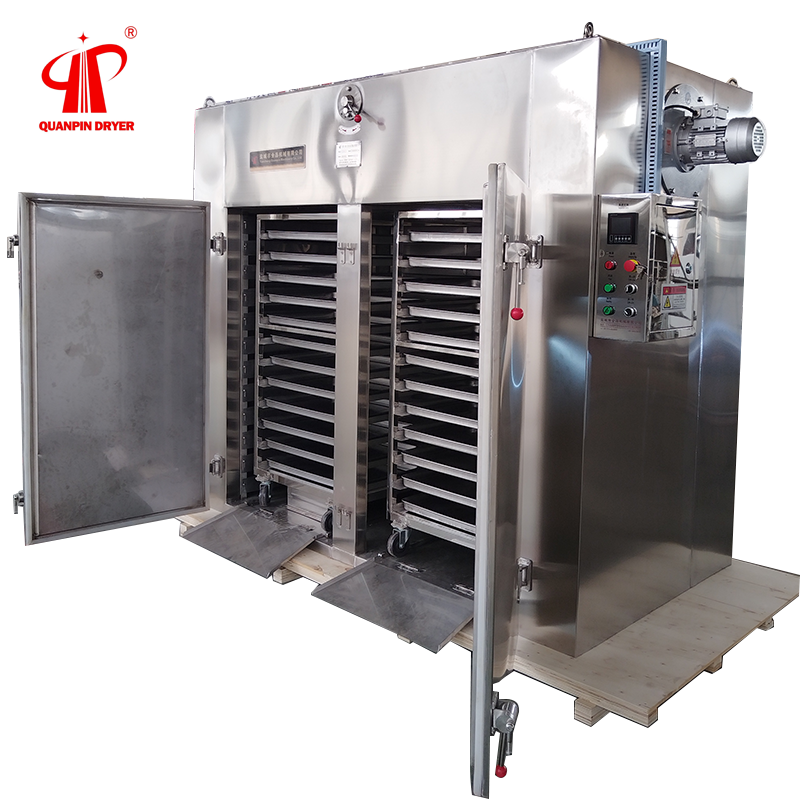
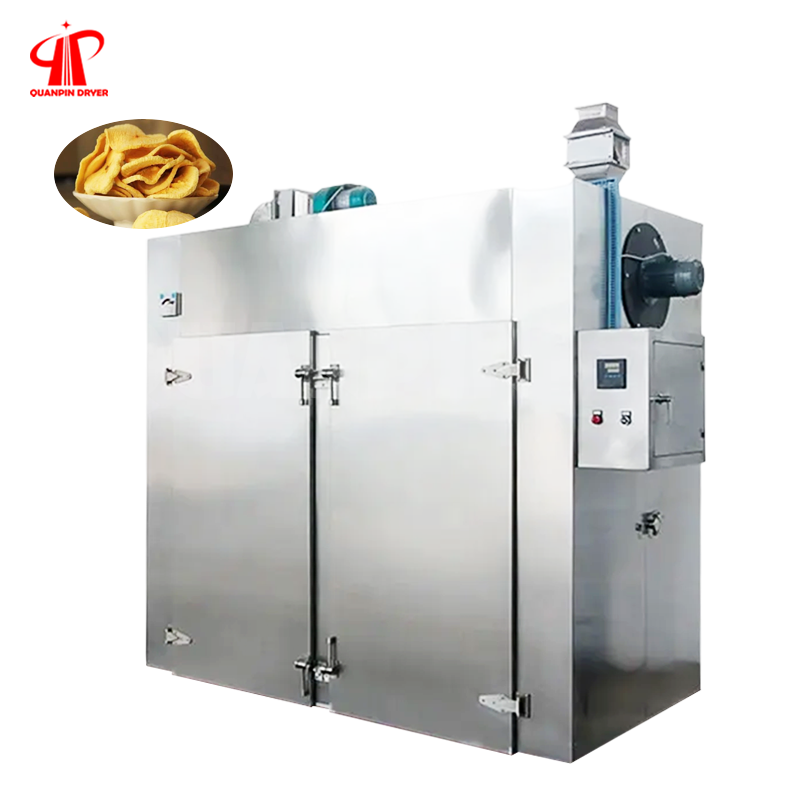
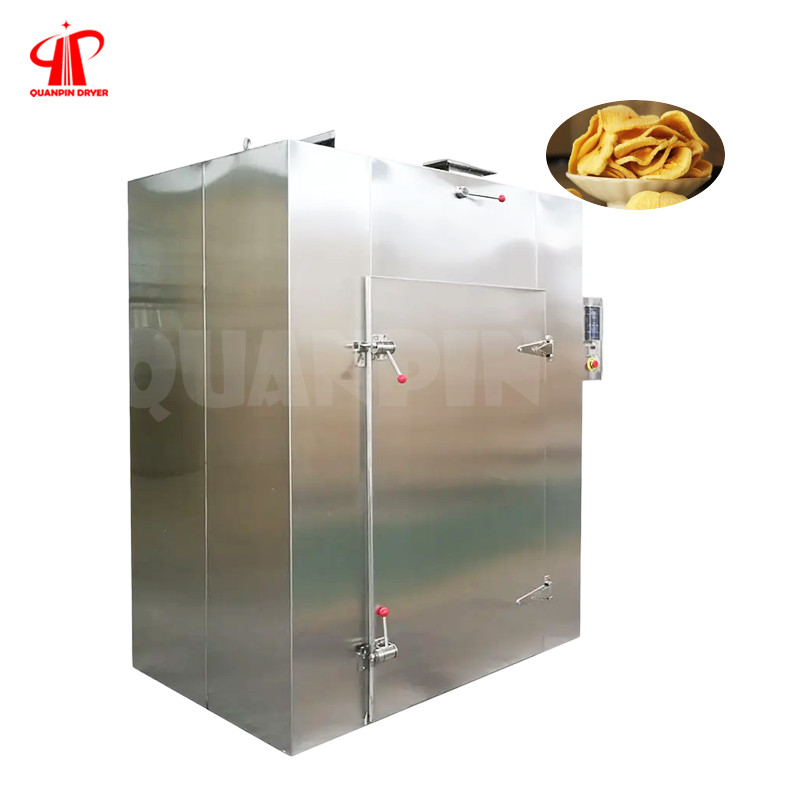
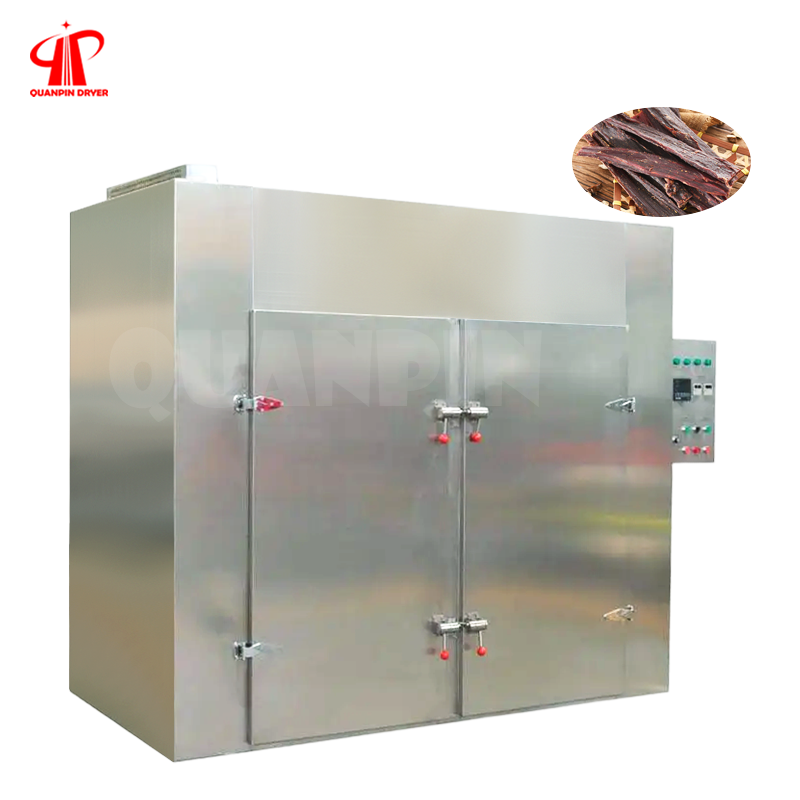
The equipment photographs illustrate the QUANPIN oven family. They do not demonstrate the sensor configuration, air-conditioning equipment or control functions of a specific quotation; confirm those details in the agreed scope.
A useful trial report concludes with what was observed and which question remains open. It should not convert a successful food sample into a general capacity claim across different seasons, products or intake conditions.
Maintain the Air-State Specification
Use the same measurement vocabulary in the enquiry, supplier response and trial report. Resolving definitions before a purchase helps prevent later disagreement about whether an air condition was measured, calculated or assumed.
Revise the specification when the intake arrangement or site conditioning changes. A previous trial remains evidence for its documented conditions; its air-state assumptions should not be silently carried into a different installation.
Questions About Intake-Air Humidity
Does equal relative humidity mean equal air moisture?
No. Relative humidity depends on temperature as well as the vapour condition. Record the accompanying temperature and location before comparing percentages from different trials.
Does heating prove that air has been dehumidified?
Not necessarily. Heating an air stream can lower its relative humidity without removing water vapour. Establish what treatment occurred and retain an appropriate moisture quantity before claiming dehumidification.
Is product temperature the same as wet-bulb temperature?
No. Product temperature, dry-bulb temperature, wet-bulb temperature and dew point are different quantities. Label each observation by what was actually measured or calculated.
Can weather data replace factory intake observations?
They can support preliminary planning when their origin is explicit. They do not replace observations at the factory intake or establish the conditions after site air treatment.
Does every humidity calculation need pressure information?
The relevance of pressure depends on the quantity and calculation used. Preserve the pressure basis whenever the selected conversion requires it, rather than allowing a default to remain undocumented.
What should the supplier confirm?
Ask for confirmation of the intake and return-air arrangement, measurement locations, included instruments, assumed site conditions and the proposed food trial. Agree product acceptance tests separately from the air-state record.
Discuss the Proposed Food-Drying Scope
Discuss the material, processing objective and required trials with QUANPIN. Review the equipment information and the relevant industry applications, or send an enquiry through our contact page.
Email sales@qpdryer.com or stacie@qpdryer.com. Call +86 19850785582 or contact WhatsApp +86 15921493205 to discuss the proposed scope.
For process evaluation, consider the hot air oven for batch tray drying with circulating hot air; and the vacuum tray dryer for batch drying on trays under vacuum. Confirm suitability with representative material, the required product properties and the proposed process conditions.