Battery Cathode Powder Premixing: Connect Carbon Distribution with Conductive-Network Evidence
By QUANPIN
Battery cathode powder preparation needs more than the correct mass fraction of conductive carbon. The arrangement of that carbon, its association with binder and the later electrode-forming process can all matter. A useful premixing investigation connects composition evidence with measurements that address the intended conductive structure.
For a conical screw mixer enquiry, define the proposed role as an identified dry-powder premixing duty and ask QUANPIN to assess the actual material. Research on intensive mixing and mechanofusion does not establish that a DSH unit performs those specialised operations or produces a qualified battery electrode.
A carbon ratio does not describe every contact
An ingredient ratio states how much active material, conductive additive and binder enters a formulation. It does not independently describe the arrangement of particles and contacts after processing. Preserve that distinction when a trial asks whether a mixture is compositionally consistent or electrically functional.
The term conductive network describes connected pathways relevant to electron transport within a material. A powder measurement and an electrode measurement examine different physical systems. A result obtained on compressed powder should therefore retain its measurement conditions and should not automatically become a prediction of cell performance.
Define the role of premixing in the electrode route
Start with the intended manufacturing route. A powder intended for later slurry preparation and a mixture intended for solvent-free electrode formation do not pass through the same downstream operations. The premixing objective should identify that route before the team selects measurements or interprets a material comparison.
This article proposes an evidence framework for a chemical-powder equipment enquiry. It offers no battery recipe, universal carbon loading, mixing setting or electrochemical performance guarantee. Electrode development and cell qualification require material-specific work beyond a preliminary assessment of a powder mixing duty.

Five facts needed for a cathode-powder brief
Active-material identity
Identify the actual active material and incoming lot. General labels such as cathode powder do not establish particle morphology or surface condition. Provide verified incoming information where available and keep unknown characteristics open for evaluation instead of replacing them with properties from a published research formulation.
Conductive-additive identity
Identify the conductive additives separately. Carbon black and graphite are not interchangeable names for one ingredient. Preserve each material’s identity and the basis of its addition so that a later observation can be connected to the formulation actually prepared during the trial.
Binder and addition stage
Record the binder identity and addition stage. A binary active-material and carbon comparison does not contain the same system as a final mixture including binder. Keep those stages separate so the development team can locate where the relevant structure or processing behaviour changes.
Electrical test specimen
State the physical specimen used for electrical testing. Include the laboratory’s appropriate loading, geometry and preparation conditions. A conductivity or resistivity value without its specimen context is difficult to compare with a value measured on a different prepared powder bed or finished electrode.
Downstream endpoint
Define the downstream endpoint. Powder handling, electrode formation, electrode transport and cell behaviour are related but different decisions. The investigation should state which one each observation supports instead of describing every favourable result as evidence that the complete manufacturing route is already qualified.
Interpret distribution together with binder effects
The original KIT abstract on conductive-additive distribution reports that a seemingly favourable carbon arrangement could not be evaluated without considering binder effects in the later electrode process. It illustrates why a powder-stage picture alone may miss a functional limitation introduced downstream.
Use that finding to define the question for the actual formulation. Identify whether the comparison ends at powder preparation or continues through a specified electrode route. Do not transfer the published outcome to a different active material, binder or equipment configuration without supporting evidence.
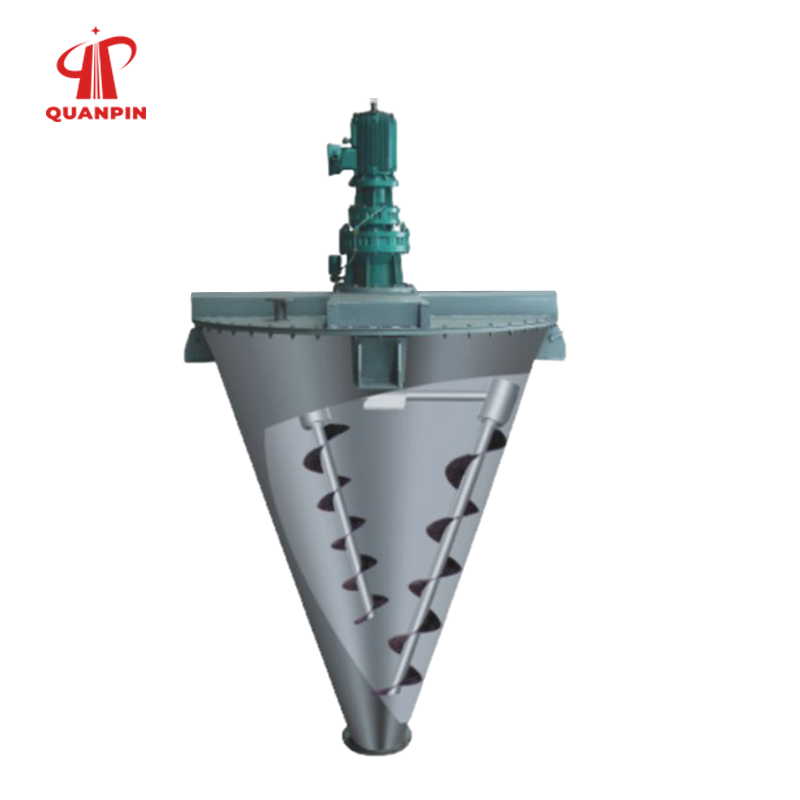
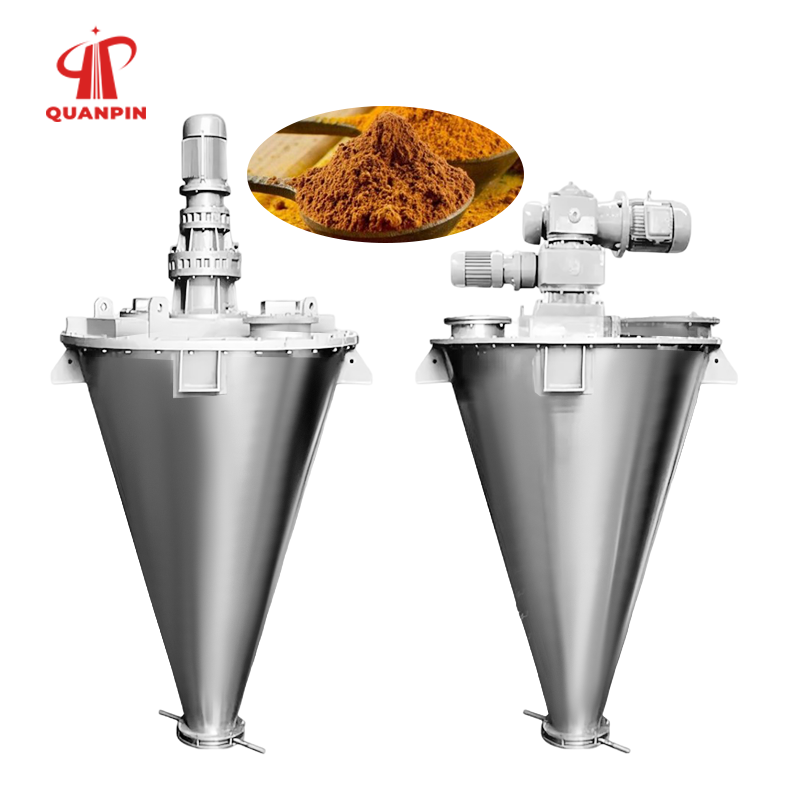
For a double screw cone mixer trial, the first procurement question is whether the proposed unit is appropriate for the identified premixing task. That assessment should remain separate from a claim that the machine produces the carbon coating or contact structure described in an intensive-mixing investigation.
If a published study describes specialised coating or deagglomeration, retain its equipment context. Such work can explain why the final material requires more than a mass-ratio check, while leaving open which operations are necessary and which equipment is suitable for the actual development route.
Build a staged material comparison
Record the formulation
Prepare the real formulation record before comparing operating conditions. State the material identities, intended proportions and charging sequence. A documented input record does not prove functional performance, but it allows a reviewer to understand which formulation produced each later powder or electrode observation.
Identify each processing stage
Keep the initial premixing stage identifiable. If further intensive dispersion, binder addition or electrode formation follows, label each stage and its samples separately. This prevents a favourable result after additional processing from being attributed without evidence to the earlier premixing operation alone.
Measure the chosen constituent
Choose composition measurements that answer the distribution question at a stated sample scale. Do not rely on a visually dark appearance as proof that every required component is distributed appropriately. State which constituent is measured and which aspects of the formulation remain outside that measurement.
Preserve structural context
Add structural observations when the intended decision requires them. Identify the imaging or other method and retain its sampling context. A selected image can illustrate a structure, but the interpretation must explain how the inspected specimens relate to the material being compared.
Document electrical testing
Ask the laboratory to document its electrical method. Preserve specimen preparation and relevant test conditions with individual results. If the powder is compacted for measurement, distinguish the state produced by that preparation from the state in which powder was collected from the process.
Test the relevant downstream product
Assess the downstream product through its own relevant tests. The development team may need an electrode-level comparison or cell testing depending on its objective. A useful investigation explains why those observations are needed rather than extending a convenient powder metric beyond its demonstrated scope.
Read three electrode investigations within their scope
Powder resistivity and mechanofusion
The original Sheffield research abstract on powder resistivity describes mechanofusion experiments connecting carbon-black deagglomeration with powder resistivity. It also explicitly limits that relationship: the powder metric does not directly predict electrochemical performance. That boundary belongs in any practical interpretation.
The study gives a reason to investigate both carbon arrangement and the level at which performance is assessed. It does not provide a universal optimum amount of mixing. A different formulation and a different process can require their own comparison and measurement strategy.
Do not adopt the specialised research equipment’s operating conditions as a DSH specification. The relevant inference is that changing carbon structure can matter; the appropriate operation and machine must still be established for the real material and intended product route through verified application work.
Premixing before dry calendering
The original study of powder premixing before dry calendering examines mixture homogeneity together with flow, processability and electrode performance. Its findings show that interpreting dry powder preparation benefits from considering the later forming operation, rather than judging the powder in isolation.
For an industrial comparison, identify which part of that relationship is actually being tested. Flow behaviour may influence the next operation, but a flow observation does not automatically establish the required carbon network. Retain the purpose of each test alongside its reported result.
The published work used its own materials, mixing route and calendering conditions. Its measured capacities and operating parameters are not QUANPIN performance specifications. Avoid copying numerical outcomes into an enquiry as targets that the proposed premixing unit has already demonstrated for another formulation.
Particle interactions in solvent-free processing
The original manuscript on particle interactions during dry powder mixing investigates how processing affects additive structure, binder distribution and the conductive network in a solvent-free route. It supports treating material interactions as part of the development question rather than assuming ingredients remain functionally unchanged after mixing.
Keep the intended comparison narrow enough to be interpretable. Changing formulation, charging sequence and downstream forming conditions together can make an observed difference difficult to attribute. Identify the question of interest and preserve records of other changes that the trial cannot independently resolve.
The research does not establish that all dry mixing has the same effect on carbon structure. Treat its process and formulation as the experimental context of the reported findings. The actual enquiry still requires an agreed equipment role and observations appropriate to the materials supplied for evaluation.
Connect the DSH proposal to the actual powder duty
For a conical powder mixer proposal, provide verified material information and describe the proposed position of premixing within the process chain. Ask QUANPIN to confirm the actual configuration and assess its relevance. Leave specialised coating, fibrillation and electrode formation as separately defined requirements unless explicitly demonstrated.
Include the expected transfer route after premixing. Samples collected before and after an intervening operation should retain their distinct stage identities. If later material differs, the record should show the process history available for investigation without automatically assigning the change to the original mixing cycle.
Agree where trial specimens will be collected and which analyses require separate material. A physical specimen used for one preparation may not preserve the state needed for another question. Coordinate the collection plan with the responsible laboratories before the comparison starts.
Keep the formulation owner’s qualification responsibilities visible. A double screw conical mixer proposal can address a confirmed mixing duty, but equipment documentation alone does not establish electrode compatibility, cell performance or suitability for a particular battery application. Those claims require their own verified evidence.
Keep specialised structuring operations identifiable
The original NMC622 particle-tracking and simulation study investigates dry powder motion in a specific intensive mixer. It deliberately excludes binder and conductive additives, so its validated movement observations do not establish carbon-network formation or binder structuring in a complete cathode formulation.
Use that distinction when dividing the process specification into actual duties. If the programme needs binder fibrillation, name it and identify how it will be established. Do not infer that outcome from a homogeneous appearance, a correctly weighed recipe or a product-family description of a mixer.
Prepare a material-specific equipment enquiry
Prepare the equipment brief around the real active material and additives. Include available information about particle properties and the required stage of preparation. The supplier needs to understand whether the request concerns initial distribution or a specialised material-structuring operation with its own qualification requirements.
Provide the downstream route and the intended decision for the trial. A powder intended for slurry preparation should not be described as though the planned trial ends in dry film formation. The distinction helps select evidence and avoids comparing routes that answer different process questions.
State the laboratory measurements available for the comparison. Identify the constituent assay, structural observation and electrical or downstream test where applicable. Missing methods should remain an explicit development issue rather than being replaced by an unsupported claim that a single indicator proves the entire outcome.
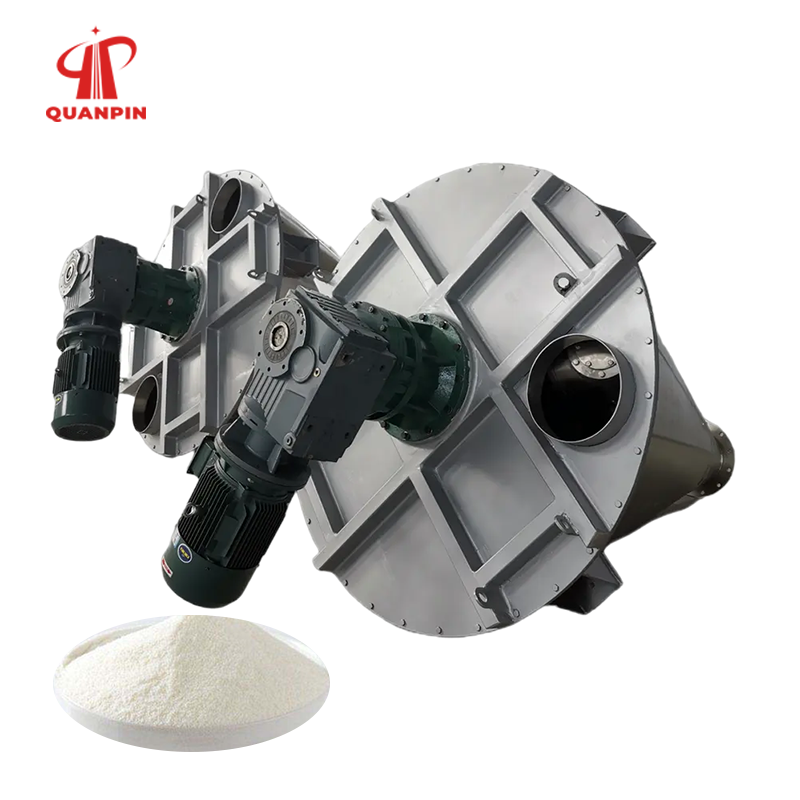
Ask the supplier to confirm the relevant actual configuration. Product images establish neither the presence of every proposed feature nor the performance of the specific powder duty. Keep configuration confirmation attached to the material assessment and the agreed trial conditions before evaluating the results.
Document additional processing after the initial mixing step. If a specialised operation later develops the required structure, preserve that history. A commercial description should attribute the demonstrated result to the actual evaluated route rather than allowing the initial mixer to inherit the performance of subsequent equipment.
Agree who approves each endpoint. The equipment team can address the mixing proposal, the laboratory can explain measurement limitations and the formulation owner can determine downstream relevance. A final report should connect those responsibilities to the evidence used for the specific development decision.
Investigate differences at the measurement stage
When powder resistivity changes, first check whether the measurement preparation remained comparable. The apparent difference could require review of specimen conditions as well as material processing. Preserve the individual results and method record before interpreting the change as an improvement in conductive-network formation.
When an electrode result differs from a powder prediction, retain both observations. The discrepancy can identify a limitation in the proposed proxy or a relevant downstream interaction. It is useful development evidence, and should not be hidden by selecting only the favourable stage of measurement.
State the scope supported by the evidence
Review the final claim against the entire evaluated route. If the study only established ingredient distribution in premixed powder, report that scope. If later electrode and cell measurements were also completed, identify the materials and conditions supporting those additional conclusions without converting them into universal equipment guarantees.
For a conical screw blender enquiry, bring the powder identities, desired preparation stage and measurement plan together. Ask QUANPIN to assess the proposed DSH duty, then agree the trials needed to connect initial distribution with any separately required structural, electrode or cell-level evidence.
Frequently Asked Questions
Does carbon percentage establish a conductive network?
No. A carbon mass fraction describes composition, while a conductive network concerns connected pathways in a particular physical system. A formulation can therefore need both a distribution assessment and functional measurements appropriate to the electrode route and downstream decision being evaluated.
Does powder resistivity predict cell performance?
No. A powder resistivity result belongs to its specimen preparation and test conditions. Research can establish useful relationships within a defined system, but the result does not independently replace electrode and electrochemical testing for a different formulation or manufacturing route.
Is longer mixing always beneficial?
No. Research on specialised intensive processing does not establish a universal benefit from extending time. Changes in additive structure can have different consequences. Define the actual equipment role and assess the relevant outcome for the real materials rather than assuming more processing must be better.
Can binder effects be ignored?
No. Binder identity, distribution and the later process can affect how the conductive components function together. A binary powder comparison can answer a useful limited question, but it should not be reported as complete evidence for the corresponding binder-containing electrode formulation.
Does a DSH name establish specialised coating?
No. Confirm the actual duty and supplied configuration with QUANPIN. Ordinary premixing, specialised carbon coating, binder fibrillation and electrode formation are distinct requirements. A proposed machine should only be credited with the functions and results supported by its verified application evidence.
What belongs in the QUANPIN enquiry?
Provide the actual active material, conductive additives, binder, proposed premixing stage and downstream route. Add the intended sampling and measurement plan, then ask QUANPIN to assess the DSH configuration. Preserve the distinction between equipment suitability and final electrode or cell qualification throughout the discussion.
Discuss Your Chemical Powder Premixing Duty
Discuss the material, processing objective and required trials with QUANPIN. Review the equipment information and the relevant industry applications, or send an enquiry through our contact page.
Email sales@qpdryer.com or stacie@qpdryer.com. Call +86 19850785582 or contact WhatsApp +86 15921493205 to discuss the proposed scope.