Polymer Powder Refresh Blending: Preserve Thermal History Alongside the Mixing Ratio
By QUANPIN
Mixing recovered polymer powder with fresh material can distribute the two fractions without restoring the recovered fraction to its original state. A useful development plan therefore distinguishes the blend ratio and distribution from evidence about each fraction’s previous thermal exposure.
For a conical screw mixer enquiry involving polymer powders, identify the actual material and intended downstream process. Powder-bed-fusion research can clarify questions about thermal history, but it does not qualify a DSH unit for a particular printing material or guarantee performance of the finished part.
A refresh ratio does not reset material history
A refresh ratio describes how much of each identified fraction enters the mixture. It does not independently describe the ageing condition of the recovered material, which can differ between collections carrying the same general name.
A distribution measurement addresses where components or a justified marker are located. Thermal characterization and downstream processing tests investigate different properties; one cannot replace the others through a shared claim that the powder is ready for reuse.
Define the inputs and limit the claim
The incoming history belongs in the specification when the application depends on it. Keep material identity, collection stage and prior processing traceable instead of treating every recycled portion as an interchangeable ingredient.
This article proposes an evidence framework for a chemical-powder enquiry. It gives no universal refresh proportion, printing parameter or thermal limit and does not claim that dry blending reverses polymer ageing.
Five records needed before comparing reused fractions
Incoming fraction identity
Identify each incoming fraction and its source. Record whether it is virgin, recovered from a specified operation or prepared by another route, and retain the relevant lot and collection identity.
Ratio and reporting basis
State the actual blend ratio and reporting basis. A mass ratio is different from a volumetric loading fraction, especially when the incoming materials do not occupy the same volume per unit mass.
Previous exposure
Describe relevant thermal and handling history without inventing missing data. A count of previous cycles may be useful, but it does not necessarily capture differences in exposure location or duration.
Measurement purpose
Name the measurements proposed for the mixture and its inputs. Particle morphology, thermal transitions and final-part properties are different outputs with different specimen preparations and interpretation limits.
Downstream requirement
Agree the intended downstream acceptance question before testing. A homogeneous mixture and an acceptable processed product are related project goals, but they require evidence at their respective stages.
Read mixed-PA12 ageing research within its scope
An original PA12 study examined repeated laser-sintering cycles using a defined mixture of recycled and virgin material. It investigated structural, chemical and crystalline-morphological characteristics across the experimental sequence.
The original mixed-PA12 ageing investigation illustrates why a stated recipe does not eliminate the importance of processing history. Its blend and apparatus are specific to that experiment and do not establish a universal refresh rule or DSH performance.
For a mixing project, retain both the charged ratio and the identity of the recovered fraction. A later result cannot be interpreted fully if the blend recipe is known but the incoming material history has been lost.
Avoid presenting a repeated-cycle observation as proof that the mixer changed the polymer chemistry. The complete processing route must remain visible before a cause is assigned to one operation.
Build a traceable blending and material comparison
Define the duty
Define the actual powder duty and which fractions will be combined. State what the blending trial is intended to demonstrate and what requires separate downstream evaluation.
Collect input references
Collect appropriate references from each incoming fraction. Their purpose is to establish the material states used in the comparison, not to assume that a generic virgin or reused label fully characterizes them.
Plan traceable sampling
Prepare a traceable charging and sampling plan. Keep the proposed distribution measurement attached to the material and collection location actually assessed, rather than to an unspecified sample of the final mixture.
Select material measurements
Select thermal or other material measurements through qualified personnel. Their relevance depends on the actual polymer and application; naming several instruments does not automatically validate the reuse decision.
Compare with history
Compare individual observations with the recorded input history. If the incoming recovered fraction changes, document that change as part of the experiment instead of assigning all differences to mixing duration.
Assess the downstream operation
Assess the intended downstream operation using its own acceptance procedure. A successful dry-blend comparison supports that stage without replacing evidence about later spreading, consolidation or final-product behaviour.
Read three reuse investigations as different experiments
Coalescence and crystallization
An original PA12 investigation examined powder reuse through coalescence, melt flowability and isothermal crystallization measurements. Its design addresses how previously processed material behaves under subsequent thermal conditions.
The original PA12 reuse and coalescence study demonstrates that composition labels alone do not describe every relevant material property. Its reported kinetics and models are specific to the tested system, not universal criteria for another polymer mixture.
For procurement, the useful distinction is between material distribution and the response measured after further treatment. Keep these results separate in the report rather than treating one as a surrogate for all reuse performance.

A fire-retarded formulation
A study of fire-retarded PA12 examined successive reuse of selected polymer and additive blends. Its analytical programme considered the particular formulations and processing stages used in the research.
The original fire-retarded PA12 reuse investigation illustrates why formulation identity belongs alongside processing history. It does not demonstrate equivalent behaviour for a different additive package or certify the fire performance of another product.
If the commercial project changes the additive or polymer grade, record that as a change in scope. Earlier evidence may inform the questions asked without automatically validating the new mixture.
Repeated cycles and powder preparation
Another original PA12 study followed consecutive sintering cycles with a defined powder preparation route between cycles. It assessed powder and printed-part properties using different characterization methods.
The original consecutive-cycle PA12 investigation highlights that handling between cycles is part of the experiment. Its conclusions cannot be transferred as a general approval for every recovered powder or a guarantee of an untested mixing arrangement.
A new comparison should therefore identify any sieving, milling or other preparation separately from blending. Those operations can affect what enters the mixer and what the subsequent test actually evaluates.
Connect the actual polymer duty to the mixing trial
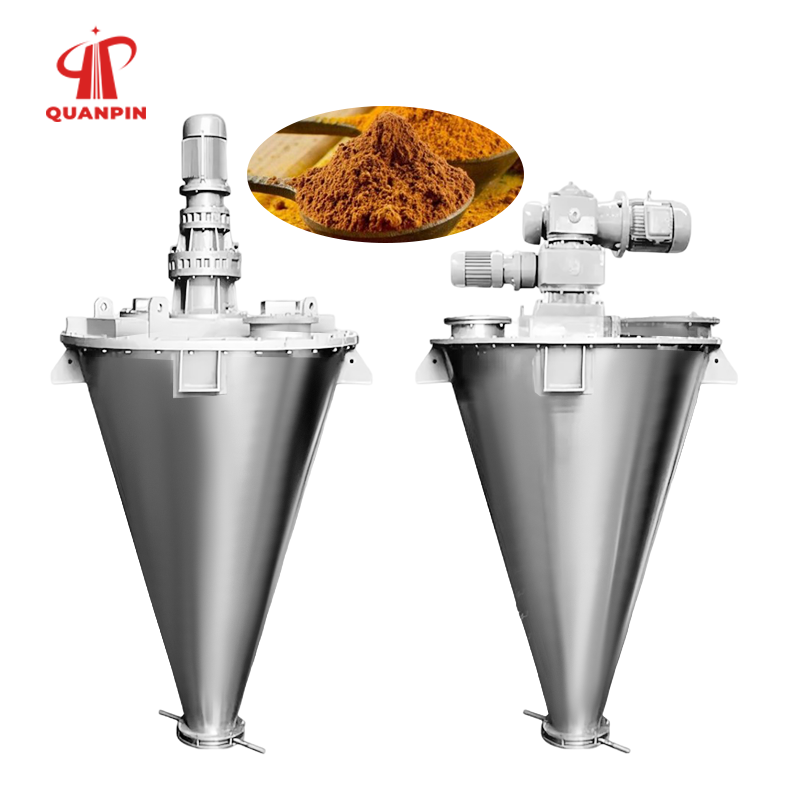
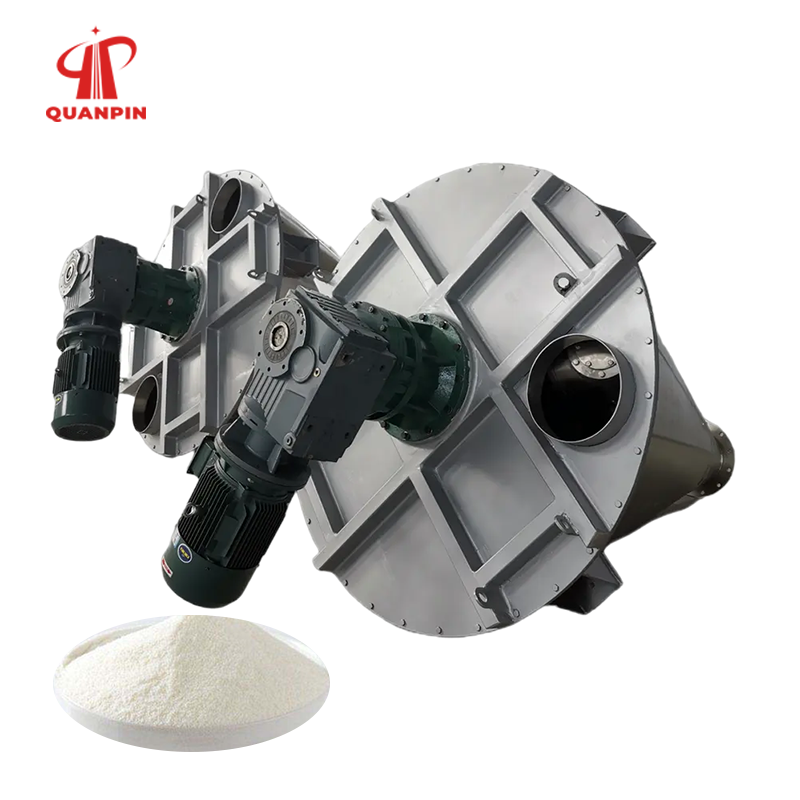
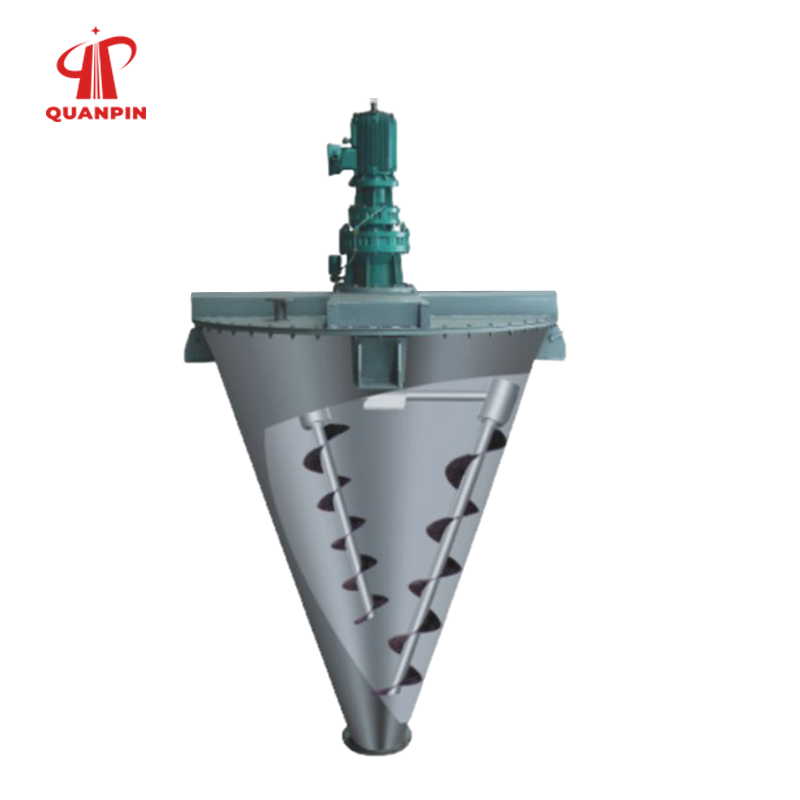
A double screw cone mixer trial should describe the actual polymer fractions and loading arrangement. Confirm suitability for the proposed material before treating a general chemical-powder application as a qualification for that specific duty.
If a marker is used for distribution, establish its intended role and limitations. Uniform marker distribution does not automatically establish identical ageing condition in every portion of the mixture.
Record the actual collected powder and the laboratory preparation route. A specimen selected for a thermal analysis may have a different purpose from a specimen used to assess mixture distribution.
Keep the tested configuration and sample identities associated with the final decision. A general equipment-family description should not replace the record of what was actually evaluated.
Investigate distribution and downstream differences separately
When distribution results agree but downstream behaviour changes, review the incoming history and preparation route. Do not assume that an unmeasured chemical reset occurred because the blend looks even.
When distribution differs, investigate the actual mixing and analytical evidence separately. A thermal-history explanation should not dismiss an independently observed component pattern without supporting data.
Prepare the material and equipment enquiry together
Provide the real polymer preparation, recovered-fraction identity and intended downstream use with the enquiry. The supplier needs a defined material duty rather than only the word recycled powder.
Describe the charging, discharge and specimen collection route. If the project requires separate handling of incoming fractions, explain that arrangement before finalizing the proposed equipment scope.
State which distribution and material-characterization observations are required and who performs them. Mechanical supply, analytical testing and approval of downstream performance are separate responsibilities.
Confirm the proposed product-contact, cleaning and access requirements for the actual configuration. Research conducted using another processing system does not verify the construction details of the supplied DSH unit.
Keep changes in polymer grade, additive or recovered-fraction history visible during development. Those changes may alter the relevance of earlier evidence even when the nominal blend ratio remains unchanged.
A double screw conical mixer quotation should separate the mechanical scope from the material reuse programme. It should not promise reversal of ageing or finished-part properties without relevant project-specific substantiation.
Keep configuration and reuse responsibilities explicit
A further original study characterized PA12 ageing using thermal and mechanical analysis for a powder-bed-fusion context. Its measurements investigate changes in the material rather than simply documenting the quantity of fresh powder added.
The original PA12 powder-ageing study provides another example of application-specific material characterization. It does not demonstrate that dry mixing changes the measured thermal state or establish an operating specification for another powder-processing machine.
Use ageing measurements for their actual purpose
A conical screw blender or conical powder mixer proposal should therefore be evaluated using the real material duty and agreed distribution evidence. Separate reuse and downstream claims require the corresponding material and application tests.
The final record should distinguish the incoming histories, charged ratio, measured distribution and downstream observations. This supports an informed decision without describing a mixed powder as renewed when that property was never established.
Frequently Asked Questions
Does adding fresh powder reverse ageing?
No. Adding fresh material changes the composition but does not independently demonstrate reversal of the recovered material’s thermal or chemical history. Evaluate the properties relevant to the intended application.
Are all reused fractions equivalent?
Not necessarily. Collection stage and previous exposure can differ. Preserve the identity and history of the actual fractions instead of relying on a general reused-material label.
Does uniformity establish a thermal state?
No. A distribution result and a thermal-characterization result answer different questions. Use suitable evidence for each endpoint required by the development programme.
Can published reuse ratios be copied?
Only when their relevance is established for the actual material and conditions. The cited investigations use specific PA12 systems and do not supply universal reuse proportions or processing rules.
What belongs in a comparison record?
Record incoming identity, blend ratio, preparation route, sampling context and the purpose of each analytical observation. Keep unresolved limitations attached to the final reuse decision.
What should a supplier enquiry contain?
Provide the real polymer fractions and intended downstream process, then confirm the supplied DSH configuration. Keep distribution acceptance separate from material-reuse and final-product qualification responsibilities.
Discuss Your Polymer Powder Blending Duty
Discuss the material, processing objective and required trials with QUANPIN. Review the equipment information and the relevant industry applications, or send an enquiry through our contact page.
Email sales@qpdryer.com or stacie@qpdryer.com. Call +86 19850785582 or contact WhatsApp +86 15921493205 to discuss the proposed scope.