CH Food Paste Mixing Trials: Measure Texture Recovery on a Defined Timeline
By QUANPIN
Food paste can become easier to move during mixing and then change again while standing. A useful trial therefore follows the material through shear, transfer and rest, rather than accepting one viscosity reading as a complete description of texture. The test schedule should reflect when the paste will actually be used.
For a trough mixer enquiry, define both ingredient distribution and the intended texture after a stated waiting period. These are different acceptance questions. A batch may look evenly mixed while its measured flow response continues to evolve between discharge, laboratory preparation and the next manufacturing operation.
Why recovery history belongs in the mixing trial
Time-dependent behaviour requires a controlled history. Shear thinning describes a response to changing shear rate; thixotropic breakdown concerns change over time under shear and subsequent recovery. A food formulation may also show strengthening during shear. Do not assign a behaviour simply because another sauce has the same commercial name.
Treat recovery as a measured response under a declared protocol. The waiting time, temperature, measuring geometry and initial conditioning belong beside the reported value. Comparing samples prepared differently can turn a change in laboratory handling into an apparent change in mixing performance.
Define the practical handling question
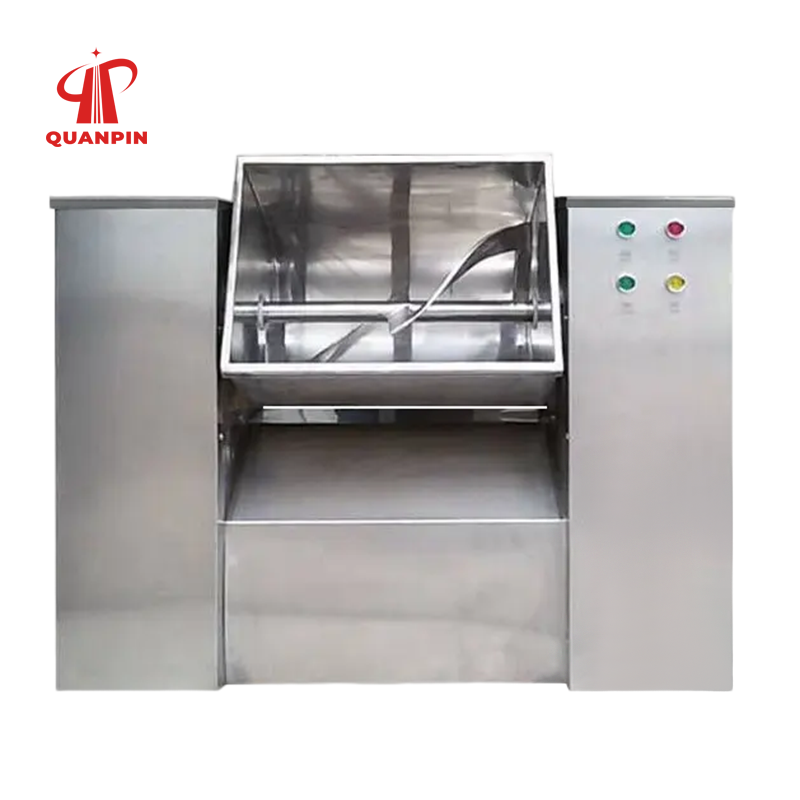
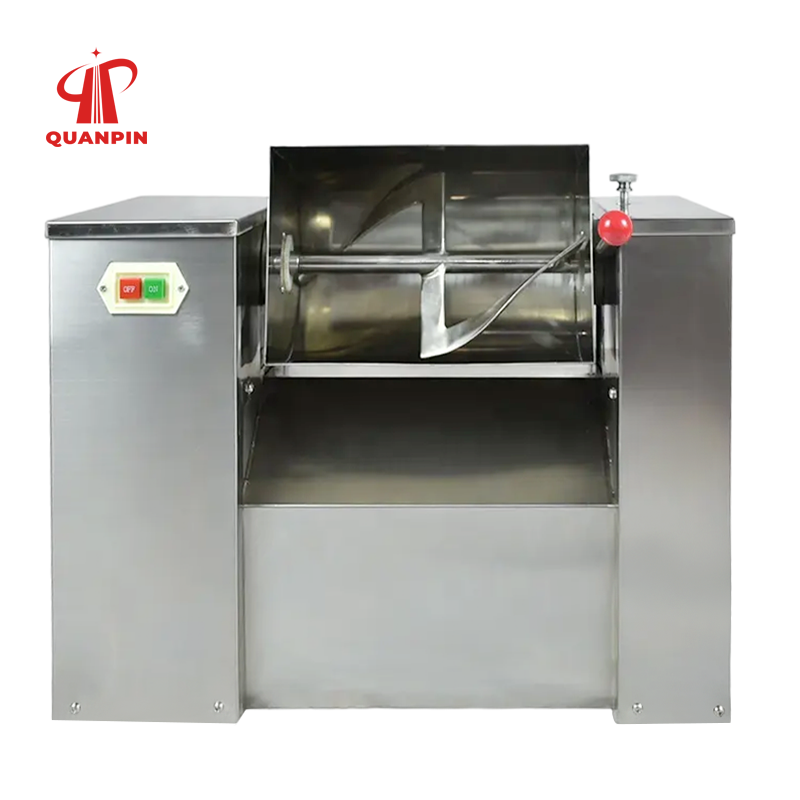
A horizontal trough mixer should be evaluated with the actual recipe and handling route. The practical question is whether the required composition and usable texture can be achieved and maintained through the agreed handover, rather than whether an isolated sample has a high or low initial viscosity.
The following trial framework is an engineering interpretation of published formulation research. It is not a validated operating recipe for QUANPIN machinery, a food safety assessment or a promise of identical results across starches, sauces and pastes.
Record five conditions before testing
Recipe and ingredient preparation
Record the recipe on a consistent mass basis, including water introduced with liquid ingredients. Identify starch type, fibre preparation and any previous heat treatment, since ingredients sharing a generic name may have different preparation histories.
Sampling time
State the time at which mixing ends and when sampling begins. Preserve that distinction when several samples are collected; the last container should not silently receive a longer recovery period than the first.
Temperature and equilibration
Document the temperature at collection and testing. If equilibration is necessary, prescribe it consistently and report the resulting delay instead of describing the measurement as an immediate discharge result.
Handling before measurement
Choose containers and handling tools that preserve sample identity without imposing uncontrolled extra mixing. Record stirring, spooning, pumping or extrusion during preparation because each can alter the history presented to the measuring instrument.
Required downstream behaviour
Agree which response matters downstream: spreading, pumping, holding shape or filling after a pause. A laboratory recovery curve is useful only when its relationship to that practical requirement is explained and checked.
What sauce research says about time dependence
Published ketchup research shows why the direction of the response must be measured. In a pulses-fortified ketchup experiment, the authors observed shear thinning together with rheopexy under their test conditions. That combination prevents a universal assumption that all ketchup structures simply weaken during continued shearing.
The original pulses-fortified ketchup study concerns particular flour-containing recipes and laboratory methods. Its finding supports checking the response direction in a trial; it does not establish that adding a pulse flour or changing mixer time will reproduce the same result in another sauce.
An experimental sauce study using oxheart tomato pomace included a controlled standing period before rheological testing and examined upward and downward shear-rate paths. The preparation and test conditions are part of the result, rather than incidental details that can be removed when comparing batches.
The tomato-pomace sauce investigation provides a useful example of declaring test temperature, conditioning and curve interpretation. A loop between two flow paths is evidence under that programmed history; it should not be presented as a direct measurement of recovery during an unrestricted factory rest period.
Build a repeatable shear-and-rest comparison
Agree the comparison
Start by agreeing the recipe, raw-material preparation and intended handover. Keep one documented version for the comparison so that an ingredient change is not mistaken for an equipment or sampling effect.
Time the sampling
Prepare a written sampling timetable tied to the actual mixing endpoint. Include planned delays, collection order and the point where each container enters controlled laboratory handling. Record deviations when they occur.
Condition consistently
Apply a reproducible initial conditioning stage. The aim is to make the comparison interpretable, not to erase every trace of the process. Preserve separate samples if immediate and conditioned responses are both important.
Declare the shear programme
Use a declared shearing stage followed by a declared observation stage. Choose conditions suitable for the instrument and formulation, then retain them across comparable specimens. There is no universal recovery programme for all food pastes.
Define the calculation
Report the complete response over time where possible. If a single recovery percentage is used, state its denominator and averaging interval. Without those definitions, two percentages can describe different measurements.
Check practical handling
Compare the laboratory response with a practical handling check on the same recipe. Document whether a change improves the required transfer or filling step, rather than assuming that greater apparent recovery is always beneficial.
Read three experimental approaches correctly
Recovery under a three-step programme
A phosphorylated potato starch investigation used a three-step shear programme to evaluate in-shear structural recovery. It calculated recovery from defined portions of the first and third stages, making the calculation dependent on the stated programme.
The original potato-starch experiment demonstrates why a recovery percentage needs a method definition. Its modified starches were prepared under specific conditions; the study does not prescribe a chemical modification or recovery target for commercial food manufacture.
For a production comparison, retain the measurement definition even when the selected programme differs from that paper. Record why the chosen stages represent the question being asked, and avoid borrowing the reported percentage as an equipment acceptance threshold.
Pasting and texture measurements
Another original experiment examined how shearing and annealing influenced pasting properties of different starches. It also assessed gel texture, showing that the response being measured must be named rather than grouping all changes under the word consistency.
The shearing-and-annealing starch study concerns prepared starch systems and their measured properties. Texture-profile recovery between compressions is a different test from viscosity recovery after a shear programme. Similar everyday language does not make the outputs interchangeable.
Select the laboratory output that answers the process question. A gel hardness result can complement a flow measurement, but should not be substituted for a time-resolved response merely because it is easier to collect.
Responses across food matrices
Food matrix effects also matter. An apple cell-wall polysaccharide matrix was investigated in several food systems; its effects on viscosity and the measured thixotropic response depended on the product and concentration.
The apple-polysaccharide matrix experiment supports testing the actual formulation instead of transferring a result between juices, dressings and other foods. It does not demonstrate that a mixer creates the matrix or guarantees a particular texture.
Use these studies as reasons to specify comparison conditions. Their formulations and instruments differ, so combining their numbers into a single performance ranking would conceal those differences rather than help select processing equipment.
Keep the mixer trial and laboratory route connected
For an S type mixer trial, keep recipe development and machine assessment traceable. If thickener identity or hydration treatment changes during a run series, label that as a new comparison instead of attributing every response difference to mixing duration.
Record material remaining on tools or in transfer containers when it affects the specimen collected. An unrepresentative portion can have both a different composition and a different shear history, making the interpretation ambiguous.
Keep the original time series and preparation log with each sample identifier. A summary table should allow the reader to recover which specimen, conditioning sequence and calculation produced each reported result.
When repeating a trial, repeat the relevant handling steps as well as the nominal mixer setting. Repeatability of an isolated instrument reading does not establish repeatability of the complete sampling and preparation route.
Investigate disagreement before changing the process
If two specimens disagree, first compare their timestamps, temperature records and preparation histories. Only then investigate whether mixing or formulation caused a real difference. This order avoids adjusting the process to compensate for an unrecognized laboratory delay.
If a stronger rested texture makes transfer harder, report the trade-off explicitly. Acceptance should reflect the actual next operation and its waiting interval; maximizing one rheological number is not a meaningful universal objective.
Prepare an equipment enquiry around the real paste
An enquiry should describe the material as received, the final recipe and the state expected during loading. Identify dry powders, liquids and pre-existing pastes separately, with their preparation and storage histories where relevant.
Provide the intended batch sequence and a realistic description of transfer after mixing. Include the longest routine pause that the development team wants to study, without converting that proposed condition into an unverified capability claim.
Describe sampling access and laboratory handling needs before settling the trial arrangement. The equipment discussion should address whether the agreed observation points can be reached safely and repeatably under the site procedure.
Specify the product-contact, cleaning and discharge requirements that apply to the application. These must be confirmed for the supplied configuration; an image of a similar machine does not establish every construction detail.
Share the acceptance measurements and who will perform them. If the purchasing team requires a rheological assessment, define the method and responsibility before the trial rather than expecting a general equipment inspection to provide it.
Keep the final decision attached to the recipe and documented scope. A successful development comparison supports that tested arrangement; additional materials or handling routes require their own assessment.
Select the supplied configuration using relevant evidence
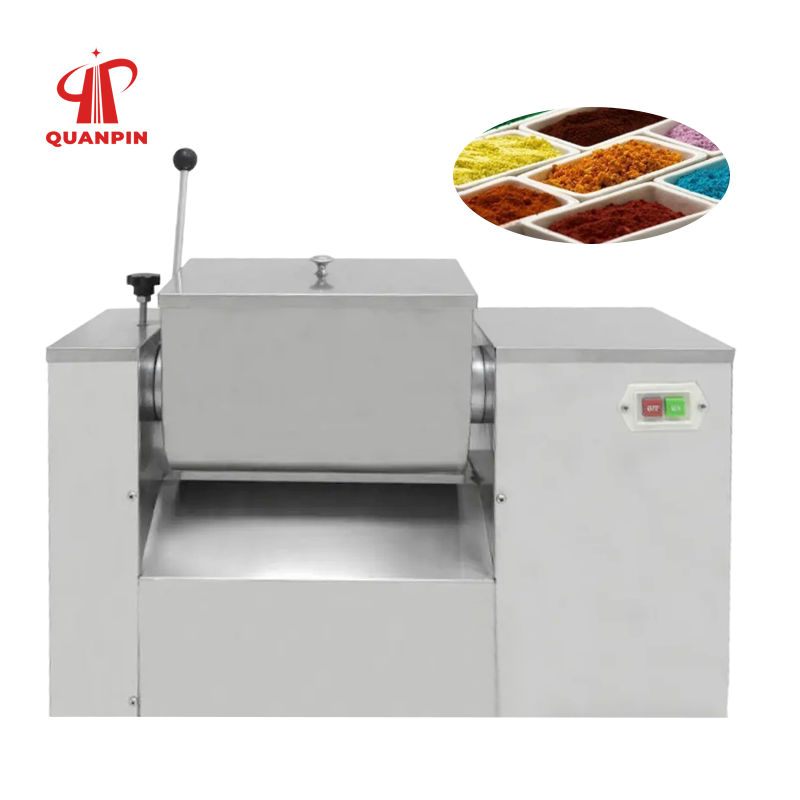
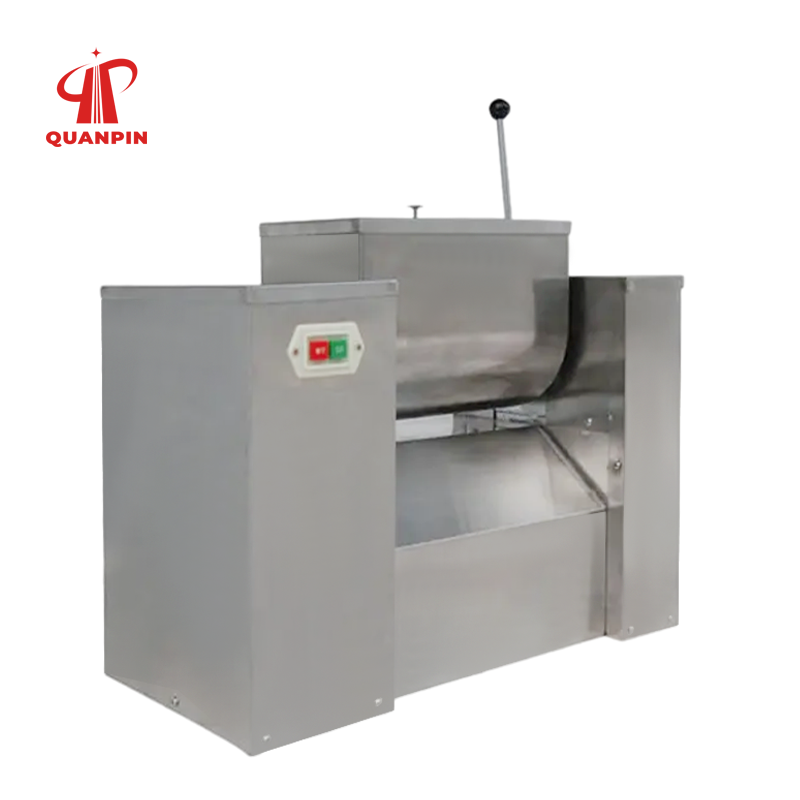
QUANPIN presents the CH range as a powder and paste mixer. Discuss the actual food formulation, proposed loading and discharge route with the supplier, while retaining independent laboratory evaluation of the required texture and recovery behaviour.
Equipment selection should combine mixing duty, handling access and the agreed trial evidence. The research discussed here does not verify a specific motor rating, processing time, heating function or recovery capability for an individual supplied machine.
Make a defensible development decision
Approve a comparison only when composition, handling history and the practical downstream requirement are all understood. Keep a record of unresolved causes when the available evidence cannot distinguish formulation effects from preparation variation.
A clear result can also be a decision to redesign the test. If conditioning dominates the observed response or samples cannot be compared fairly, correct the method before spending another series of batches on changing mixer settings.
Frequently Asked Questions
Does shear thinning prove recovery?
No. A lower viscosity during shear does not establish how the paste will behave after a pause. Measure the response under the relevant observation conditions and compare it with the intended handling step.
Does every ketchup weaken under shear?
Not necessarily. The published pulses-fortified ketchup experiment observed rheopexy under its conditions. Test the actual formulation rather than assigning every sauce the same time-dependent behaviour.
Which recovery programme should we use?
Use a documented programme appropriate to the formulation and question. Keep conditioning, shearing, observation time and calculation consistent across comparable specimens; there is no universal recovery percentage for equipment acceptance.
Can texture replace a rheological test?
Only with care. A texture-profile test and a rheological recovery test impose different deformations and report different outputs. State which measurement was used and why it is relevant to the process decision.
Can published results predict our recipe?
No. The studies use particular starches and food matrices. They explain why recipe and preparation matter, but do not establish the same response in a new formulation or demonstrate commercial mixer performance.
What should an enquiry include?
Provide the recipe, preparation history, sampling timetable, intended downstream operation and proposed acceptance method. Confirm the actual CH configuration and trial scope before using laboratory observations to support a purchase decision.
Discuss Your Food Paste Mixing Requirements
Discuss the material, processing objective and required trials with QUANPIN. Review the equipment information and the relevant industry applications, or send an enquiry through our contact page.
Email sales@qpdryer.com or stacie@qpdryer.com. Call +86 19850785582 or contact WhatsApp +86 15921493205 to discuss the proposed scope.
For process evaluation, consider the pharmaceutical trough mixer for batch mixing of suitable powders or pastes; and the ribbon blender for ribbon-driven mixing of suitable powder batches. Confirm suitability with representative material, the required product properties and the proposed process conditions.