Double Cone Blending: Distinguish Lubricant Surface Coverage from Tablet Wetting and Bulk Compactibility
By QUANPIN
A double cone blender trial with a tablet lubricant should distinguish distribution at particle surfaces from the behaviour of the resulting tablet. Surface wetting and bulk compactibility are separate development questions.
Lubricant coverage describes where material lies on other particles. A strength test describes a compact made under particular conditions; it does not directly map that coverage.
Surface Coverage and Bulk Response Are Different
Wettability concerns the interaction between a liquid and the exposed solid surface. The measured response also depends on the liquid and specimen preparation.
Consequently, a convenient tablet hardness result cannot independently establish how a later coating liquid spreads. The surface and bulk observations need separate interpretation.
Define the Proposed Mixing Duty
For a double cone mixer enquiry, identify the actual powder formulation and intended mixing duty. No chemical imaging or coating equipment is assumed included.
The studies discussed here used different formulations and analytical methods. Their results explain evaluation boundaries rather than demonstrate a universal commercial mixer operating programme.
Five Inputs for the Comparison
Lubricant identity
Record the lubricant identity and grade. The same general ingredient name can cover materials whose composition or physical properties differ in relevant ways.
Matrix ingredients
Specify the matrix-forming ingredients and their grades. Their interaction with the lubricant belongs to the tested formulation rather than a generic powder description.
Concentration and history
Keep concentration and blending history identifiable. A change in both variables requires interpretation that distinguishes their separate contributions to the observed product.
Compaction conditions
Define the compaction procedure used to prepare analytical specimens. Comparing tablets made under different conditions can obscure the effect being investigated in blending.
Surface measurement
Identify the surface measurement and the liquid used. A contact-angle result refers to that combination and should not become an unspecified coating-performance guarantee.
Separate Imaging from Mechanical Proxies
Preserve the reference specimens and analytical settings needed for comparison. The sample history helps establish what a later measurement actually represents.
An original pharmaceutical investigation examined magnesium stearate distribution in microcrystalline-cellulose tablets produced after blending at three different scales.
The investigators detected lubricant distribution using Raman mapping and considered tablet crushing strength separately. Their imaging setup required careful planning to obtain reproducible information.
For a double cone powder mixer trial, this supports separating direct distribution evidence from an indirect mechanical response. Neither supplies every answer about the downstream dosage form.
Six Stages through the Evaluation
Incoming formulation
First document the incoming powders, lubricant grade and intended proportions. Keep formulation changes visible when comparing the resulting tablets or surface observations.
Blending programme
Next record the actual blending programme and addition sequence. The research does not provide a universally transferable duration for another apparatus or formulation.
Specimen collection
Collect representative portions under a defined plan. Associate each specimen with the blend fraction and processing stage from which it was obtained.
Compact preparation
Prepare compacts using the agreed laboratory procedure. Retain their manufacturing conditions alongside the observations rather than treating every tablet as an equivalent analytical surface.
Separate tests
Evaluate surface and bulk properties using the selected methods. Keep the meaning and limitations of each measurement visible in the development record.
Joint interpretation
Compare the results together before assigning a processing explanation. A change in one response may coexist with a different or unchanged response elsewhere.
Read Lubricant-Specific Dispersion Evidence
Dispersion kinetics
An original pharmaceutical investigation investigated dispersion kinetics of five particulate lubricants while varying concentration and mixing duration in binary formulations.
Short mixing times showed a relationship between theoretical surface coverage and strength reduction. Longer mixing exposed differences between lubricant dispersion kinetics rather than one common time response.
That distinction matters when interpreting a mechanical proxy for distribution. A relationship established for a tested material and duration range does not automatically cover another lubricant.
Fatty-acid composition
An original pharmaceutical investigation compared magnesium stearate materials with different stearate and palmitate contents while assessing several tablet and lubrication responses.
The researchers examined ejection, mechanical strength, disintegration and release separately. Differences in fatty-acid composition did not produce an identical response across all these observations.
Therefore an ingredient specification cannot be reduced to a presumed better-or-worse lubrication label. Identify the product attributes the actual development decision must address.
Surface wetting
The double cone tumble blender supplies a defined mixing operation within the proposed route. Tablet preparation and analytical interpretation remain separate responsibilities unless explicitly agreed.
An original pharmaceutical investigation examined how lubricant and pancreatin-containing formulations affected spreading of an enteric coating liquid over tablet surfaces.
The original experiment found that composition and lubricant affected surface wetting differently from bulk plasticity. The particular mixing conditions tested did not significantly change its coating-spreading parameter.
Evaluate Surface and Formulation Differences
This is a specific boundary on interpretation: surface-related effects should not automatically be inferred from compactibility, and more blending is not a demonstrated universal remedy.
An original pharmaceutical investigation evaluated sucrose fatty-acid esters as alternative lubricants in direct-compression tablet formulations.
The direct-compression investigation compared powder and tablet attributes, including hardness and disintegration. Its results concern the tested alternatives and formulations rather than interchangeable lubricant substitutions.
Selecting a different excipient requires appropriate formulation development. An equipment discussion cannot authorize a recipe change solely because an alternative performed favourably in another study.
Define the Analytical Responsibilities
For a double cone blender price discussion, distinguish the blending duty from chemical imaging, surface testing and tablet analysis. Confirm the responsibilities needed to evaluate the intended intermediate.
Describe any later coating stage and the liquid-interaction question requiring investigation. That helps define relevant specimen collection without assuming that blending alone determines coating success.
Interpret Different Surface and Bulk Results
If tablet strength changes while wetting remains similar, retain both findings. The observations address different aspects of the material and need not be contradictory.
If wetting changes while compactibility remains similar, investigate the surface question directly. An unchanged bulk response does not invalidate the separate surface observation.
If lubricant grade changes, retain the actual material specification and comparison basis. Equal nominal concentration does not establish equivalent performance of every available grade.
If a distribution image differs from a mechanical proxy, examine their specimen and method conditions. Do not discard one result simply because it is less convenient.
If the coating liquid changes, assess the relevant liquid and solid combination. A previous wetting result cannot automatically establish performance with a different formulation.
If several processing variables change together, limit the causal conclusion. The trial may demonstrate a product difference without isolating which change produced it.
Prepare the Blending Enquiry
Prepare the enquiry with powder identities, lubricant grade and the proposed blending duty. State whether the development question concerns distribution, compaction or later liquid interaction.
Describe the available analytical procedures and specimen preparation route. Identify the surface and bulk measurements that will be compared rather than selecting one as a universal substitute.
Confirm the Downstream Scope
Review the proposed scope for mixing and downstream work individually. The cited experiments do not establish that an equipment package includes specialized analytical or coating functions.
A useful report states what changed at the measured surface, what changed in the compact and what remains unresolved. Keep those conclusions connected to their actual specimens.
Frequently Asked Questions
Does strength map lubricant coverage?
No. Tablet strength is a mechanical response of a prepared compact. It does not directly provide a map of lubricant location or surface coverage.
Does compactibility establish coating wetting?
No. Surface wetting and bulk plasticity responded differently in the pancreatin study. The relevant surface interaction requires its own evidence under defined conditions.
Does one blending time suit every lubricant?
No. The dispersion investigation identified differences among lubricants at extended times. A single duration cannot be transferred universally across formulations and apparatus.
Do all product attributes respond equally?
Not automatically. The fatty-acid composition investigation found different effects across ejection, strength, disintegration and release; assess the attributes relevant to the intended product.
Can another study authorize substitution?
No. A favourable result for another formulation does not authorize excipient substitution. Material selection and product performance require their appropriate development assessment.
What should the enquiry include?
Provide lubricant grade, matrix ingredients, blending history, specimen preparation and separate surface and bulk tests. Explain the downstream liquid-interaction question before defining the equipment trial.
Discuss Your Blending Application
Discuss the material, processing objective and required trials with QUANPIN. Review the equipment information and the relevant industry applications, or send an enquiry through our contact page.
Email sales@qpdryer.com or stacie@qpdryer.com. Call +86 19850785582 or contact WhatsApp +86 15921493205 to discuss the proposed scope.
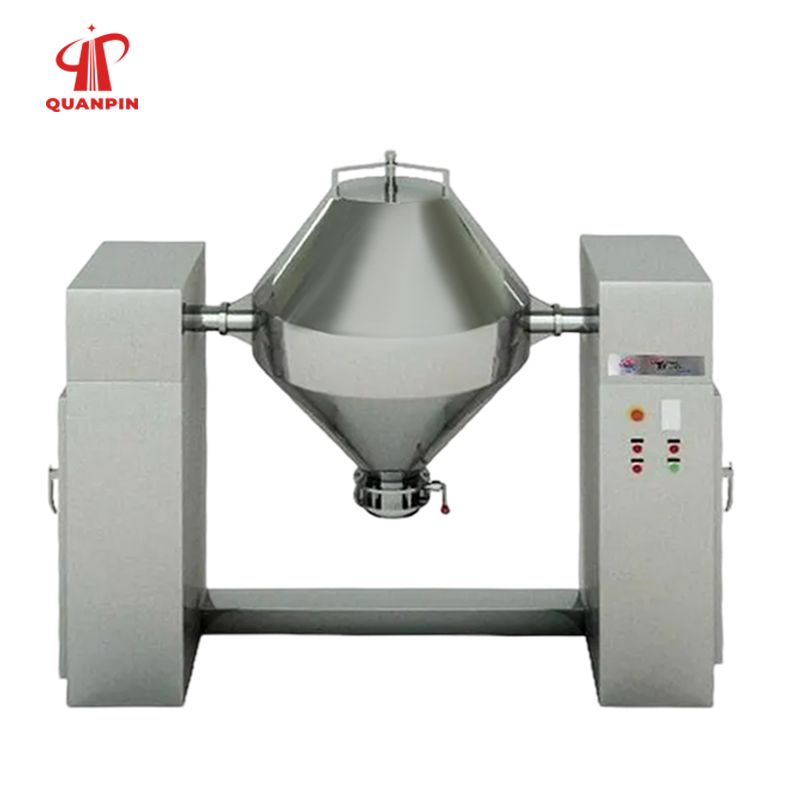
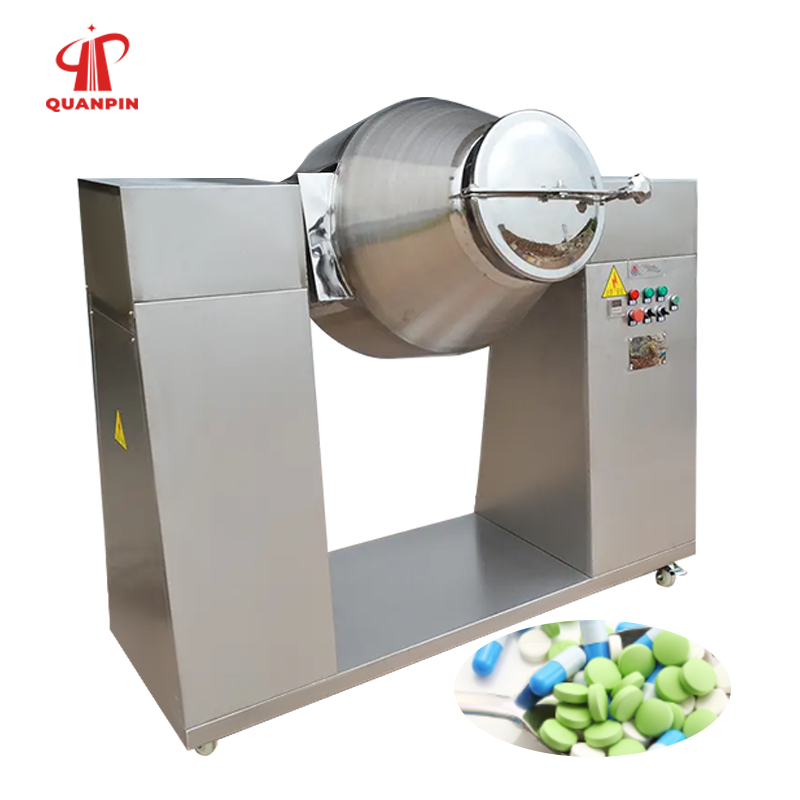
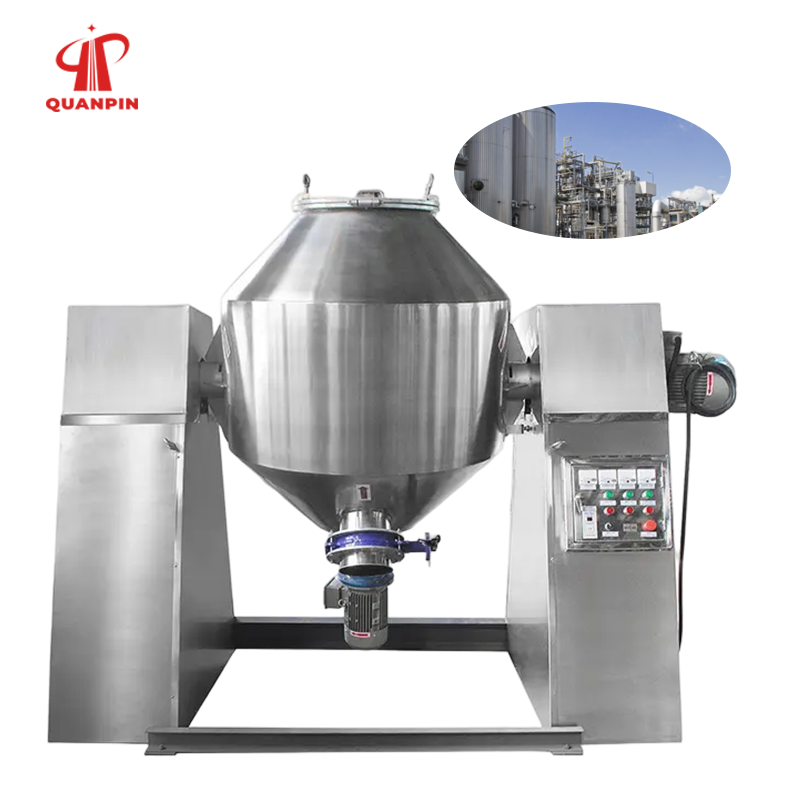
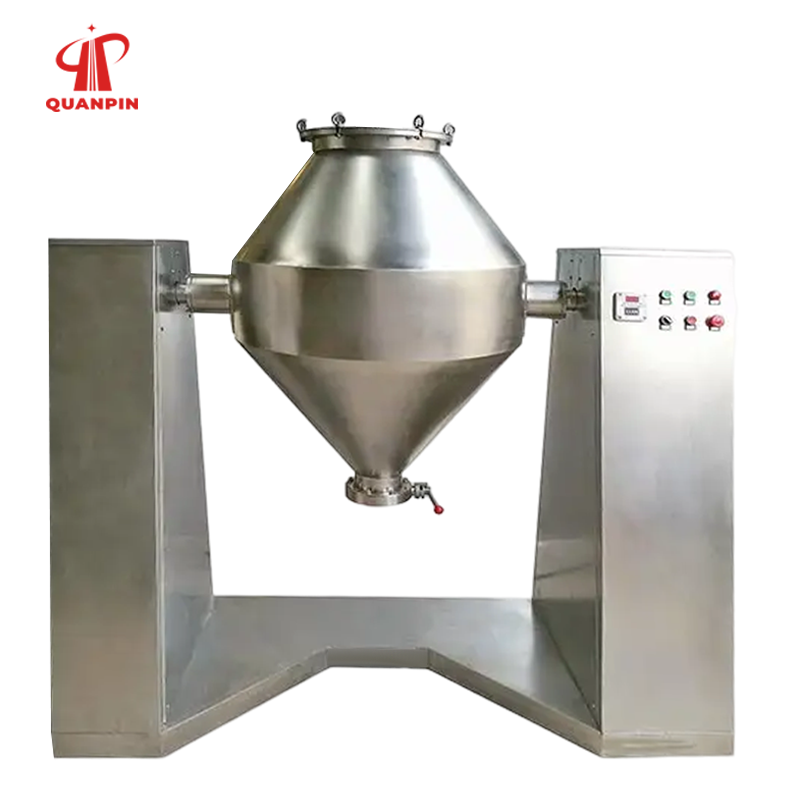
For process evaluation, consider the double-cone blender for gravity-driven blending in a rotating double cone. Confirm suitability with representative material, the required product properties and the proposed process conditions.