Spice Pulverizer Trials: Separate Volatile Aroma Oil from Nonvolatile Extract and Piperine
By QUANPIN
A spice pulverizer trial needs separate measurements for aroma oil, nonvolatile extract and pungency. A single extraction number cannot describe all three attributes of ground pepper.
For food processing, define the retained flavour components and sampling time before comparing powders made under different grinding conditions.
Which Flavour Measurement Does the Trial Need?
Volatile oil contributes aroma, while piperine is a distinct pungency component. Nonvolatile ether extract measures another operationally defined fraction of the sample.
These measurements answer different questions. A higher extract yield cannot establish a stronger fresh aroma without suitable volatile analysis and sensory evidence.
Why Are Extraction Results Different?
Specify the analytical method alongside each acceptance value. Distillation, solvent extraction and chromatography recover or quantify different parts of a complex spice matrix.
Keep volume-per-mass results separate from mass-per-mass values. State the moisture basis so apparent concentration changes are not confused with improved retention.
Which Five Measurements Belong Together?
Volatile Oil
Volatile oil content needs a defined distillation procedure and collection time. Comparable values require consistent sample mass, preparation and reporting basis.
Piperine
Piperine requires its own assay. An oil measurement cannot substitute for the concentration of this nonvolatile pungency component in black pepper.
Nonvolatile Ether Extract
Nonvolatile ether extract is a method-defined fraction. Its stability does not demonstrate that the volatile aroma profile remained unchanged during grinding or storage.
Particle Size Distribution
Particle size distributions help explain extraction accessibility. Finer powder can expose material differently even when the starting spice composition is unchanged.
Controlled Sensory Assessment
Sensory assessment addresses perceived aroma and pungency. Use defined sample preparation and evaluation conditions so processing comparisons remain interpretable.
How Does Cooling Affect Interpretation?
Grinding temperature can alter both breakage and retained composition. Record product temperature rather than treating room temperature as the material’s thermal history.
Cooling method also matters. Precooling, jacket cooling and direct cryogen injection represent different experimental arrangements and should not be grouped into one guaranteed outcome.
Black-pepper cooling experiments found nearly equal retained volatile oil with chilled-water and liquid-nitrogen cooling, while the latter produced finer powder.
That result separates fineness from oil retention. It does not establish that every cooled industrial pulverizer will reproduce the same oil content or particle distribution.
Which Trial Inputs Need Recording?
Spice Identity
Identify the spice variety and preparation history. Black, white and green pepper undergo different processing and need not begin with the same composition.
Feed Moisture
Record feed moisture and the analytical moisture basis. Loss of water can change reported component concentrations without creating additional flavour material.
Product Temperature
Measure feed and collected-powder temperatures consistently. Record the measurement location and delay, since a cooled sample may warm after leaving the mill.
Feed Rate and Configuration
Document feed rate and grinding configuration. Changes in residence, loading and breakage conditions can accompany changes in cooling or target particle size.
Collection Procedure
Keep the powder collection and packaging procedure consistent. Sampling delays introduce an additional exposure period that belongs in the comparison record.
Storage History
Record storage duration and conditions before analysis. An immediate result and an aged result describe different product histories, even when produced by the same run.
What Do Original Experiments Show?
Pilot Pepper Findings
Pilot black-pepper grinding research compared ambient and cryogenic processing and measured volatile oil, terpene composition and sensory attributes.
The experiment reported greater monoterpene retention and stronger fresh top notes under cryogenic conditions. These findings concern the tested pepper and pilot apparatus.
Its reported operating optimum is not a universal setpoint. Product temperature and feed rate must be evaluated together in a representative equipment trial.
Turmeric Fracture Findings
Original turmeric fracture measurements found different fracture work and particle morphology under ambient and cryogenic conditions.
This supports treating cooling as a mechanical processing variable as well as a composition variable. Turmeric fracture data cannot supply pepper-specific aroma acceptance limits.
A useful trial therefore combines particle measurements with chemical measurements. Better breakage alone does not prove better retention of every flavour component.
Separate Measurement Methods
Low-temperature turmeric grinding experiments assessed precooling and measured volatile oil with a Clevenger apparatus, separately from particle size.
The paper illustrates why the recovery method belongs in the specification. Its laboratory procedure and turmeric results do not establish a black-pepper performance guarantee.
Treat precooling and subsequent grinding as a combined process history. Compare samples at the same analytical stage rather than attributing every difference to the mill alone.
How Should Runs Be Compared?
Use one representative feed lot when comparing candidate settings. Otherwise natural ingredient variability can obscure the contribution of the processing change.
Apply the same sampling and sealing procedure to every run. Collect sufficient powder to support repeat measurements rather than relying on one unrepresentative grab sample.
Compare volatile oil, piperine and nonvolatile extract on their stated bases. Examine particle distributions alongside the chemical results when extraction efficiency changes.
A consistent direction across several measurements strengthens interpretation. Conflicting results are a reason to investigate methods and sample history rather than choose the most favourable number.
What Changes During Storage?
Pepper pulverization and storage research reported essential oil, piperine and nonvolatile ether extract separately for black, white and green pepper.
After six months at 4 degrees Celsius, essential oil and piperine declined, while corresponding nonvolatile extract values did not change significantly. One stable fraction therefore did not establish overall flavour stability.
What Belongs in a Spice Trial Brief?
Prepare a pulverizer machine trial brief around the spice, required particle distribution and retained composition. State which laboratory will perform each measurement.
Define volatile oil units and the distillation protocol. Include the moisture basis and the time between grinding and analysis in the acceptance record.
Specify a separate piperine assay when black-pepper pungency is central. Do not extend this pepper-specific marker to turmeric or other spices without justification.
An industrial pulverizer comparison should retain individual results rather than merge them into an unexplained flavour-retention score. Different applications may prioritize different attributes.
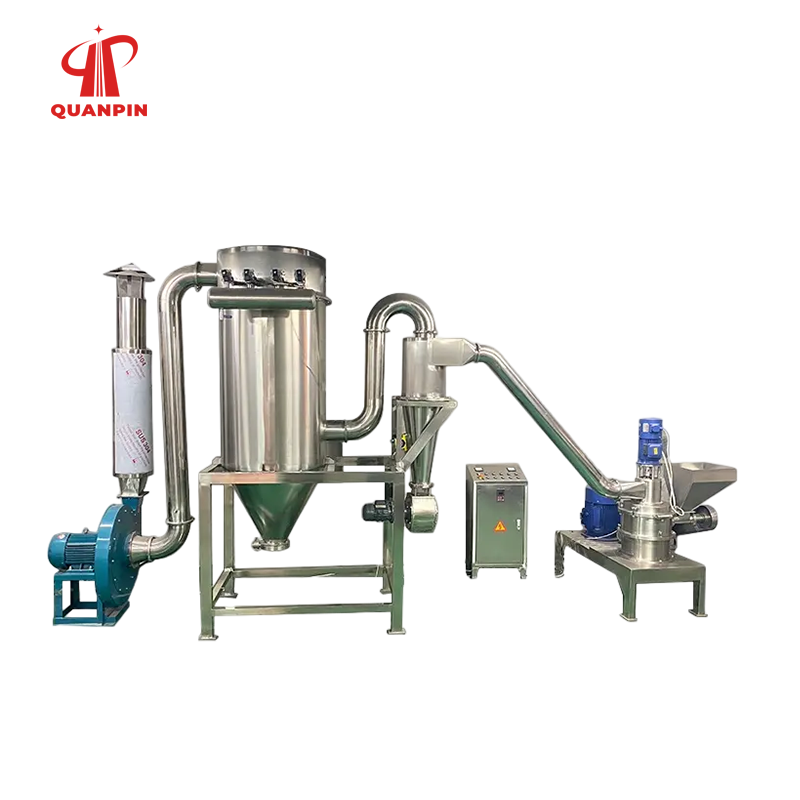
For a universal pulverizer discussion, describe feed preparation and any proposed cooling arrangement. Ask the supplier to confirm the actual offered configuration and its trial boundaries.
A powder grinding machine quotation should identify the supplied components and testing scope. Published cryogenic research does not establish that a standard offered unit includes cryogenic facilities.
How Does This Inform Equipment Discussions?
The grinding principle explains size reduction, but the retained aroma profile remains material-specific. Confirm product quality through representative samples and appropriate assays.
When discussing industrial pulverizer price, include sampling, analysis and acceptance responsibilities in the comparison. A nominal capacity alone does not define acceptable spice output.
What Should a Quotation Cover?
Review cleaning and product-contact requirements for the intended food application. Their implementation belongs in the confirmed supply scope rather than an assumption from a research paper.
Send the feed description and measurement plan through the QUANPIN fine pulverizer page to discuss suitability and a representative trial.
Frequently Asked Questions
Does Stable Extract Mean Stable Aroma?
No. Nonvolatile extract and volatile oil describe different measured fractions. Stable solvent-extract values cannot demonstrate unchanged aroma compounds or perceived freshness.
Does Piperine Measure Aroma?
No. Piperine describes one important black-pepper pungency component. It does not replace essential-oil analysis or a controlled sensory assessment of aroma.
Does Cooling Always Improve Retention?
Cooling can alter breakage and retained composition, but published results remain specific to the material and apparatus. Confirm its benefit under the proposed processing arrangement.
Why State the Moisture Basis?
Report the moisture basis because changing water content changes the denominator. Comparisons need equivalent reporting bases before interpreting differences as component retention.
Is There One Correct Grinding Temperature?
No single grinding temperature guarantees flavour retention. Feed composition, loading, cooling, collection and storage all belong in the tested process history.
Which Information Should I Send?
Start with spice identity, moisture, required size distribution and separate volatile-oil and pungency targets. Add analytical methods and sampling timing before requesting equipment recommendations.
Discuss Your Spice Grinding Application
Discuss the material, processing objective and required trials with QUANPIN. Review the equipment information and the relevant industry applications, or send an enquiry through our contact page.
Email sales@qpdryer.com or stacie@qpdryer.com. Call +86 19850785582 or contact WhatsApp +86 15921493205 to discuss the proposed scope.