Pulse Flour Milling: Separate Protein Enrichment, Recovery and Ingredient Functionality
By QUANPIN
Milling pulse seeds can release cellular components for later separation. A finer flour alone does not establish higher protein concentration, recovery or useful food functionality.
An air classifier mill trial should therefore report flour properties separately from the composition and mass balance of any downstream fractions.
Define the Ingredient Objective
Define the target as a food ingredient: protein-enriched flour for a specified formulation, rather than an undefined demand for maximum fineness.
Protein concentration describes the fraction composition. Recovery describes how much original seed protein reaches that fraction; neither measure substitutes for the other.
Separate Grinding from Fractionation
Grinding prepares the material by disrupting seed structures. Subsequent ingredient fractionation separates streams according to their physical behaviour.
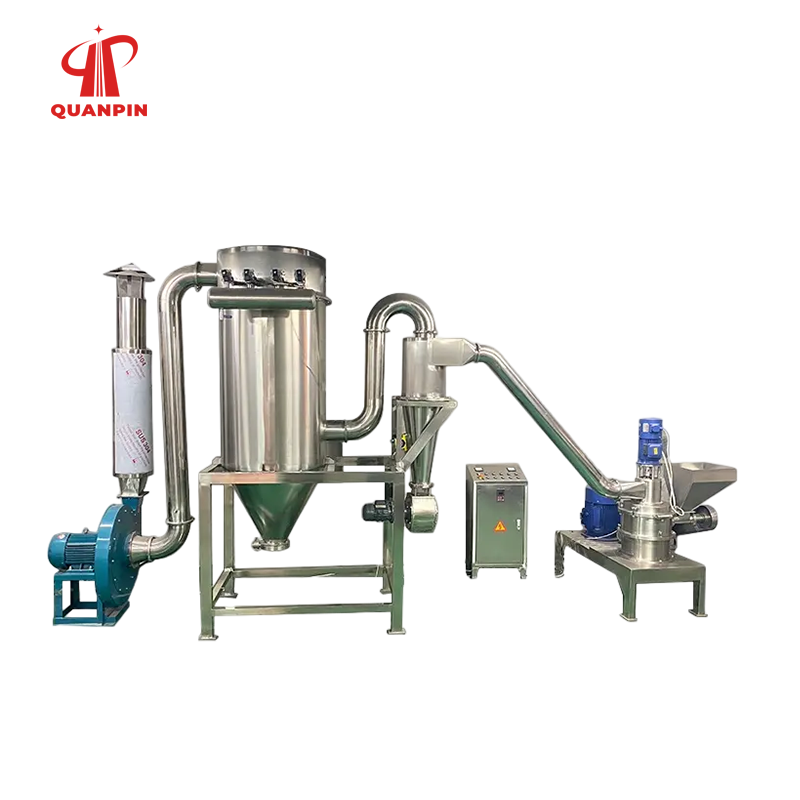
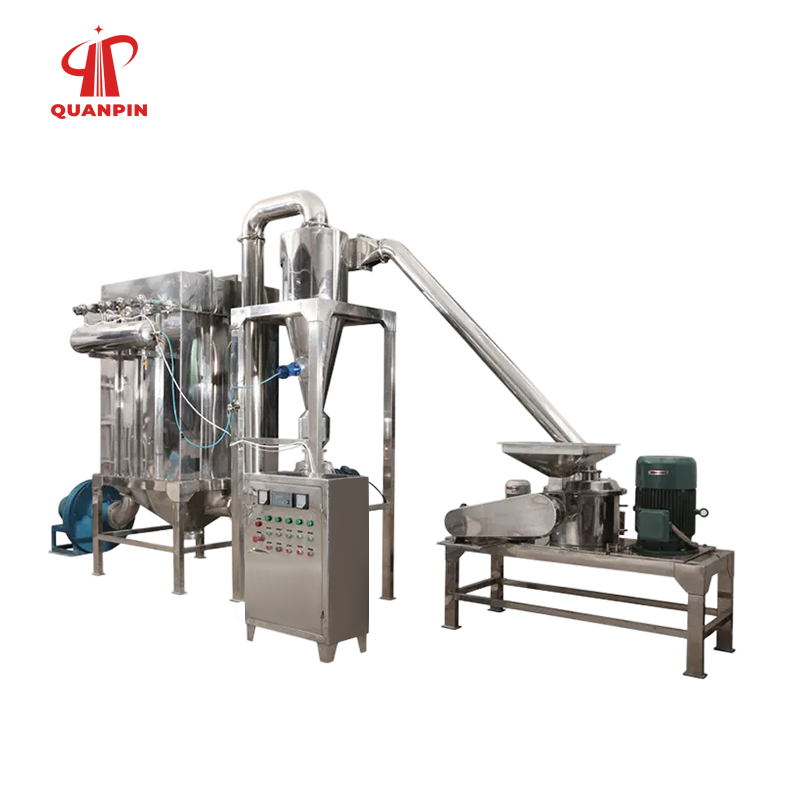
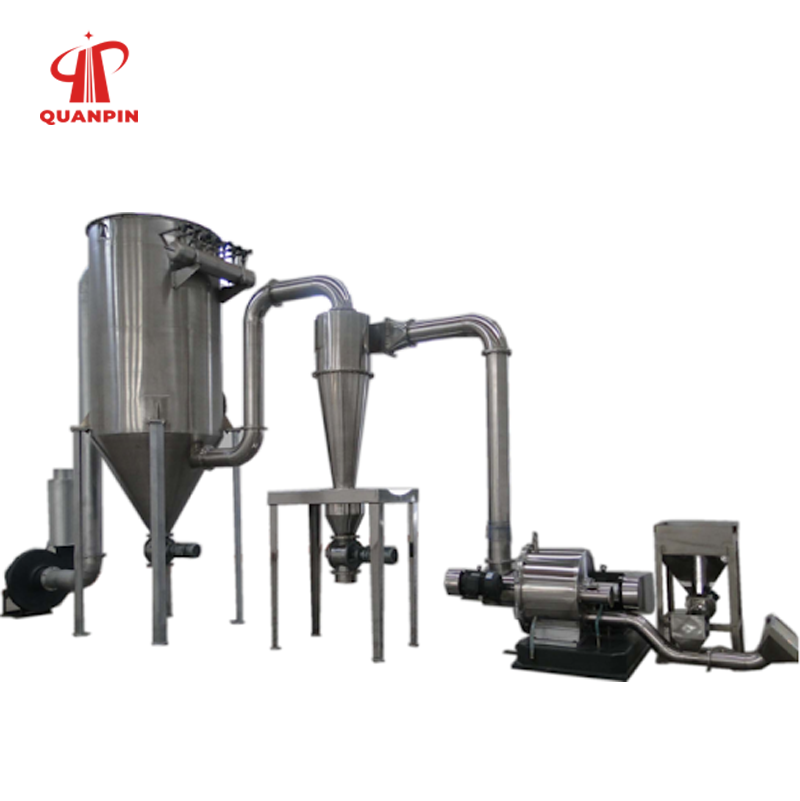
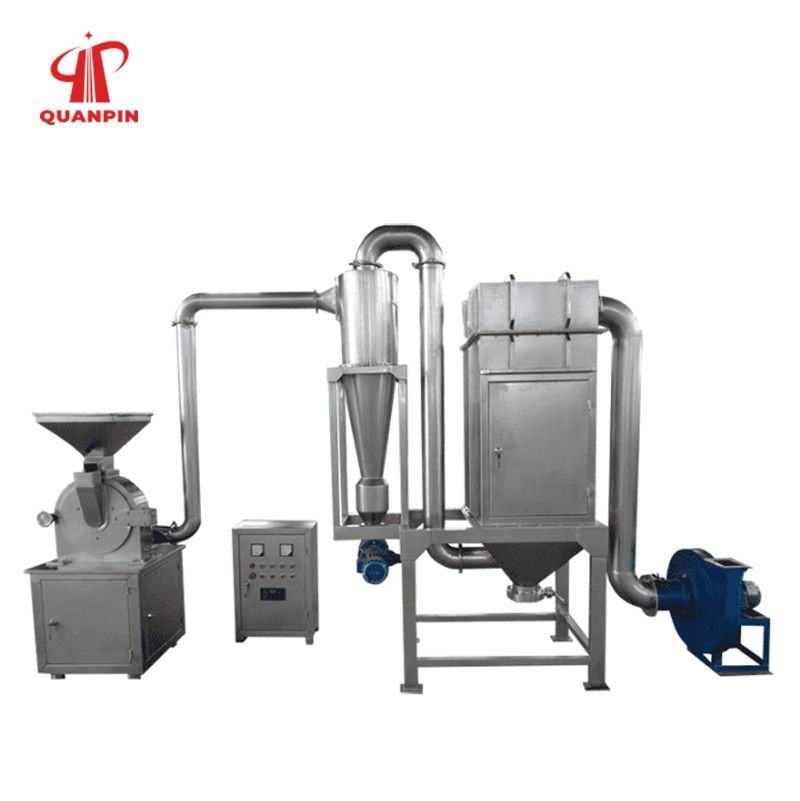
A milling classifier that controls product fineness must not automatically be described as a validated protein-fractionation system. Confirm the actual supplied process scope.
Identify the Starting Material
Pulse Identity
Choose and identify the pulse species and cultivar. Their cellular structures affect how constituents are released.
Hull Preparation
Record dehulling and feed preparation because retained hull material changes the composition entering the mill.
Moisture Basis
Measure feed moisture consistently; use the same basis when comparing incoming flour and collected fractions.
Starting Composition
Retain representative starting flour so enrichment can be calculated against its actual protein content.
Food Application
Define the food application before selecting acceptance tests; bakery flour and a gel-forming ingredient need different evidence.
Read the Pea Milling Evidence
In pea experiments, pea milling research examined grinding followed by separate air classification, rather than assuming that milling itself yielded pure protein.
Excessive size reduction produced handling difficulties in that study. The finding supports checking flour dispersibility alongside size.
The investigators also examined damaged starch. A small diameter can reflect released starch granules or further fragmentation, with different consequences.
Those observations justify a comparative trial; they do not establish a universal WFJ setting or protein-purity guarantee.
Measure Six Complementary Outcomes
Cellular Release
Use microscopy to inspect whether starch granules and surrounding material appear liberated or remain connected.
Size Distribution
Compare the whole particle-size distribution instead of selecting a single impressive fine-particle value.
Protein Analysis
Measure protein in the original feed and each separated stream using a consistent analytical method.
Stream Weighing
Weigh all recovered streams and record retained material, sampling losses and deposits separately.
Protein Recovery
Calculate protein recovery from stream mass and composition, with moisture corrections made consistently.
Handling Behaviour
Check the handling behaviour needed by the next operation, including reproducible feeding and dispersion.
Interpret Structure and Function Together
Material-Specific Milling
A functional analysis of pea fractions compared several starch-rich legumes and connected suitable milling conditions with their distinct structures.
Seed hardness and starch-granule characteristics differed between materials. Consequently, a successful pea setting cannot simply become a chickpea specification.
The practical response is to retain a material-specific trial record, including feed identity, microscopy and distribution measurements.
Composition Beyond Protein
A later pea composition study compared impact and stirred ball milling before pea fractionation, documenting different flour microstructures.
Protein-rich fractions also accumulated endogenous lipids and ash. Enrichment changed a mixture of components, rather than isolating one molecule.
Its additional high-pressure homogenization experiments must remain a separate wet treatment; they are not evidence of an air classifying mill capability.
Functionality Beyond Purity
In multi-legume experimental study, mildly refined pea fractions behaved differently during suspension and gel preparation because starch, fibre and protein remained together.
A fraction with lower molecular purity can therefore still be useful, provided its performance suits the intended recipe.
Evaluate the actual ingredient in a controlled formulation. Do not infer gel behaviour from a protein percentage alone.
Build a Controlled Trial
Plan a baseline flour and a small, documented set of milling conditions using the same raw-material lot.
Keep any downstream separation settings identifiable so their effects can be distinguished from changes made at the grinder.
Compare collected flour before fractionation, then compare every resulting stream. This reveals where a compositional change actually occurs.
Repeat promising conditions before accepting an apparent improvement, especially when material retention changes between runs.
Confirm the Equipment Scope
Treat the fine powder grinder as one part of the proposed process. Discuss feed suitability, collection and cleaning with the supplier.
For QUANPIN WFJ enquiries, provide representative pulse material and the intended downstream route. Request confirmation of configuration rather than assuming protein separation is included.
Evaluate Food Functionality
A Food Science pea experiment measured pea fractions after milling and air classification, including protein composition, solubility and gel behaviour.
Its comparison with a commercial wet-fractionated protein concerns those tested ingredients. It does not demonstrate that every dry route outperforms every wet route.
Commercial comparison samples can differ in processing history. Record that history where known before attributing functionality solely to milling.
For a food formulation, test solubility under the intended preparation conditions instead of relying on an unrelated published assay.
Assess starch-related thickening and residual fibre when they matter to the recipe, because enrichment leaves other constituents present.
Keep nutritional composition, physical handling and recipe performance as separate acceptance fields in the trial report.
Read the Mass Balance Carefully
Stop short of claiming improved recovery when only protein concentration has increased; inspect the stream masses first.
Likewise, a higher recovered mass is not necessarily a better ingredient if composition or practical functionality misses the target.
Prepare the Supplier Brief
An ACM mill enquiry becomes more useful when it specifies the starting pulse, required flour properties and the evaluation method for later fractions.
Agree which supplier tests and downstream operations are included before purchasing equipment or promising a finished ingredient specification.
Frequently Asked Questions
Does milling alone enrich protein?
No. Grinding changes structure and size; a protein-enriched stream requires a demonstrated separation process and compositional testing.
Are concentration and recovery equivalent?
No. Concentration is a proportion within a stream, while recovery accounts for the original protein captured in that stream.
Is the finest flour always preferable?
No. Published pea work found limitations from excessive milling, so handling and structural release should accompany size measurements.
Can one setting cover every pulse?
No. The cited multi-legume experiments found material-dependent conditions; validate the actual pulse and preparation route.
Does the WFJ reference include fractionation?
No. The WFJ equipment reference does not establish an included protein-fractionation line, wet homogenizer or guaranteed ingredient composition.
What should a trial report contain?
Use matched feed records, distributions, microscopy where appropriate, stream masses, protein analyses and application-specific functionality results to compare trials.
Discuss Your Pulse Milling Requirements
Discuss the material, processing objective and required trials with QUANPIN. Review the equipment information and the relevant industry applications, or send an enquiry through our contact page.
Email sales@qpdryer.com or stacie@qpdryer.com. Call +86 19850785582 or contact WhatsApp +86 15921493205 to discuss the proposed scope.