Food Fibre Milling: Measure Water Holding, Swelling and Solubility Separately
By QUANPIN
A fine powder grinder trial for food fibre should measure the required hydration property separately from particle size. Finer material does not independently establish greater water holding, swelling or solubility.
Define the food application before selecting the preferred grinding result. Different laboratory properties describe different interactions between the prepared fibre and water.
Define the Required Hydration Property
Water-holding capacity describes retained water under a defined procedure. The preparation, separation and reporting basis belong beside its value.
Swelling describes a volume response under specified conditions. It is not automatically interchangeable with the mass of water retained.
Describe the Fibre Preparation
Solubility concerns the material entering the measured soluble fraction. A higher result does not by itself demonstrate higher water holding.
Keep the actual fibre source and preparation visible. An isolated dietary-fibre preparation may differ from whole pomace or untreated food powder.
Five Inputs for the Trial
Material identity
Identify the botanical material and lot. Record whether it is whole residue, isolated fibre or an already modified ingredient.
Preparation history
State the incoming preparation, including extraction or drying where relevant. These operations may change the structure before milling.
Size method
Define particle-size measurement and specimen dispersion. Report what was measured rather than using fine as an analytical specification.
Hydration tests
Choose the required hydration methods. Keep specimen mass, conditioning and reporting units consistent within a comparison.
Intended use
Describe the intended food use. A laboratory capacity should answer a relevant ingredient-development question rather than become a universal quality ranking.
Read Apple-Fibre Evidence within Scope
An original apple-fibre study compared coarse and superfine preparations. Smaller particles were accompanied by changes in swelling and solubility without a significant water-holding change.
This illustrates why the properties need separate measurements. A favourable change in one response cannot supply an unmeasured result for another.
Its findings concern the investigated apple preparation and apparatus. They are not validated outcomes or settings for QUANPIN equipment.
An air classifier mill enquiry should therefore include both dimensional and functional objectives. Specify the actual fibre rather than borrowing a result from another plant.
Six Specimen Boundaries
Incoming material
Identify the incoming material before processing. Preserve its lot and preparation records through the trial.
Confirmed arrangement
Confirm the supplied milling arrangement. Do not assume it includes enzymes, wet homogenization or another research modification.
Collected powder
Collect identified powder from the defined run. State which collection the laboratory specimens represent.
Specimen division
Divide specimens through an appropriate procedure. Keep the portions for sizing and hydration associated with the same material condition.
Separate analyses
Apply each selected test under its stated method. Differences in conditioning or separation may change the reported response.
Application assessment
Evaluate the result against the intended ingredient use. Smaller size alone should not replace the required food-property evidence.
Compare Three Different Measurements
Particle-size evidence
Compare size results using a consistent reporting basis. Aggregation and dispersion can influence which entities the instrument measures.
Retain the distribution rather than only a descriptive average where the trial requires it. Two powders with similar averages can differ elsewhere.
An air classifying mill comparison should identify the collected fraction tested. Classification and laboratory preparation are different operations.
Water-holding evidence
Compare water holding under the same procedure. A change in separation conditions can alter what the retained-water result represents.
An original kiwifruit investigation included enzymatic preparation and ball milling of pomace fibre, with changes in several hydration-related capacities.
That combined treatment cannot demonstrate what grinding alone would achieve. Its separate animal experiments are outside this equipment-selection discussion.
Swelling and solubility
Compare swelling and solubility as distinct observations. Neither should silently be renamed water holding.
Retain the conditioning time and material basis required by the selected methods. Method differences can complicate comparisons between publications.
Use the actual ingredient specification to choose between responses. A single overall score can conceal an important trade-off.
Keep Combined Modification Explicit
An original artichoke-fibre study compared high-pressure homogenization and combined superfine-grinding treatment, assessing structural and physicochemical changes.
Those operations involve a different modification route from dry pulverizing. Their outcomes do not establish the effect of a standard QUANPIN mill.
The useful comparison identifies which preparation produced each specimen. Avoid assigning a combined-treatment result entirely to particle size.
An ACM mill proposal should retain that distinction. Confirm the actual processing scope instead of adding research operations by implication.
Interpret Multiscale Structure Carefully
An original pea-fibre study related grinding-induced structural changes to laboratory adsorption and diffusion observations.
Its multiscale analysis considered surface chemistry, pores and surface area alongside diameter. Its in-vitro observations do not establish clinical benefits.
Investigate Conflicting Property Results
If finer material holds less water, first verify the measured property and method. An unexpected direction is not automatically a laboratory error.
Then review the incoming fibre and preparation. Structural modification can differ between isolated ingredients and whole residues.
If solubility increases while swelling changes differently, retain both results. They describe different aspects of the prepared material.
A separate artichoke soluble-fibre investigation compared grinding, microwave treatment and their combination using physicochemical measurements.
Its microwave-assisted preparation differs from the other artichoke experiment. Do not combine their results into one claimed dry-milling effect.
Keep all therapeutic and animal-study interpretations outside the powder-equipment assessment. This article concerns measured food-ingredient properties only.
Prepare the Milling Enquiry
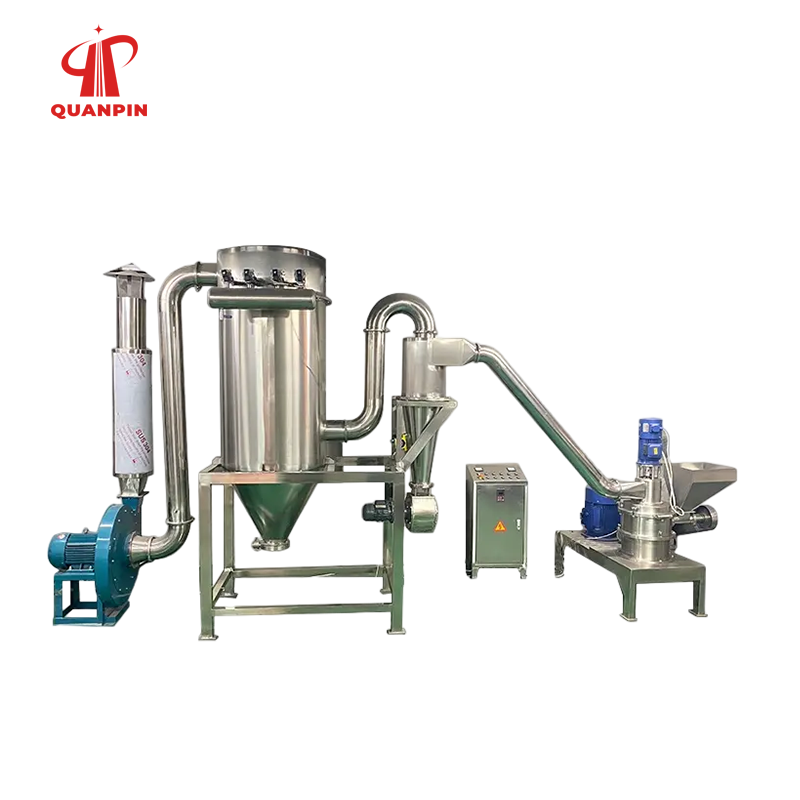
Prepare the enquiry with fibre identity, incoming form and desired particle distribution. State the separate hydration properties that matter.
Review the WFJ Series Fine Pulverizer against that duty within the food industry application. Confirm material suitability through representative evaluation.
Retain the Evidence Basis
Retain methods and specimen preparation with the results. A bare capacity value leaves the comparison difficult to interpret.
A useful proposal identifies demonstrated size reduction and the remaining functional tests. It should not promise an unverified hydration improvement.
Frequently Asked Questions
Does finer fibre always hold more water?
No. Particle size and hydration are different observations. Measure the property required for the actual food ingredient.
Is swelling water holding?
No. Swelling concerns a volume response, whereas water holding concerns retained water under its specified procedure.
Does higher solubility establish water holding?
No. Solubility describes a different measured fraction. It cannot independently establish water retained by the remaining material.
Can combined treatment establish a grinding-only effect?
No. Enzymes, homogenization or microwave treatment can contribute to the outcome. Keep their contribution distinguishable.
Does this guide establish health benefits?
No. The cited laboratory and animal investigations do not establish therapeutic performance of QUANPIN equipment or an untested ingredient.
What should accompany an enquiry?
Provide fibre identity, preparation history, size objective, hydration methods and intended use. Explain the criteria the material trial must demonstrate.
Discuss Your Food-Fibre Trial
Discuss the material, processing objective and required trials with QUANPIN. Review the equipment information and the relevant industry applications, or send an enquiry through our contact page.
Email sales@qpdryer.com or stacie@qpdryer.com. Call +86 19850785582 or contact WhatsApp +86 15921493205 to discuss the proposed scope.