Cereal Milling Trials: Separate Pesticide-Test Sample Preparation from Production Residue Redistribution
By QUANPIN
A cereal milling trial must distinguish preparation of a laboratory sample for pesticide analysis from a production operation that changes the distribution of residues. The two activities can produce different interpretations of an analytical result.
An air classifier mill produces powder for an agreed processing duty. Its fineness specification does not independently demonstrate pesticide removal or finished-food compliance. An ACM mill proposal should define its actual production duty separately from the laboratory preparation method.
Define the Purpose of Milling
Analytical comminution prepares material for a measurement. Particle condition can affect how well a laboratory extracts and measures a residue already present in the sample.
Production milling can produce several material fractions. Their measured residue concentrations need to be interpreted with the actual material route and fraction identities.
Distinguish Recovery from Redistribution
A higher measured residue after finer laboratory preparation need not mean that milling created the pesticide. A change in analytical extraction may contribute to the result.
Conversely, a lower concentration in one production fraction does not establish that the entire incoming residue was destroyed. Keep material redistribution and chemical change distinguishable.
Five Inputs for a Defensible Comparison
Cereal identity
Identify the cereal, lot and incoming preparation. A flour specimen and an intact-grain specimen should not silently share a claimed measurement basis.
Milling purpose
State whether milling belongs to laboratory analysis or production processing. Its purpose determines which comparisons answer the actual question.
Specimen preparation
Record the specimen condition and its size-preparation method. Preserve any pre-treatment that affects what enters the analytical extraction.
Analytes and method
Identify the measured compounds and suitable laboratory procedure. Different pesticides can respond differently under the same preparation conditions.
Fraction boundary
Define the fractions and mass basis where production processing is assessed. An isolated concentration does not describe the distribution through an entire route.
Read Analytical-Milling Research within Scope
An original DTU cereal study investigated milling conditions and the extraction efficiency of incurred pesticides from barley, oat, rye and wheat.
The authors measured particle distributions and analysed extracted residues using their stated laboratory procedures. Their results demonstrate that sample preparation can affect the quantity recovered analytically.
That investigation concerned analytical preparation, including particular apparatus and pre-treatment. It does not establish that a production QUANPIN mill removes pesticides or includes the same equipment functions.
A fine powder grinder enquiry should therefore identify the processing objective separately from the customer’s analytical laboratory requirements. Do not substitute a residue-extraction result for equipment performance.
Six Boundaries from Grain to Report
Incoming specimen
Identify the incoming lot and the specimen selected for examination. Retain the relationship between the production material and the submitted laboratory sample.
Production operation
Describe the production operation being evaluated. State which outlets, retained material or other fractions belong to its actual scope.
Laboratory milling
Document laboratory milling as a separate preparation where used. Do not merge its conditions into the record of the production machine.
Analytical extraction
Conduct extraction through the laboratory’s appropriate method. The reported measurement depends on the complete analytical procedure, not just the milling step.
Reported result
Retain compound identity, specimen basis and analytical limitations with the result. A report should explain what was measured rather than supplying an unqualified processing claim.
Decision responsibility
Review the result for the actual decision. Equipment fineness acceptance, residue quantification and any applicable food assessment are separate responsibilities.
Interpret Three Different Evidence Types
Extraction evidence
An extraction result describes what a procedure recovered and quantified. Its relationship to the original sample needs suitable method evidence.
A second original cereal investigation studied milling, particle fractions and extraction conditions for several incurred pesticides in rice, wheat, barley and oat.
The reported response depended on cereal and analytical conditions. The paper supports method-specific preparation rather than a universal instruction that every residue test requires the same fineness.
Fraction evidence
A production-fraction result describes the analysed material at a defined outlet. State whether it concerns flour, bran or another identified portion of the process.
A DTU field-treated cereal investigation examined pesticide distributions in flour, bran and feed-bran fractions, showing that the fractions could have different concentrations.
Those results belong to the investigated compounds, grains and processing arrangements. A factor from one study should not become an unverified value for another product or QUANPIN installation.
Degradation evidence
A chemical-degradation conclusion needs evidence about actual change in the compound, rather than a concentration comparison stripped of its material context.
Keep the total material and reporting basis visible when interpreting a processing study. A selected fraction cannot alone describe the fate of every residue in the incoming lot.
An air classifying mill review should preserve these distinctions when discussing acceptance. Its classification duty and the laboratory’s chemical investigation are connected but different tasks.
Keep Storage Experiments Separate
An original wheat-and-flour storage investigation examined the degradation profiles of selected pesticides under defined temperature and humidity conditions.
The researchers built models using their prepared samples and measured time profiles. Their study concerns a defined storage experiment rather than an instantaneous milling-removal guarantee.
Do not borrow its conditions as instructions for treating food or operating a mill. An application-specific process and analytical review is required for the actual material.
Record elapsed time and storage history where they influence the comparison. A later analysed sample can represent more than the mechanical operation alone.
Respect the Analytical Validation Range
An original wheat-flour analytical proof-of-concept study explored a direct-extraction and gas-chromatographic method while reporting the limits of its evaluated scope.
Its exploratory measurements were not presented as a compliance assessment. This distinction matters when a result is below the experimentally evaluated range or otherwise outside fully demonstrated method performance.
Investigate Conflicting Measurements
If finer analytical milling produces a higher measured residue, investigate preparation and extraction before describing the difference as increased contamination.
If a flour fraction has a lower concentration than grain, identify the other fractions and the tested compounds. Do not immediately label the difference complete destruction or removal.
If two laboratories disagree, compare specimen identity, preparation, extraction and reporting basis. An equipment setting alone may not explain different chemical results.
Keep uncertainty and method limitations visible in the technical review. A convenient numerical result cannot replace information about the conditions under which it is meaningful.
Separate the equipment supplier’s confirmed scope from laboratory and food-quality decisions. A mill description does not certify a residue-analysis method or an ingredient lot.
Retain results that complicate the interpretation. They can reveal a changed fraction, specimen-preparation effect or analytical question requiring further investigation.
Prepare the Food-Milling Enquiry
Prepare the enquiry with the cereal feed, desired powder dimensions and actual collection route. State separately whether material will be submitted for residue analysis.
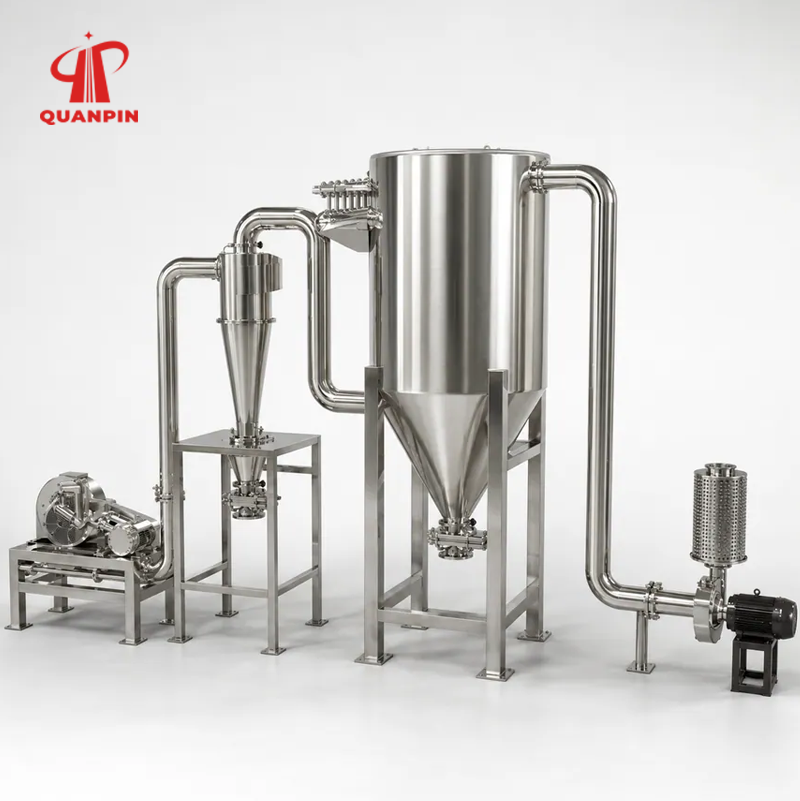
Review the WFJ Series Fine Pulverizer for the defined size-reduction duty within the relevant food industry application. Request only capabilities confirmed for the proposed arrangement.
Retain the Two Processing Records
Retain the production record and analytical preparation record together while keeping their operations distinct. This makes later differences interpretable without overstating equipment performance.
A useful proposal explains the powder duty demonstrated and the separate chemical evidence still needed. It does not promise pesticide removal, safety approval or compliance from fineness alone.
Frequently Asked Questions
Does a higher measured residue mean milling created it?
No. Finer sample preparation can affect analytical extraction. The result needs interpretation through the actual specimen and laboratory procedure.
Does lower flour concentration prove destruction?
No. Different processing fractions can have different concentrations. A single flour result does not establish the fate of every residue in the incoming grain.
Can a published storage model specify production?
No. A model applies to the compounds, materials and conditions investigated. Do not transfer it directly to another food or installation.
Is analytical milling a production-removal test?
No. It prepares material for a measurement, whereas production milling serves a processing objective. Their conditions and evidence should remain identifiable.
Does an exploratory result establish compliance?
No. The cited proof-of-concept explicitly limits that interpretation. A result requires a suitable validated basis and assessment for the intended decision.
What information supports an enquiry?
Provide feed identity, powder objective, production fractions and collection route. Identify any laboratory preparation and residue-analysis requirements as separate parts of the evaluation.
Discuss Your Cereal Powder Duty
Discuss the material, processing objective and required trials with QUANPIN. Review the equipment information and the relevant industry applications, or send an enquiry through our contact page.
Email sales@qpdryer.com or stacie@qpdryer.com. Call +86 19850785582 or contact WhatsApp +86 15921493205 to discuss the proposed scope.
For process evaluation, consider the pulverizer machine for grinding suitable prepared dry feed. Confirm suitability with representative material, the required product properties and the proposed process conditions.