WFJ Air Classifier Mill: Distinguish Particle-Size Reduction from Retention of a Pharmaceutical Crystal Form
By QUANPIN
A pharmaceutical milling study can show a change in particle size without answering whether the drug substance retained its original solid-state form.
These are separate material attributes.
Separate size reduction from crystal form
When assessing a WFJ air classifier mill, specify which question the study is intended to answer and what evidence will be collected. The FDA guidance discusses polymorphism in the context of ANDA submissions. See FDA solid-polymorphism guidance.
The WFJ performs mechanical size reduction and classification.
Define the incoming material
Its equipment description does not establish that a particular crystalline drug substance will retain its initial polymorph, hydration state or degree of crystallinity.
Nor does it establish that a transformation will occur.
State the mechanical objective
Two different attributes
A material-specific evaluation is necessary before either conclusion can be drawn.
What equipment descriptions establish
FDA’s guidance on pharmaceutical solid polymorphism discusses differences among solid forms and the possibility of phase conversion during manufacturing operations, including milling.
Known form and uncertainty
This is background for selecting relevant characterization.
Feed identity
It is not a performance test of QUANPIN equipment, and it provides no universal operating limit for the proposed material.
Mechanical duty
Start with the incoming material. The ritonavir study concerns controlled ball milling; its findings do not establish WFJ performance. See ritonavir milling experiments.
Identify the collection points
Record its identity, lot, formulation context and the solid form that is actually known.
If the initial form has not been characterized, describe that uncertainty.
A supplier’s generic chemical name is insufficient to identify every relevant solid-state property of the specimen submitted for milling.
Next, define the intended mechanical duty.
Preserve the processing record
Study boundaries
An air classifying mill study may aim to evaluate a particle-size distribution, feeding behavior or collection arrangement.
Collection fractions
State those aims without quietly adding an untested claim of solid-form preservation.
Retained specimens
The study brief should distinguish an engineering observation from a pharmaceutical material-acceptance decision.
Actual configuration
The feed container preserves the identity of the incoming powder. The kinetic study investigates milling-induced transformations rather than a universal production limit. See kinetic milling investigations.
Temperature observations
The grinding chamber supplies the mechanical size-reduction action.
Analytical purpose
The classifier separates material within the configured system, and recovery containers receive the resulting fractions.
Choose relevant characterization
Method limitations
Each retained specimen must remain associated with its actual collection point and processing history.
An ACM mill study should preserve enough information to interpret those specimens.
Identify the actual configuration, processing sequence and relevant observations.
What size results show
Do not substitute catalogue parameters for what was used.
Where temperature observations are part of the agreed study, identify the measurement location and limitations rather than treating one displayed value as the complete history of every particle.
Particle-size characterization and solid-state characterization answer different questions. The comparative study shows that method and calibration choice can affect reported disorder. See comparative disorder-characterization study.
What size results cannot show
A size-distribution report describes its measured size attribute and method.
A suitable solid-state assessment examines the attribute relevant to the material and product.
The responsible pharmaceutical team selects and interprets the analytical procedures; this article does not prescribe an assay or universal acceptance criterion.
Interpret particle-size findings
A smaller reported particle size cannot by itself establish unchanged crystal form.
Conversely, identifying the same dominant solid form does not establish that every required particle-size target has been achieved.
Keep both findings within their measured scope.
Avoid converting the absence of one reported observation into proof that every possible transformation was excluded.
Limit conclusions to examined specimens
Consider a hypothetical study with an incoming specimen and two collected powder fractions. USP explains that diffraction profiles can reflect crystallite size, strain and instrumental resolution. See USP XRPD chapter introduction.
If only one fraction receives solid-state examination, the resulting conclusion belongs to that specimen.
Compare conditions carefully
It should not automatically be extended to the other fraction, all retained material or future production lots.
Explain what was sampled and what remains unexamined.
The same caution applies when comparing operating conditions.
If the feed lot, specimen preparation or analytical procedure also changed, those differences need to remain visible.
A comparison cannot isolate the equipment condition simply because its title names only that variable.
Preserve the actual design and limitations of the comparison.
Prepare the equipment enquiry
For a fine powder grinder enquiry, useful inputs include the material identity, known solid-state sensitivity, intended size-reduction duty, handling restrictions and proposed characterization plan.
Provide existing findings as findings, including uncertainty.
Keep handling requirements separate
Do not replace them with a claim that the substance is universally stable under mechanical processing.
An industrial fine powder grinder proposal can then address the confirmed mechanical scope and identify unresolved material questions.
Questions about solid-state retention
Sampling coverage
The manufacturer can review the equipment configuration; pharmaceutical acceptance remains with the responsible organization and the appropriate evidence.
Unexamined material
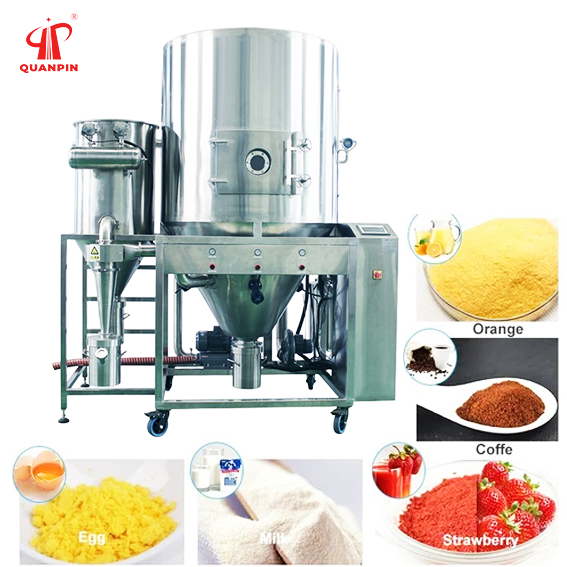
No equipment photograph establishes a drug substance’s crystal form after processing.
Confounded comparisons
Safe handling remains a separate requirement.
Relevant enquiry inputs
Follow the material’s actual hazards and the approved containment, cleaning and isolation arrangements.
Safe sampling
Do not open operating equipment to obtain a specimen or inspect retained powder.
Evidence for the decision
Sampling provisions must be agreed within the applicable safe procedure. Does milling always change a crystal form? No. The possibility of a transformation is not evidence that it occurred in a particular study. The material and appropriate observations determine the supported conclusion. Does a particle-size result prove retention of the original form? No. Size reduction and solid-state retention are different questions, and the analytical evidence must address the question being claimed. Can one examined fraction represent every output? Only where the sampling and study design justify that interpretation. Otherwise, identify the specimen and limit the conclusion accordingly. Does the WFJ model establish a universal safe temperature for the material? No. Material-specific limits and the relevance of temperature observations require their own review; no new limit is introduced here. What should QUANPIN receive? Provide the actual feed identity, known material sensitivity, mechanical objective, proposed sampling needs and relevant restrictions so the equipment discussion remains tied to a defined study.
Discuss the next study
Discuss your material and study requirements with QUANPIN using the enquiry form.
Email sales@qpdryer.com or stacie@qpdryer.com. Call +86 19850785582, or contact us on WhatsApp: +86 15921493205.