YK Oscillating Granulator: Separate Outlet Granule Appearance from Fines after Transfer
By QUANPIN
The appearance of granules at a sizing outlet and the fines observed after transfer describe different process boundaries. A granule evaluation should identify where a change was observed before assigning it to the sizing equipment.
For a YK oscillating granulator duty, connect the immediate outlet material to the actual receiving process and the product attributes needed there. See pharmaceutical industry applications.
YK Principle and the Material Leaving the Screen
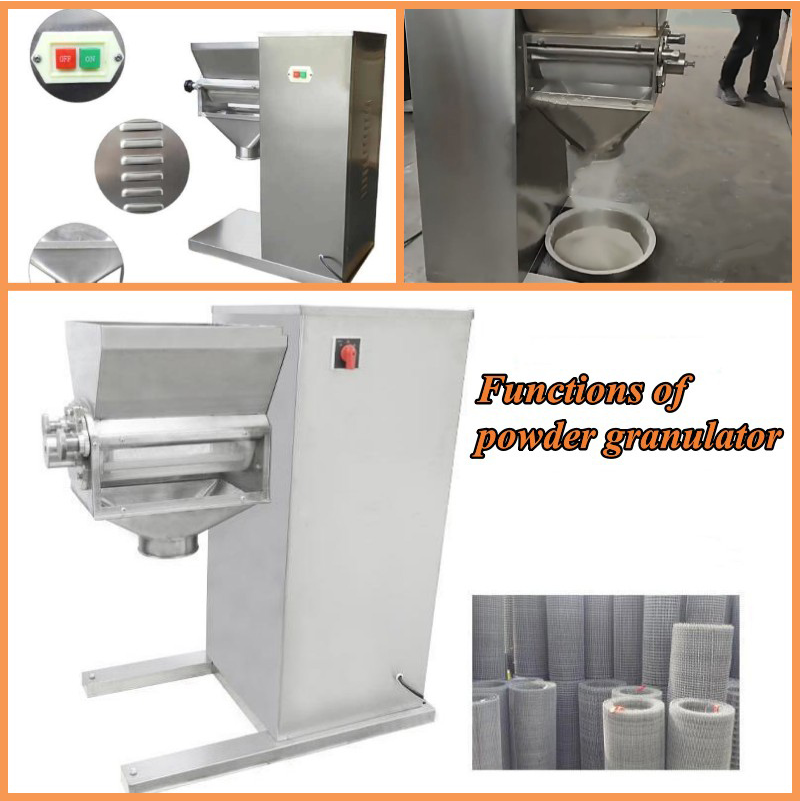
The verified oscillating granulator machine works compatible wet mass or suitable dry agglomerates against a screen using reciprocating rotor action.
That mechanism describes the sizing or granule-forming operation; it does not independently establish how every formulation behaves during subsequent handling. Use product-specific development knowledge to justify the attributes being examined. See FDA ICH Q8 pharmaceutical development.
Define Outlet and Receiving-Process Questions
Define whether the application question concerns the immediate granule condition, the delivered material or both.
Use the actual formulation and intended receiving operation rather than assigning a universal acceptable fines level to an equipment family.
Five Steps for the Application Review
Identify the feed state
Identify the granules and the material state entering the YK.
Define the outlet sample
Define the immediate outlet sampling boundary.
Map subsequent handling
Map transfer and any intermediate holding or handling.
Identify receiving material
Identify the material delivered to the receiving operation.
Assess each boundary
Assess each boundary using the agreed relevant product methods.
Four Boundaries for Granule and Transfer Evidence
An outlet observation should retain its connection to the actual screen and working arrangement used.
A receiving-container result may include effects of several later operations and should not silently be labelled as the immediate machine output.
If different portions are tested, preserve the sampling basis instead of treating an apparent difference as a controlled material comparison.
Keep any drying stage visible when wet-sized granules are assessed again in a later dry state.
Equipment and Process Interfaces
Feed presentation
The feed arrangement presents the material whose suitability for the selected duty has been reviewed.
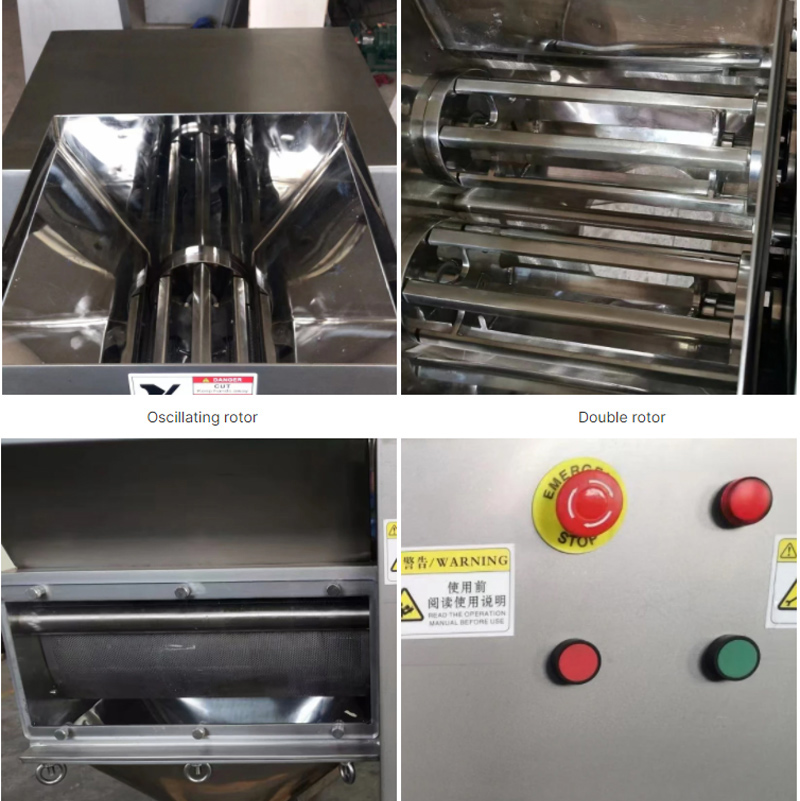
Reciprocating rotor
The reciprocating rotor supplies the mechanical action within the confirmed working assembly.
Fitted screen
The fitted screen forms the granule-processing interface and belongs in the configuration record.
Outlet collection
Outlet collection establishes the first identified material available after that operation.
Transfer route
The transfer route defines which subsequent handling is included in the receiving-material assessment.
Receiving process
The receiving process determines which actual product attributes need evaluation beyond an immediate visual observation.
Interpreting Granule Condition across Handling
Define the Actual Material
A swing granulator comparison should distinguish particle appearance, measured distribution and the intended handling question.
A pharmaceutical granulator duty can require product evidence at more than one process boundary without making those boundaries interchangeable.
For wet granulation routes, preserve whether each observation was made before or after drying.
Preserve the Relevant Boundary
Do not infer a measured fines fraction from a photograph of attractive granules.
Explain the method and sample preparation behind each reported distribution or other relevant result.
If a receiving sample differs from the outlet reference, review the intervening material history before assigning a cause.
State the Evidence Limits
A different formulation or an unexplained sample-selection change can also limit the comparison.
The YK equipment description should not acquire an unconfirmed conveying, drying or receiving function simply because those stages follow it.
A useful report identifies the operation and actual material represented by each result rather than treating the entire route as one undefined machine test.
Benefits and Limits of Separate Boundary Assessment
Separating outlet and receiving evidence can help locate which part of a material route needs further investigation.
It can reveal that a favorable outlet observation does not answer the complete downstream-handling question. A development comparison should not be presented as complete validation of an untested production process. See FDA process validation guidance.
It cannot establish a universal granule-strength or fines specification for every pharmaceutical formulation.
The required product attributes and acceptance methods depend on the actual material and intended next operation.
Feed, Configuration and Sampling Records
Record the feed identity and its wet or dry condition.
Identify the fitted assembly associated with the outlet material. Assess relevant quality risks using the actual material and process context. See FDA ICH Q9 quality risk management.
Records, Handling and Safety Requirements
Describe the outlet sampling and collection boundary.
Map intermediate transfer, holding and any additional processing.
Preserve the method and preparation basis for each assessed sample.
State which receiving-process requirements the comparison is intended to investigate. Interpret measurements through process understanding rather than treating an isolated instrument reading as product acceptance. See FDA process analytical technology framework.
Sample collection or access must follow the approved procedures for the installed equipment and material.
An interest in comparing two boundaries does not justify reaching into a moving assembly or improvising an unsafe transfer sample.
Prepare the YK Granule-Handling Enquiry
Send QUANPIN the actual granule duty and the intended downstream route.
Ask for confirmation of the YK supply boundary while keeping separately provided transfer or receiving functions identifiable.
Evidence and Limits after Route Changes
Retain the outlet and receiving results with their material histories and relevant limitations.
When handling or formulation changes, review which earlier observations remain relevant before extending the equipment conclusion. Retain knowledge and manage adopted process changes through the pharmaceutical quality system. See FDA ICH Q10 pharmaceutical quality system.
Frequently Asked Questions
Do outlet and receiving samples represent the same boundary?
An immediate outlet sample and a receiving sample represent different boundaries unless their relationship is explicitly established.
Does appearance establish measured fines?
A visual granule comparison does not independently provide a measured fines distribution.
Should wet and dried states remain identifiable?
Wet and dried material states should remain identifiable when interpreting the results.
Can downstream change be assigned directly to the granulator?
A change observed downstream cannot automatically be assigned to the granulator without reviewing the intervening route.
Does the machine family define integrity acceptance?
A machine-family name does not prescribe a universal granule-integrity acceptance limit.
What should the granule enquiry describe?
The enquiry should describe the feed, actual sizing configuration, transfer route and the product questions at each sampling boundary.
Discuss Your Application with QUANPIN
Discuss the confirmed YK Oscillating Granulator application with QUANPIN. Use the enquiry form or the contact page to describe your project.
Email sales@qpdryer.com or stacie@qpdryer.com. Call +86 19850785582, or contact us on WhatsApp: +86 15921493205.