Pharmaceutical V Blender: Separate Blend Uniformity from Dosage-Unit Quality
By QUANPIN
Pharmaceutical blend uniformity and the quality of individual dosage units are different evidence boundaries. A V-type mixing study should state which material and operation its results actually represent.
A pharmaceutical V blender enquiry should not treat a satisfactory powder sample as proof of every later tablet or capsule requirement. See pharmaceutical applications.
Equipment Principle and Evidence Limits
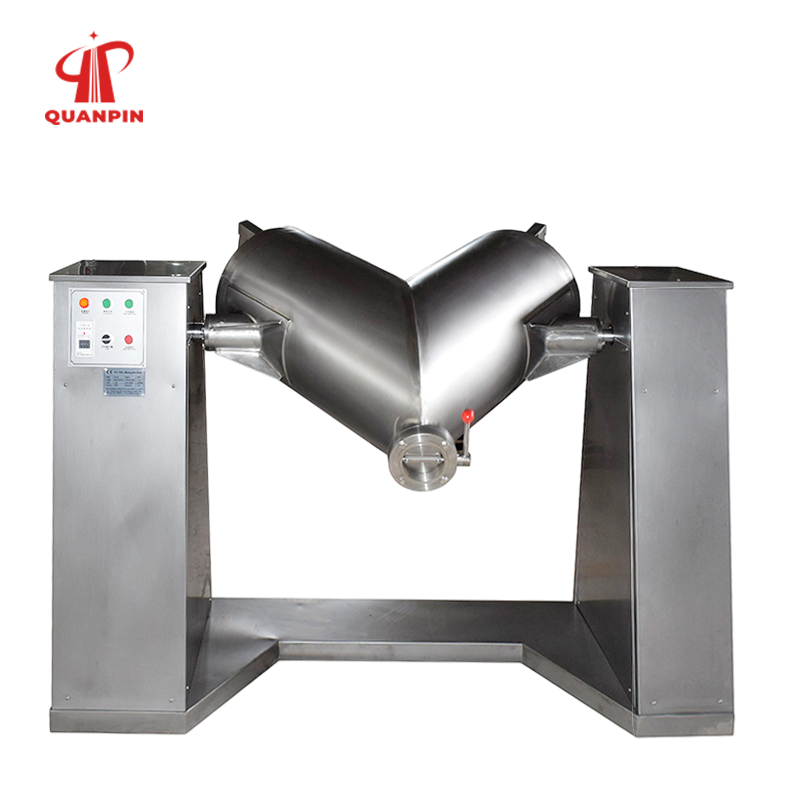
The V blender divides and recombines compatible dry ingredients as its vessel rotates.
This V mixer principle describes dry blending, not the complete set of operations that creates and assesses finished dosage units. Use product-specific development knowledge to justify the attributes being examined. See FDA ICH Q8 pharmaceutical development.
Define the Manufacturing-Stage Question
Identify whether the development question concerns the blend, its transfer or a later unit-forming process.
The intended pharmaceutical product determines what additional evidence is required beyond the mixer observation.
Five Steps for a Traceable Comparison
Define the blending objective
Define the formulation and powder-blending objective.
Identify blend-sampling boundaries
Identify the process boundary represented by blend samples.
Map subsequent manufacturing
Map the subsequent handling and dosage-unit operation.
Separate the two result records
Keep blend and dosage-unit results separately identifiable.
Interpret each tested material
Interpret each result against the material and method it actually represents.
Separate the Four Relevant Records
A blend sample concerns an identified portion of material at a stated stage.
A sample after transfer may represent another handling boundary.
A dosage unit has passed through its actual formation and any intervening operations.
An acceptance result belongs to its relevant specification and test rather than a generic statement of uniformity.
Equipment and Evidence Interfaces
Vessel and loading
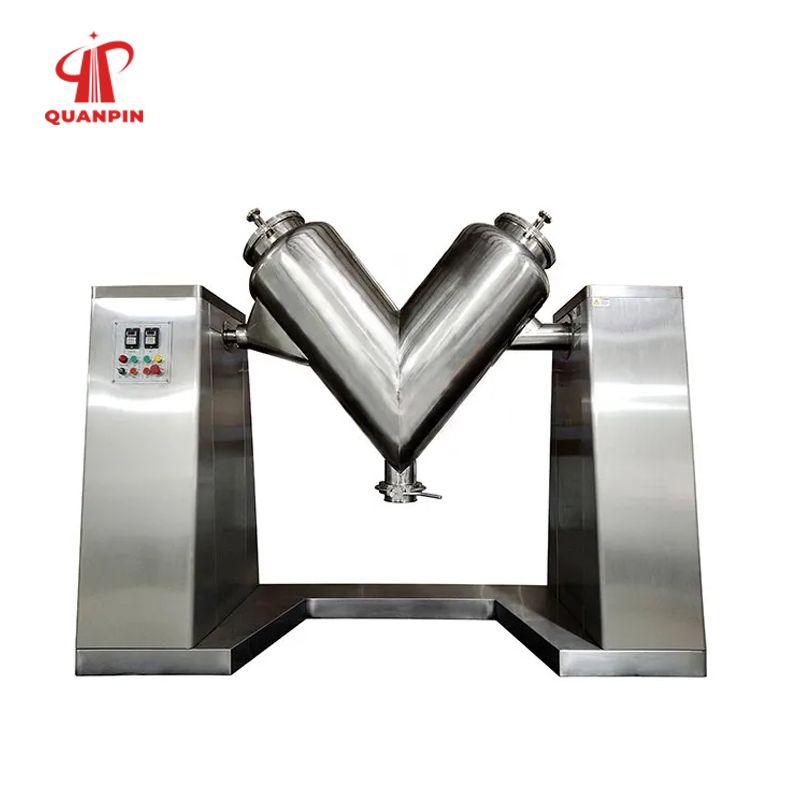
The vessel and loading arrangement define the dry-blending scope.
Rotating assembly
Rotation supplies the confirmed division-and-recombination action.
Blend sampling
The sampling arrangement determines the available blend observations.
Discharge boundary
Discharge defines where the completed material leaves the vessel.
Transfer and receiving equipment
Transfer and receiving equipment establish subsequent process interfaces.
Dosage-unit production and testing
Dosage-unit production and testing belong to their own confirmed equipment and evidence scope.
Interpret the Actual Results
Define the comparison
A V cone blender report should preserve the actual collection locations and the analytical methods used for its samples.
Do not substitute a favorable average for the individual observations needed to answer the defined blending question.
A V type mixer proposal should identify its discharge and receiving boundaries without claiming ownership of unconfirmed downstream equipment.
Preserve actual sample history
Keep any subsequent preparation, holding or transfer visible when linking the blend to later product observations.
A V powder blender result should not be labelled a finished-unit result when no such units were assessed.
Similarly, a favorable later unit sample does not reconstruct every unrecorded condition of the earlier blending operation.
Review the application evidence
Where the development team compares the stages, preserve the actual relationship between samples and manufacturing records.
An observed difference should be investigated through relevant process and analytical evidence rather than assigned to the mixer by assumption.
The pharmaceutical quality process determines the justified acceptance methods and decisions at each stage.
Benefits and Limits of the Review
Separating the boundaries can prevent an equipment enquiry from making an unsupported finished-product claim.
It also clarifies which supplier interfaces and customer manufacturing activities need further definition. A development comparison should not be presented as complete validation of an untested production process. See FDA process validation guidance.
This distinction does not prescribe a universal sampling plan or dosage-unit acceptance limit.
Those requirements depend on the actual formulation, intended product and applicable technical and quality assessment.
Identify the Material and Method
Record the formulation and the mixing configuration used.
Identify where the blend samples were collected. Assess relevant quality risks using the actual material and process context. See FDA ICH Q9 quality risk management.
Records, Handling and Safe Access
Preserve the analytical methods and results for those samples.
Describe the actual downstream transfer and unit-forming route.
Keep finished-unit observations identifiable to their own samples and methods.
State which stages were not included in the development evidence. Interpret measurements through process understanding rather than treating an isolated instrument reading as product acceptance. See FDA process analytical technology framework.
Blend sampling and discharge must follow the installed equipment’s approved access and operating procedures.
An attempt to link manufacturing stages does not authorize unsafe sampling from either the mixer or downstream equipment.
Provide QUANPIN with the Application Scope
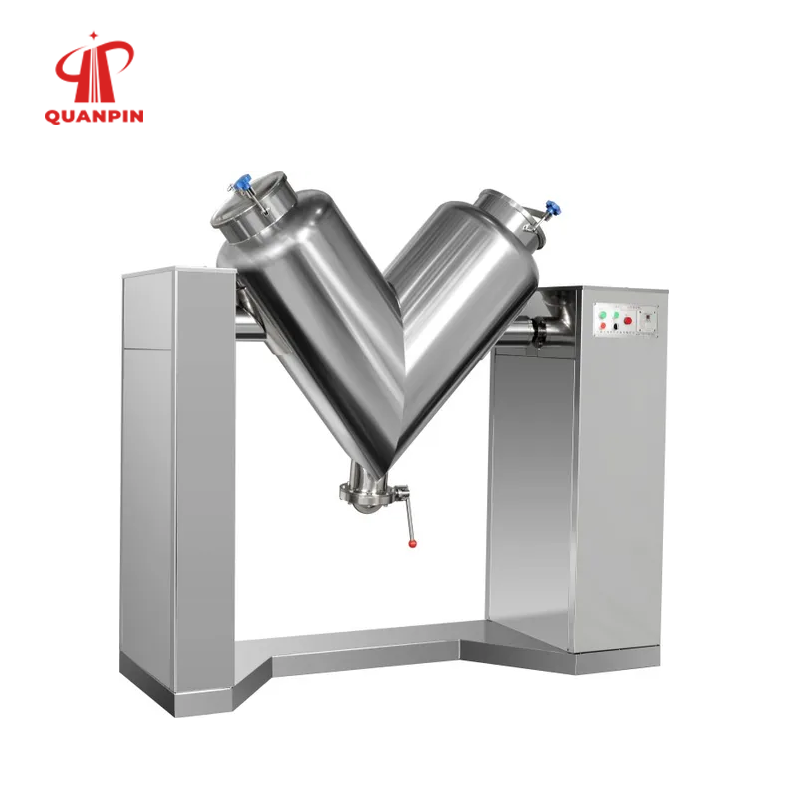
Provide QUANPIN with the dry-blending requirement and confirmed receiving process.
State which later dosage-unit operations are customer processes and which physical interfaces require equipment review.
Preserve the Evidence and Its Limits
Retain separate blend and dosage-unit evidence with the records linking the actual stages.
Use the connection to frame further questions rather than collapse distinct results into one unqualified uniformity claim. Retain knowledge and manage adopted process changes through the pharmaceutical quality system. See FDA ICH Q10 pharmaceutical quality system.
Frequently Asked Questions
Are blend and dosage-unit results the same evidence?
A blend observation and a dosage-unit result concern different materials or manufacturing stages.
Does a powder sample prove finished-unit quality?
A powder sample does not independently establish every later tablet or capsule requirement.
Does later processing belong to the result history?
Downstream handling and unit formation remain part of the history relevant to a later result.
Does the mixer proposal include finished-unit equipment?
A V-type mixer proposal does not automatically include the equipment used to create finished units.
Does this article prescribe a dosage-unit limit?
No universal dosage-unit test or acceptance limit is established by this article.
What should the blending enquiry distinguish?
The enquiry should distinguish the blending objective, sample boundaries, receiving route and the finished-product evidence question.
Discuss the Confirmed Application with QUANPIN
Discuss the confirmed ZKH(V) V-Type Mixer application with QUANPIN. Use the enquiry form or the contact page to describe your project.
Email sales@qpdryer.com or stacie@qpdryer.com. Call +86 19850785582, or contact us on WhatsApp: +86 15921493205.