Spin Flash Dryer for Pigment Wet Cake: Map Feed Conditioning Before Drying
By QUANPIN
A spin flash dryer enquiry should identify the pigment wet cake actually delivered to the drying system. Upstream filtration, storage or conditioning belongs in the feed description rather than disappearing behind a generic material name.
The objective is to define the process boundary for compatible pigment duties. No unidentified cake, solvent system or powder result is assumed suitable. See the corresponding chemical industry applications.
What Material Actually Enters the Pigment Dryer?
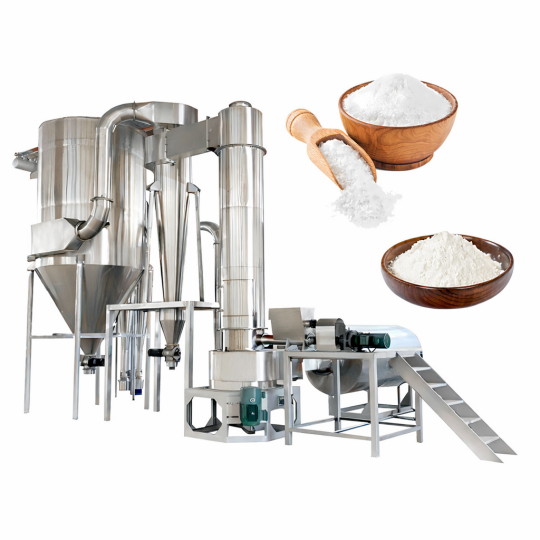
The verified rotating-flash arrangement combines feed dispersion with drying air and powder recovery.
Its proposed configuration must be reviewed against the actual wet feed and required chemical powder drying duty.
Equipment Principle and Material Requirements
Map the steps between cake formation and entry to the dryer.
Distinguish observed feed condition from measured properties and preserve the method behind each reported result.
Five Steps for the Application Review
Identify cake formation
Identify how the pigment cake is produced.
Map storage and conditioning
Describe storage and any feed-conditioning steps.
Define the feed boundary
Define the material entering the proposed dryer.
Confirm drying and recovery
Document the drying and recovery boundary.
Assess the pigment application
Assess powder properties and application requirements separately.
Four Process Boundaries to Define
A cake tested immediately after formation may differ from one held before feeding.
Record any conditioning rather than treating both samples as identical by name.
If pre-breaking or another handling stage is proposed, confirm its equipment and ownership.
Do not attribute an upstream preparation function to the dryer without evidence.
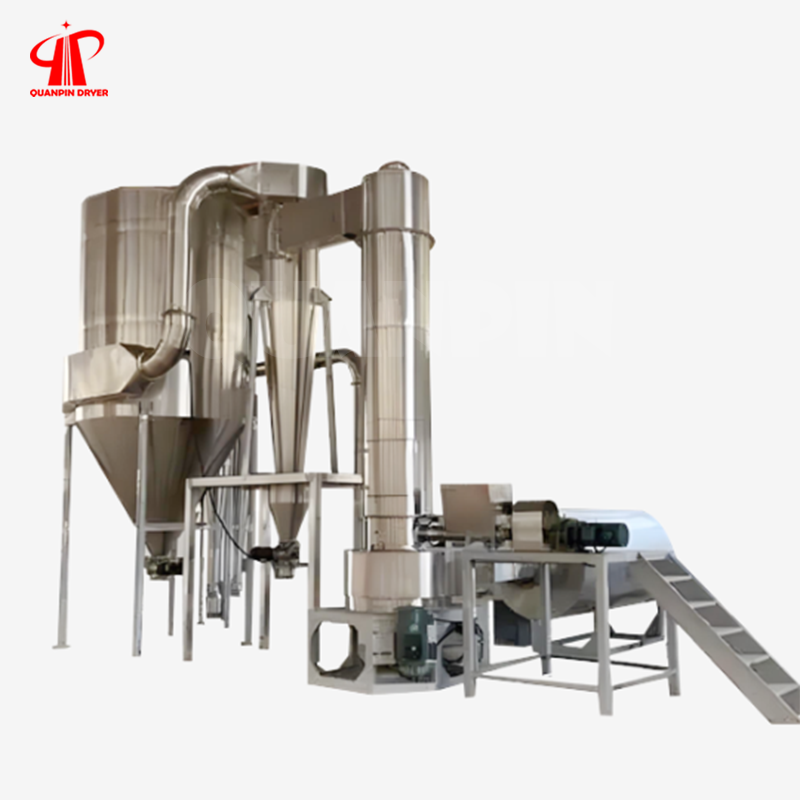
XSG Rotating Flash Dryer Components and Interfaces
Feed delivery
Feed delivery establishes the material presentation at the dryer boundary.
Dispersion assembly
The dispersion assembly provides the reviewed breakup action within the proposed system.
Drying air
Drying air belongs to the actual thermal and airflow arrangement.
Powder recovery
Powder recovery defines the collected fractions and accepted product boundary.
Upstream conditioning
Upstream conditioning equipment needs separate confirmation where included.
Sampling and safe access
Sampling and safe access must address the actual pigment and installation.
Comparison Choices and Application Evidence
Define the Reference Basis
Powder drying performance should be interpreted against the wet feed actually tested.
Define the moisture method and basis rather than comparing unexplained percentages.
Keep observations about free liquid, lumps or handling distinct from laboratory measurements.
Keep the Comparison Interpretable
Specify the pigment application and relevant powder tests.
A low moisture result does not establish color or dispersion performance.
Industrial drying equipment should be selected with the material’s actual hazard information.
Assess the Receiving Process
Review chemical identity and classification before defining the operating duty.
Separate workplace extraction and site-emissions requirements from product-quality acceptance.
The complete feed map helps identify which party must resolve an upstream handling question.
Industry Application and Acceptance
A clear boundary can prevent a dryer enquiry from hiding an unresolved feed-preparation duty. Review the actual material hazard information before defining the pigment duty. See HSE safety data sheets.
It also makes representative sampling and quotation comparisons more meaningful. Keep chemical classification, labels and material safety information appropriate to the actual pigment. See HSE chemical classification resources.
Compare spin flash dryer price proposals on the same conditioning, drying and recovery scope. Identify potentially applicable site requirements independently from powder-quality acceptance. See EPA chemical-production emissions resources.
A confirmed feed description is necessary but does not itself guarantee the final product result.
Benefits and Practical Limits
Assess relevant fire, explosion and exposure hazards using the actual material and process.
A safety data sheet supports a risk assessment; it is not the completed assessment for the installation.
Six Details for the Equipment Enquiry
Supply the pigment identity and available safety information.
Describe cake formation and storage.
List any conditioning or pre-breaking operations.
Provide measured feed properties with their methods.
Define powder recovery and application tests.
Assign ownership of upstream, drying and site-control interfaces. Workplace extraction needs its own design and assessment. See HSE local exhaust ventilation resources.
Safety and Operating Requirements
Send QUANPIN the feed map and actual material information.
Request a configuration review that separates confirmed dryer functions from additional preparation equipment. Assess relevant combustible-dust hazards using the actual pigment and process. See HSE dangerous substances and combustible dust guidance.
Prepare Your Equipment Enquiry
Representative evidence starts with a representative feed boundary.
Retain the complete preparation history with the trial configuration and powder results.
Frequently Asked Questions
Does the pigment name fully describe the cake?
A pigment name does not fully describe the delivered wet cake.
Is conditioning automatically included?
Upstream conditioning is not automatically part of the dryer supply.
Are handling observations moisture measurements?
Observed handling and measured moisture are different evidence.
Does low moisture prove pigment performance?
Low powder moisture does not prove every pigment application property.
Does product acceptance establish site compliance?
Product acceptance does not establish workplace or emissions compliance.
What belongs in the pigment-feed enquiry?
The enquiry should identify feed history, safety information and the required product boundary.
Discuss Your XSG Rotating Flash Dryer Application with QUANPIN
Discuss the confirmed XSG Rotating Flash Dryer application with QUANPIN. Use the enquiry form or the contact page to describe your project.
Email sales@qpdryer.com or stacie@qpdryer.com. Call +86 19850785582, or contact us on WhatsApp: +86 15921493205.
For process evaluation, consider the spin flash dryer manufacturer for rapid contact between suitable dispersed feed and drying air; and the hollow paddle dryer for indirect heat transfer to suitable wet solids. Confirm suitability with representative material, the required product properties and the proposed process conditions.