WFJ Air Classifier Mill for Pharmaceutical Excipients: Review the Classifier-Reject Return Boundary
By QUANPIN
A classifier return stream remains part of the milling process until its role is explicitly defined. It should not automatically be counted as rejected finished pharmaceutical powder.
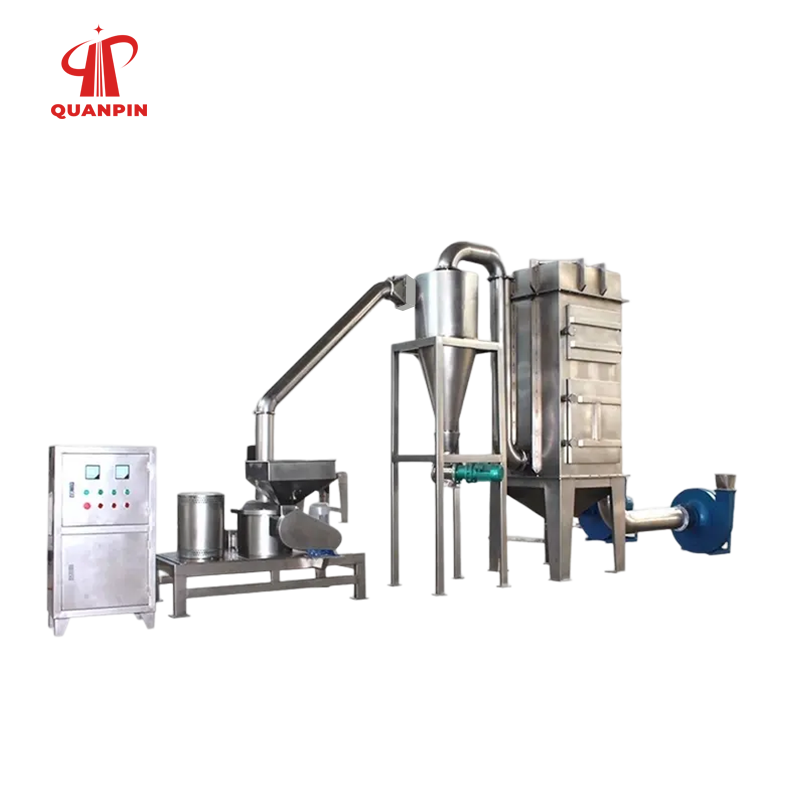
The WFJ air classifier mill combines grinding and classification for compatible dry, sufficiently brittle feeds. See pharmaceutical applications.
Which Streams Cross the Milling-System Boundary?
Grinding reduces the incoming particles, while classification separates the finer fraction within the reviewed arrangement.
Oversize returns for further size reduction. That internal movement differs from an externally collected product fraction. Use product-specific development knowledge to justify the attributes being examined. See FDA ICH Q8 pharmaceutical development.
Grinding and Classifier Return
An air classifying mill enquiry should describe which material crosses the system boundary and which material circulates inside it.
A process drawing helps distinguish these streams without assigning an unverified numerical recycle ratio.
Five Steps to Define the Return Boundary
Identify the excipient
Identify the excipient and its required powder attributes before interpreting the classifier arrangement.
Draw the material paths
Draw the incoming feed, internal return and accepted-product collection paths separately.
Confirm physical connections
Confirm which physical connections belong to the proposed WFJ configuration.
Define safe sampling
Define where representative samples can safely be collected.
Test accepted powder
Compare the resulting powder with the agreed analytical and formulation requirements.
Separate Circulation from Collected Material
An internal return is a process stream, rather than necessarily a separate container of rejected product.
A collected off-specification fraction requires its own identity and disposition; it should not disappear into an unexplained return description.
A shutdown deposit is also distinct from material circulating during normal operation.
Keep these three categories separate when reconciling the actual trial material.
WFJ Process Components
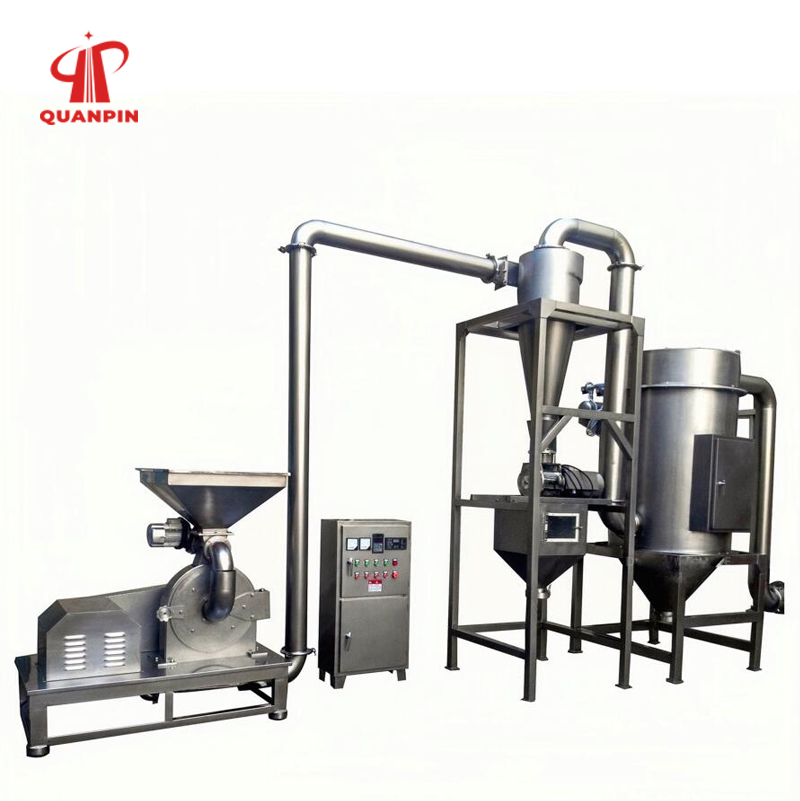
Incoming feed
The feed arrangement establishes the external material entering the milling system.
Grinding chamber
The grinding chamber supplies mechanical size reduction for the confirmed feed.
Classification
The classifier establishes a separation within the connected process.
Oversize return
The return path brings oversize back for further treatment in the verified WFJ principle.
Powder collection
Powder collection defines the external product fractions available for evaluation.
Controls and access
The actual controls and safe-access arrangements determine how the configured process can be observed.
Interpreting the Trial Material Balance
Define the observation interval
An ACM mill study should state whether its material balance covers a complete run or another defined interval.
Do not add internally circulating material repeatedly to the total feed quantity.
Identify the external collected fractions that are included in the reported output.
Avoid double counting
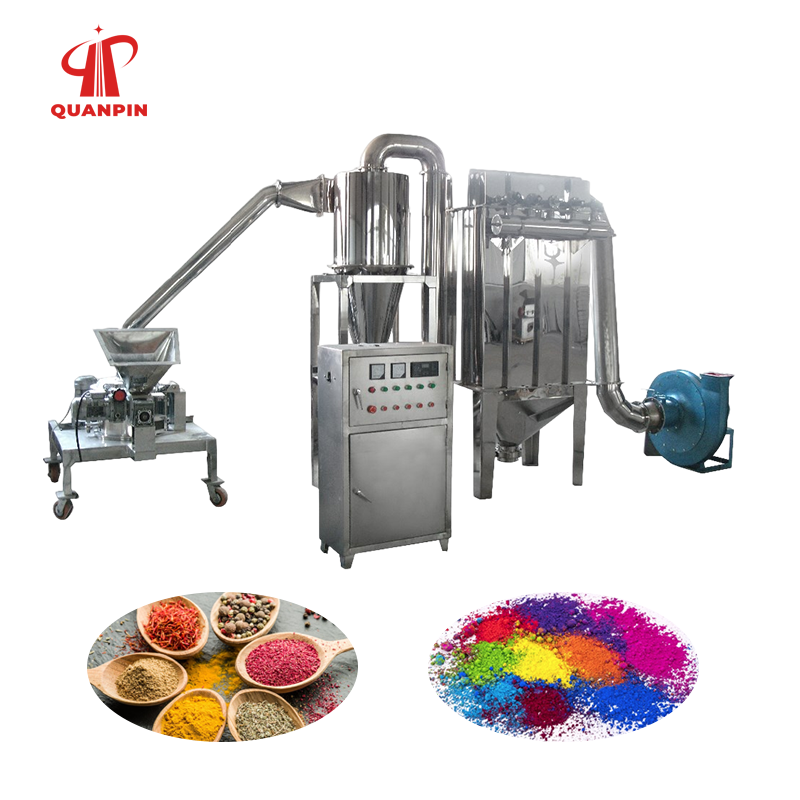
If a proposed drawing shows a separate discharge, ask the supplier to confirm its function instead of inferring it.
A fine powder grinder trial needs an identifiable incoming material and an agreed product test.
The particle-size method should remain traceable when comparing the original feed with collected powder.
Identify collected fractions
A classifier action does not independently establish pharmaceutical release acceptance.
The return arrangement should be interpreted together with the grinding and collection configuration.
An industrial fine powder grinder quotation must distinguish verified functions from optional connections or unconfirmed accessories.
Benefits and Limits of the Return-Stream Map
Mapping the return can prevent an internal process stream from being mistaken for a saleable or rejected output.
It also clarifies which observations are available from the actual configuration. A development comparison should not be presented as complete validation of an untested production process. See FDA process validation guidance.
The map does not establish the quantity circulating at every operating condition.
Any numerical performance statement needs appropriate evidence for the actual material and tested arrangement.
Document the Feed and Milling Configuration
Preserve the feed identity and the configuration used during the study.
Record the beginning and end of the stated collection interval. Assess relevant quality risks using the actual material and process context. See FDA ICH Q9 quality risk management.
Trial Records and Safe Access
Identify each collected container and its material status.
Keep deposits, samples and other removed material separately recorded where relevant.
Use analytical results to describe collected powder rather than extrapolating from a process label.
Document subsequent changes through the applicable pharmaceutical quality process. Interpret measurements through process understanding rather than treating an isolated instrument reading as product acceptance. See FDA process analytical technology framework.
Accessing a moving or energized milling system is not an acceptable way to obtain a return sample.
Review dust, exposure and safe isolation requirements for the real excipient and installed equipment.
Provide QUANPIN with the Material-Flow Scope
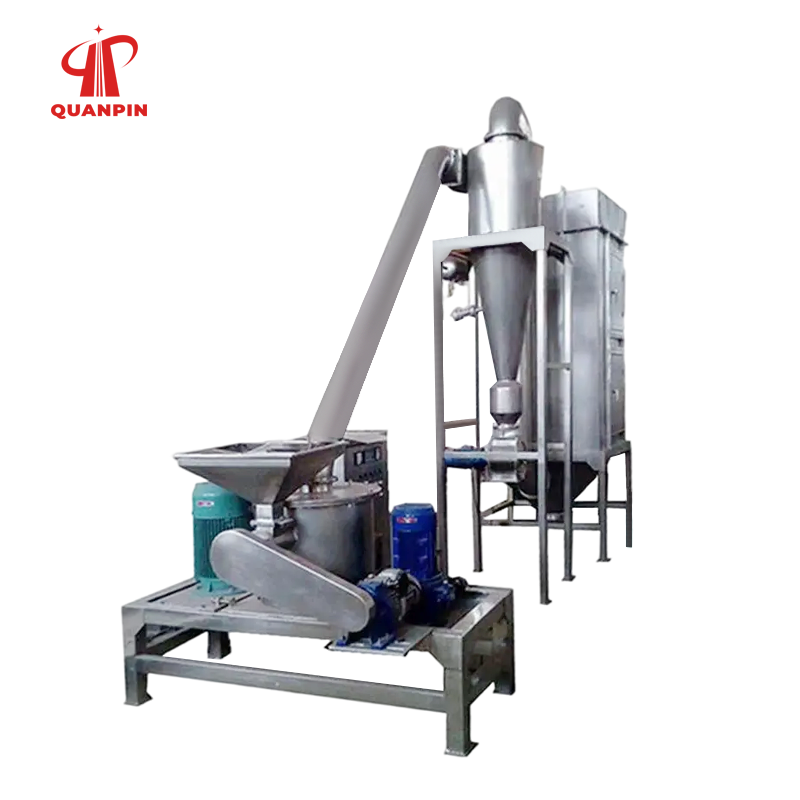
Send QUANPIN the proposed material-flow drawing and identify the connections that remain uncertain.
Include the actual feed description, required powder attributes and intended sampling boundary.
Preserve the Trial Evidence and Its Limits
A useful configuration review should identify the return path without promising a universal product result.
Retain the agreed drawing and actual trial records together so that later comparisons use the same process boundary. Retain knowledge and manage adopted process changes through the pharmaceutical quality system. See FDA ICH Q10 pharmaceutical quality system.
Frequently Asked Questions
Is internal return rejected product?
Internal return material is not automatically a separately rejected finished product.
Should circulating material be counted as new feed?
Counting circulating particles repeatedly would not describe the external feed added to the system.
How should collected off-specification powder be identified?
A collected off-specification fraction needs its own identification and approved disposition.
Does the WFJ principle define a universal return quantity?
The WFJ principle describes oversize returning for further grinding, but it does not provide a universal circulation quantity.
Can a return sample always be collected?
Safe sampling access must be confirmed for the actual configuration; it cannot be assumed from a generic diagram.
What should the enquiry include?
The enquiry should identify the feed, return path, product-collection boundary and required pharmaceutical powder tests.
Discuss Your WFJ Application with QUANPIN
Discuss the confirmed WFJ Air Classifier Mill application with QUANPIN. Use the enquiry form or the contact page to describe your project.
Email sales@qpdryer.com or stacie@qpdryer.com. Call +86 19850785582, or contact us on WhatsApp: +86 15921493205.