High Shear Granulator for Pharmaceutical Tablets: Compare Wet Granulation with Direct Compression
By QUANPIN
A high shear granulator belongs to a binder-assisted granulation route; direct compression omits that wet-granule preparation stage. Choose between routes through formulation development rather than assuming that additional equipment always improves a tablet process.
The GHL is reviewed here for compatible pharmaceutical wet granulation. The discussion does not establish the suitability of any unidentified active ingredient or tablet formulation. See the corresponding pharmaceutical industry applications.
Which Manufacturing Route Does the Formulation Support?
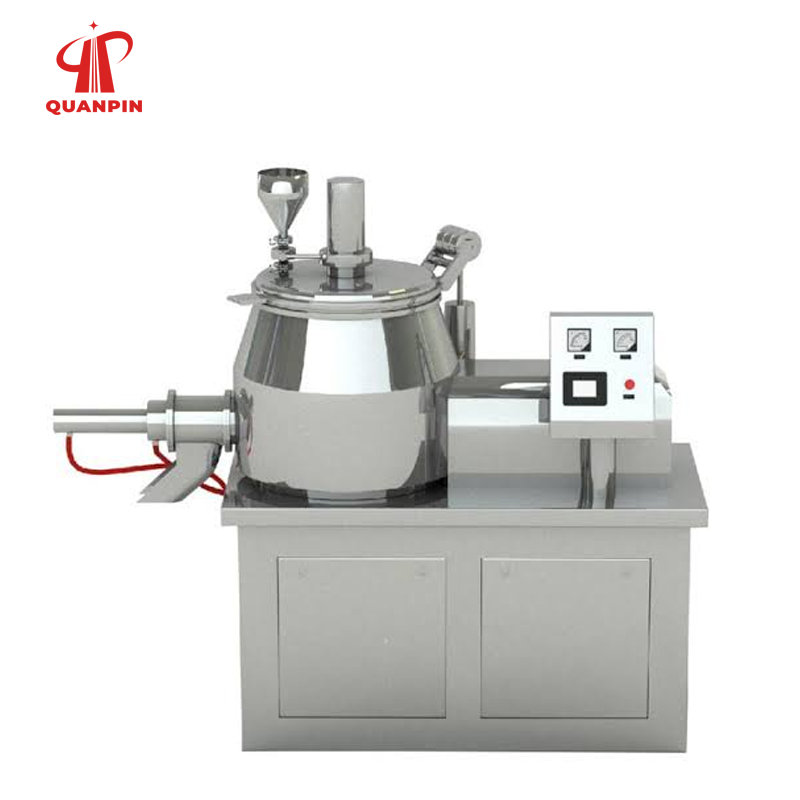
In the rapid mixer granulator, an impeller distributes binder through the powder and a chopper breaks wet agglomerates.
These actions prepare wet granules. They do not replace the downstream drying, sizing or tableting functions that must be separately defined. Use product-specific development knowledge to justify the attributes being examined. See FDA ICH Q8 pharmaceutical development.
Equipment Principle and Material Requirements
A direct-compression comparison needs the actual formulation and relevant powder and tablet attributes.
A wet-route comparison also needs a defined binder, liquid exposure and downstream treatment.
Five Steps for the Application Review
Define tablet attributes
Identify the formulation and intended tablet attributes.
Describe direct compression
Describe the proposed direct-compression route.
Define the wet route
Define the binder-assisted granulation alternative.
Compare relevant evidence
Evaluate the complete routes using relevant tests.
Select the supported route
Select the route supported by formulation evidence.
Four Process Boundaries to Define
Do not compare a dried granule from one route with an untreated powder using only a single convenient measurement.
Define which attributes matter before choosing a preferred process.
Liquid and subsequent thermal exposure require compatibility review for the actual formulation.
Keep unconfirmed stability or performance claims out of the equipment selection.
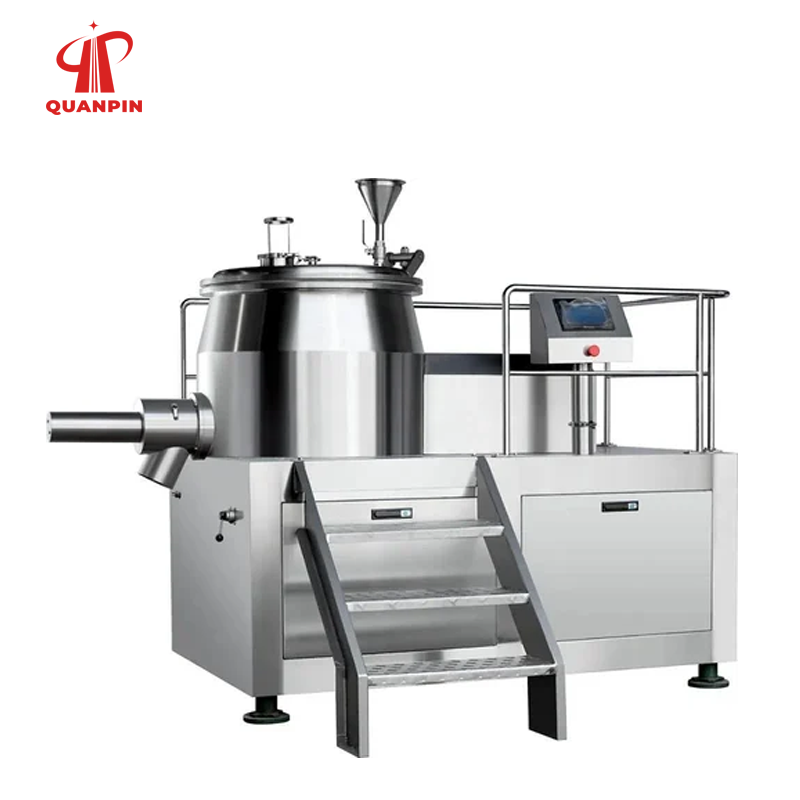
GHL High-Speed Mixing Granulator Components and Interfaces
Granulation vessel
The granulation vessel provides the working volume for the confirmed duty.
Impeller
The impeller distributes material and binder within the reviewed arrangement.
Chopper
The chopper acts on wet agglomerates during granule formation.
Binder delivery
Binder delivery requires its own confirmed preparation and addition scope.
Wet discharge
Wet discharge establishes the interface with subsequent processing.
Downstream equipment
Drying and sizing equipment remain separate parts of a complete route unless explicitly included.
Comparison Choices and Application Evidence
Define the Reference Basis
A high shear mixer granulator should be considered when binder-assisted processing addresses a documented formulation need.
That decision does not follow solely from whether a powder looks difficult to handle.
A high shear wet granulator enquiry should define the actual liquid and material compatibility.
Keep the Comparison Interpretable
Direct compression remains a distinct route to assess against its own formulation evidence.
Compare the required downstream operations rather than the granulation vessel alone.
For wet granulation, identify which granule properties are measured after drying and sizing.
Assess the Receiving Process
For the direct route, preserve the actual powder preparation and handling conditions.
Neither a favorable granule appearance nor a machine trial proves finished-tablet acceptance.
The pharmaceutical development team must justify the selected manufacturing route and its acceptance requirements.
Industry Application and Acceptance
A route comparison can clarify what problem granulation is intended to solve.
It can also identify additional operations, cleaning and installation interfaces introduced by a wet process. A development comparison should not be presented as complete validation of an untested production process. See FDA process validation guidance.
This article does not assign a universal advantage to either route.
The equipment scope should follow the selected formulation route.
Benefits and Practical Limits
Review binder hazards, compatibility and safe equipment operation before trials.
A development study does not establish complete production validation or an untested product’s stability. Assess relevant quality risks using the actual material and process context. See FDA ICH Q9 quality risk management.
Six Details for the Equipment Enquiry
Provide the formulation and relevant material properties.
State the intended tablet attributes and analytical methods.
Describe the direct and wet-route alternatives.
Identify the binder and downstream treatment scope. Interpret measurements through process understanding rather than treating an isolated instrument reading as product acceptance. See FDA process analytical technology framework.
List cleaning, containment and installation requirements.
Separate confirmed facts from development questions.
Safety and Operating Requirements
Ask QUANPIN to review the proposed granulation duty and process interfaces.
Keep the route-selection rationale with the formulation evidence rather than an equipment-family claim.
Prepare Your Equipment Enquiry
The selected equipment should support a justified manufacturing route.
Retain the actual trial configuration and limitations when moving to further development. Retain knowledge and manage adopted process changes through the pharmaceutical quality system. See FDA ICH Q10 pharmaceutical quality system.
Frequently Asked Questions
Are direct compression and wet granulation the same route?
Direct compression and wet granulation are different manufacturing routes.
Does GHL include the entire downstream line?
A GHL wet-granulation stage does not include every downstream operation automatically.
Does binder compatibility require formulation review?
A binder must be reviewed for the actual formulation.
Can granule appearance establish tablet acceptance?
Granule appearance alone cannot establish tablet acceptance.
Does a development study replace validation?
A development comparison does not replace production validation.
What should the granulation enquiry explain?
The enquiry should explain the formulation problem and the complete proposed route.
Discuss Your GHL High-Speed Mixing Granulator Application with QUANPIN
Discuss the confirmed GHL High-Speed Mixing Granulator application with QUANPIN. Use the enquiry form or the contact page to describe your project.
Email sales@qpdryer.com or stacie@qpdryer.com. Call +86 19850785582, or contact us on WhatsApp: +86 15921493205.