KZL Granulator-Crusher: Record Incoming Granule Temperature Before Comparing Pharmaceutical Sizing
By QUANPIN
A pharmaceutical sizing comparison should preserve relevant incoming granule condition. Record temperature information when the approved study requires it rather than assuming identical feed conditions. The High-Speed Granulator/Crusher duty must distinguish lump breakup from primary particle grinding.
This KZL review separates the material condition before sizing from the granule attributes measured afterward. See the matching pharmaceutical industry applications.
Which Incoming Condition Does the Sizing Record Establish?
Define what temperature information is needed and how it is obtained.
Do not convert a subjective warm or cool observation into a measured value. Use product-specific development knowledge to justify the attributes being examined. See FDA ICH Q8 pharmaceutical development.
Equipment Principle and Material Requirements
The KZL sizes suitable material through its specified working assembly and screen. Treat granulation and size reduction as different material transformations when defining the process route.
The actual feed condition belongs in the application review; it is not established by a nominal machine setting.
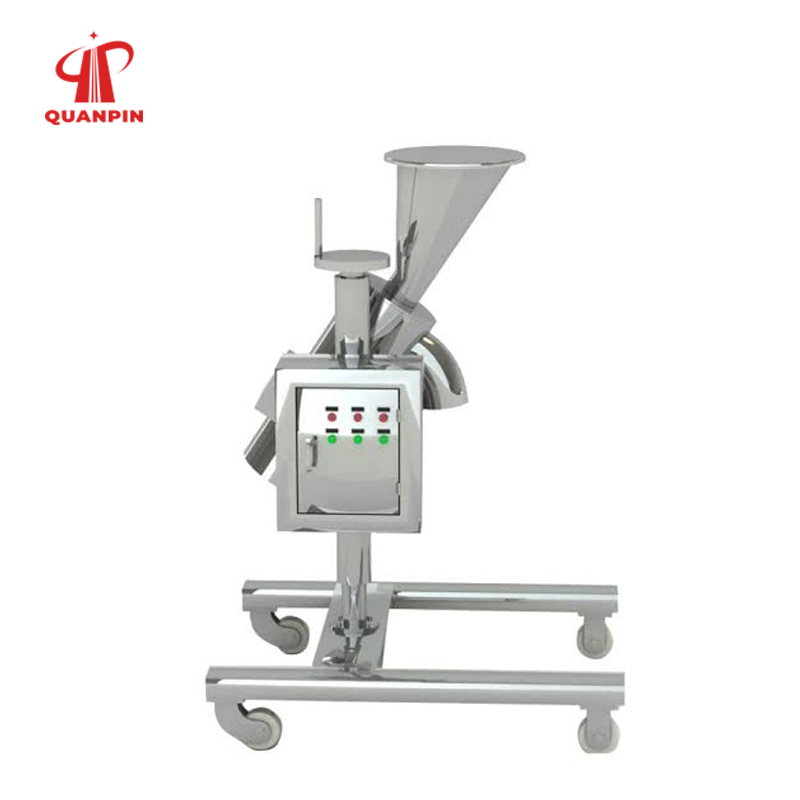
Five Steps for the Application Study
Identify the granule lot and preceding process history
Identify the granule lot and preceding process history.
Define the relevant incoming-condition measurement through the approved study
Define the relevant incoming-condition measurement through the approved study.
Record transfer and hold events associated with the feed
Record transfer and hold events associated with the feed.
Collect traceable sized-product samples at the agreed boundary
Collect traceable sized-product samples at the agreed boundary.
Review the material and sizing records before attributing a difference to equipment
Review the material and sizing records before attributing a difference to equipment.
Four Process Boundaries to Record
The upstream boundary identifies preceding treatment within the study.
The feed boundary describes granules entering the sizing arrangement.
The measurement boundary states the actual temperature method or observation.
The acceptance boundary defines the required sized-product tests.
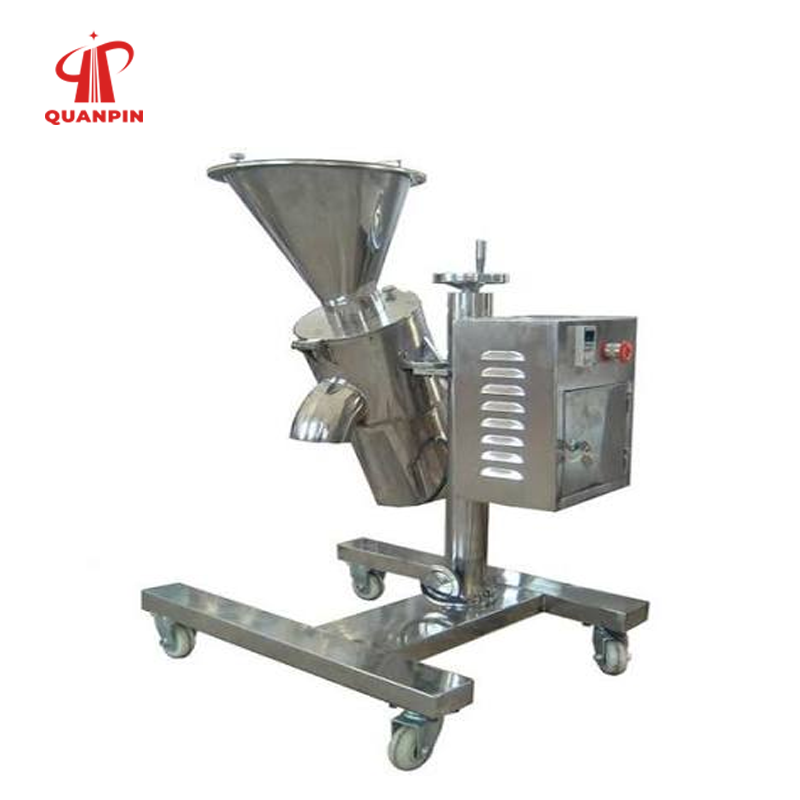
KZL Granulator-Crusher Components and Interfaces
Fitted screen
Confirm the fitted screen specification and condition. Compare the proposed granulation equipment by the actual feed and final distribution it must handle.
Working assembly
Identify the working assembly from the equipment documents.
Granule feeding
Describe the granule feeding and transfer arrangement.
Condition measurement
Record temperature-measurement equipment when used by the study.
Product collection
Keep collection containers and sample identities connected.
Cleaning and access
Preserve relevant cleaning and safe-access requirements.
Comparison Choices and Process Interfaces
Define the Reference Basis
Establish a reference granule lot and material history. Upstream granule drying history can change the strength of the material entering sizing.
Retain the feed-condition record associated with its sizing run.
Keep measurement method and location identifiable.
Keep the Comparison Interpretable
When feed condition changes, record it independently of screen or operating changes.
Do not assume a repeated equipment indication means identical incoming material.
State missing measurements as limitations rather than retrospective measured facts.
Assess the Receiving Process
Assess sized material using the required analytical methods. Subsequent granule blending needs a stated particle basis so different fractions are not hidden during pooling.
Identify downstream transfer included in the product boundary.
Use the evidence to frame the next controlled comparison.
Industry Application and Acceptance
Pharmaceutical granules require product-specific acceptance criteria.
Feed-condition information can support development without replacing size or other required tests. A development comparison should not be presented as complete validation of an untested production process. See FDA process validation guidance.
The quality review should preserve the reasons for adopted changes.
A single comparison does not establish a universal temperature requirement.
Benefits and Practical Limits
A recorded feed condition can make a sizing investigation more interpretable. Keep dry blending acceptance separate from the quality of the material leaving the sizing chamber.
It cannot prove that temperature caused every observed distribution difference. Assess relevant quality risks using the actual material and process context. See FDA ICH Q9 quality risk management.
Six Details That Affect the Result
Identify the actual granule lot.
Record the measurement method and relevant location.
Preserve the timing of transfer and hold events.
Distinguish measured information from subjective observations. Interpret measurements through process understanding rather than treating an isolated instrument reading as product acceptance. See FDA process analytical technology framework.
Keep equipment configuration changes separately identifiable.
Retain individual product results with their input histories.
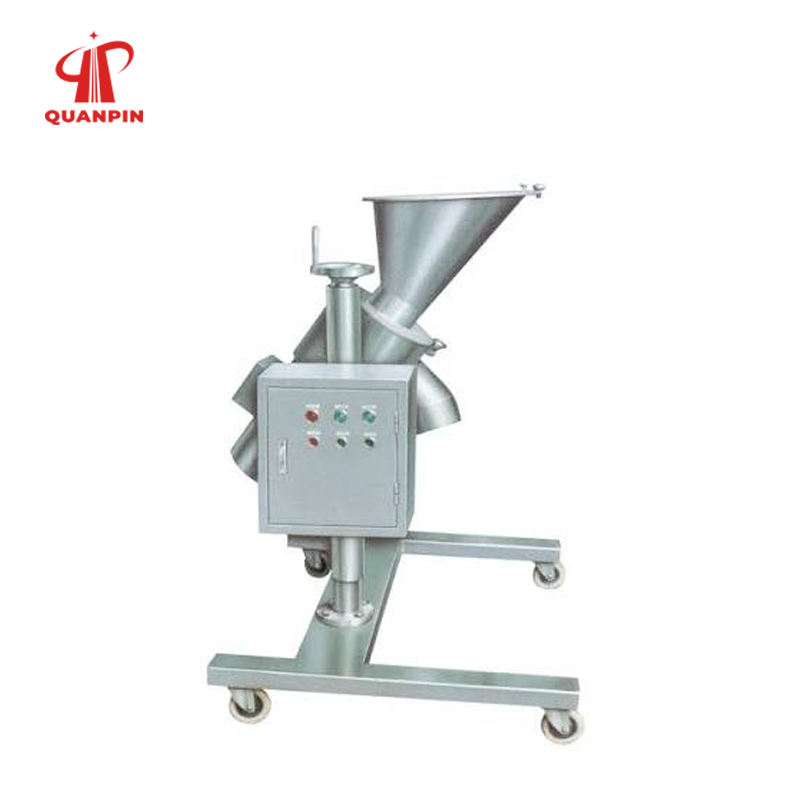
Safety and Operating Requirements
Condition measurement and sampling require approved safe access.
Handling and cleaning controls should suit the pharmaceutical granules and installed equipment.
Prepare Your Equipment Enquiry
Send QUANPIN the sizing duty and relevant upstream material information. The receiving powder mixer and its transfer path can introduce a later handling change.
Include the proposed feed-condition record and required granule tests. Place the sizing duty explicitly within the granulation line for solid dosage form, with clear input and output acceptance. Retain knowledge and manage adopted process changes through the pharmaceutical quality system. See FDA ICH Q10 pharmaceutical quality system.
Frequently Asked Questions
Is a warm impression a measured temperature?
A warm-feeling powder is not a quantified temperature result.
Is one measurement method suitable for every duty?
The appropriate measurement depends on the approved study and actual material.
Does upstream handling need identification?
Upstream and transfer history should remain traceable when relevant.
Does a distribution difference establish one cause?
An output difference does not establish a single cause by itself.
Is a universal feed-temperature limit prescribed?
No universal feed-temperature limit is prescribed here.
What condition evidence should the enquiry include?
A useful enquiry connects the incoming granules with the required sizing evidence.
Discuss Your KZL Granulator-Crusher Application with QUANPIN
Discuss your application with KZL Granulator-Crusher specialists at QUANPIN. Use the enquiry below or our contact page.
Email sales@quanpinmachine.com or stacie@quanpinmachine.com. Call +86 19850785582, or contact us on WhatsApp: +86 15921493205.