V-Type Mixer: Identify Ingredient Sieve Preparation Before a Low-Dose Pharmaceutical Blend
By QUANPIN
A low-dose blending study should identify any ingredient sieving performed before charging. Preserve that preparation history when evaluating a V-type mixer trial.
The objective is to distinguish the actual formulation input from a general ingredient name. See the matching pharmaceutical industry applications.
What Preparation Did the Ingredients Actually Receive?
Record whether sieving occurs and identify the approved preparation procedure.
Do not assume that a screened ingredient and an untreated lot are equivalent inputs. Use product-specific development knowledge to justify the attributes being examined. See FDA ICH Q8 pharmaceutical development.
Equipment Principle and Material Requirements
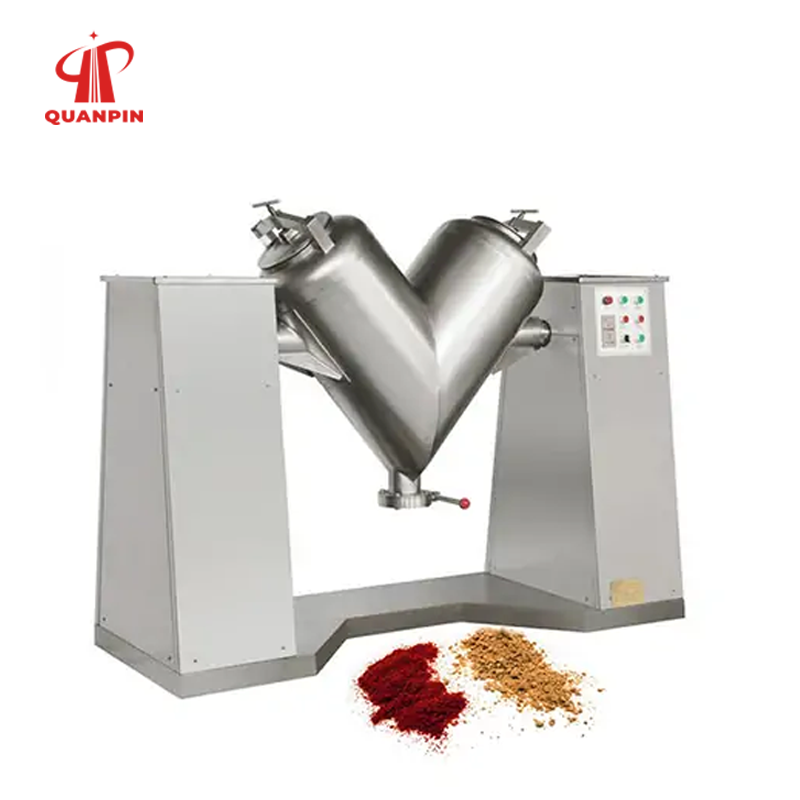
A V-type mixer moves the powder charge by rotating its vessel. Describe the intended low-shear tumble mixing duty using the actual ingredient properties and working load.
Ingredient preparation is a separate stage whose equipment and responsibilities need confirmation.
Five Steps for the Application Study
Identify the formulation and actual ingredient lots
Identify the formulation and actual ingredient lots.
Record any approved sieve preparation and its documented configuration
Record any approved sieve preparation and its documented configuration.
Preserve the prepared material's identity through loading
Preserve the prepared material’s identity through loading.
Collect blend samples using the justified pharmaceutical procedure
Collect blend samples using the justified pharmaceutical procedure.
Interpret composition evidence alongside the actual input preparation
Interpret composition evidence alongside the actual input preparation.
Four Process Boundaries to Record
The ingredient boundary identifies materials before preparation.
The preparation boundary records sieving actually performed.
The loading boundary connects prepared ingredients with the charge.
The acceptance boundary defines blend and delivered-product requirements.
V-Type Mixer Components and Interfaces
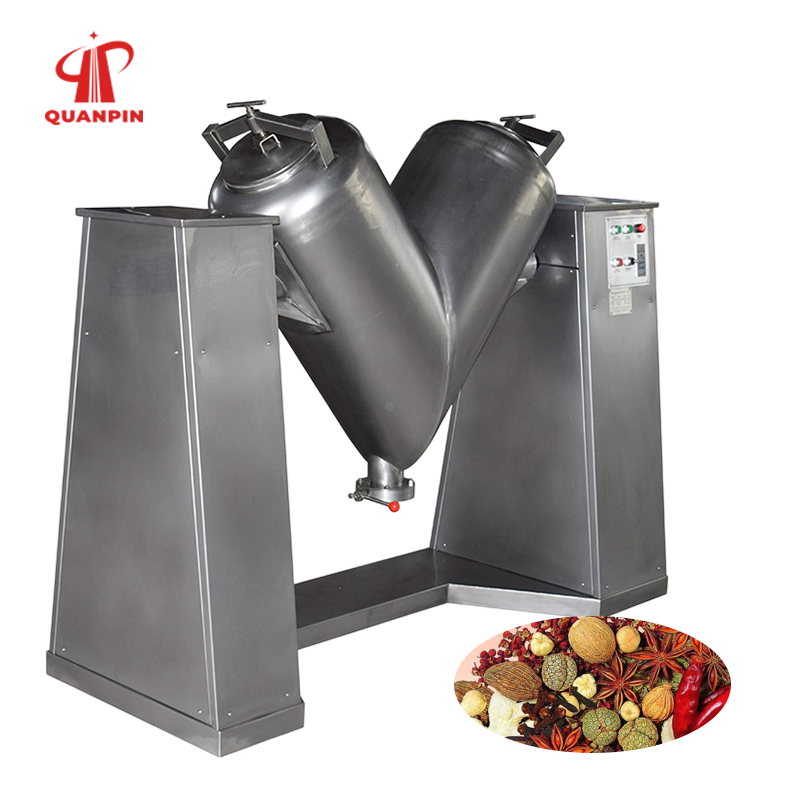
V-shaped vessel
Confirm the V-shaped vessel configuration. The dry blending comparison needs both the sample method and the discharge boundary.
Ingredient loading
Identify loading connections used for prepared ingredients. Choose the powder blender arrangement for the documented material rather than a generic vessel-volume claim.
Rotation sequence
Record the actual rotation and operating sequence.
Preparation equipment
Describe ingredient-preparation equipment separately where outside supply.
Discharge interface
Review discharge and receiving interfaces within scope.
Linked process records
Keep preparation, operating and sample records linked.
Comparison Choices and Process Interfaces
Define the Reference Basis
Establish a reference recipe using identified material and preparation. Review the powder mixer interfaces, including charging, sampling and receiving equipment.
Retain the sieve information required by the approved procedure.
Keep composition criteria separate from assumptions about appearance.
Keep the Comparison Interpretable
When preparation changes, record it independently of mixer settings.
Avoid treating combined material and operating changes as a single-variable comparison.
Describe missing preparation information explicitly in the study conclusion.
Assess the Receiving Process
Assess the powder at the agreed sampling boundary. Define how Mixing Equipment connects to the preceding preparation and the next operation.
Preserve any subsequent transfer history included in the study.
Use unresolved evidence to define the next justified blending comparison.
Industry Application and Acceptance
Low-dose pharmaceutical blends need an appropriate sampling and analytical approach.
Ingredient preparation supports process understanding but does not prove uniformity. A development comparison should not be presented as complete validation of an untested production process. See FDA process validation guidance.
Material use and deviations belong in the site’s quality review.
Development findings should not be generalized to every formulation.
Benefits and Practical Limits
A preparation record can clarify which powders actually entered the vessel. Selection of industrial mixers should include cleaning access and the intended campaign sequence.
It cannot establish a universal sieve choice or guarantee an acceptable blend. Assess relevant quality risks using the actual material and process context. See FDA ICH Q9 quality risk management.
Six Details That Affect the Result
Identify the actual ingredient lots.
State whether the preparation step was performed.
Preserve the documented sieve configuration where applicable.
Record prepared-material handling before charging. Interpret measurements through process understanding rather than treating an isolated instrument reading as product acceptance. See FDA process analytical technology framework.
Keep minor-ingredient addition history visible.
Retain individual composition results and sample identities.
Safety and Operating Requirements
Preparation and charging need suitable powder-exposure controls.
Use approved equipment, cleaning and safe-access procedures throughout the route.
Prepare Your Equipment Enquiry
Provide QUANPIN with the formulation and actual ingredient-preparation route. Specify the evidence required for uniform powder mixing; a favorable visual impression is insufficient where composition matters.
State the sampling boundary and blend evidence required by the study. Compare mixing machines at the same material and acceptance boundary before scaling the working batch. Retain knowledge and manage adopted process changes through the pharmaceutical quality system. See FDA ICH Q10 pharmaceutical quality system.
Frequently Asked Questions
Should unperformed sieving be assumed?
Sieving should be recorded when performed rather than assumed for every ingredient.
Are prepared and untreated powders necessarily equivalent?
Prepared and untreated material should not automatically be called identical inputs.
Is preparation equipment included with every mixer?
Preparation equipment is not necessarily included with a mixer.
Can appearance replace composition testing?
Appearance cannot replace pharmaceutical composition testing.
Is there a universal sieve or mixing duration?
No universal sieve or mixing duration is established here.
What prepared-material information is needed?
A useful enquiry explains the prepared powders and desired blend together.
Discuss Your V-Type Mixer Application with QUANPIN
Discuss your application with V-Type Mixer specialists at QUANPIN. Use the enquiry below or our contact page.
Email sales@quanpinmachine.com or stacie@quanpinmachine.com. Call +86 19850785582, or contact us on WhatsApp: +86 15921493205.