WFJ Air Classifier Mill: Identify the Reporting Basis of a Pharmaceutical Particle-Size Distribution
By QUANPIN
Two pharmaceutical particle-size reports should not be treated as directly comparable until their reporting bases are understood. A similar-looking distribution graph can describe different underlying measurements.
For a WFJ air classifier mill study, preserve the stated basis of each result before using a change in the graph as evidence of changed powder. See pharmaceutical applications.
Equipment Principle and Evidence Limits
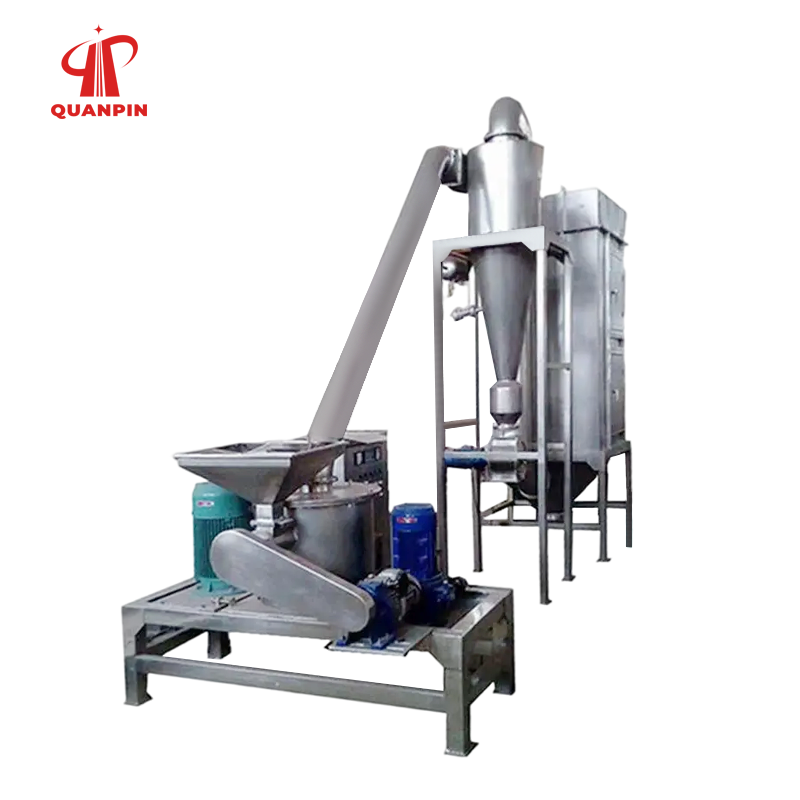
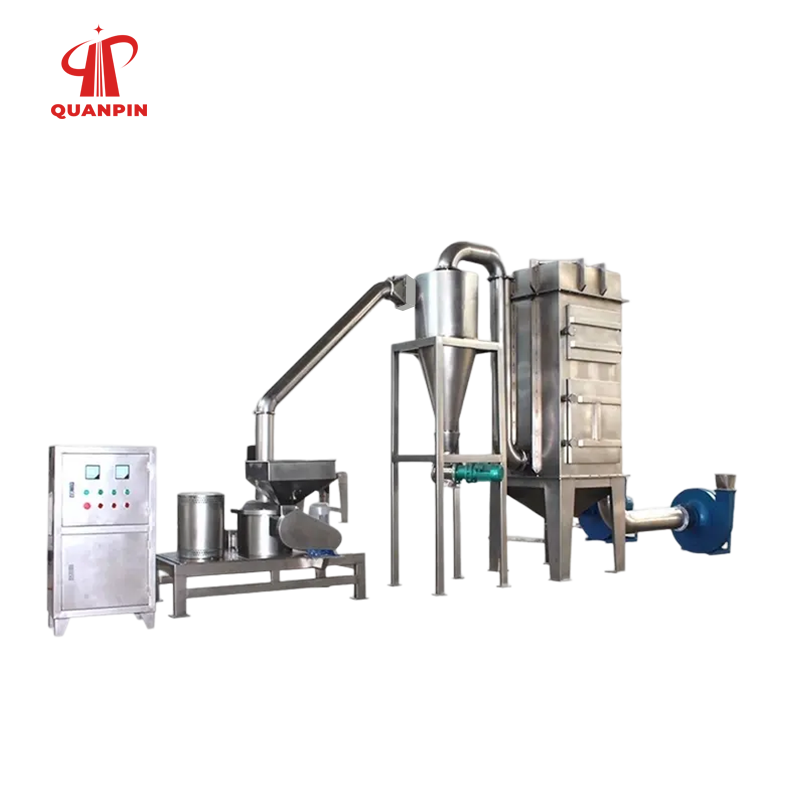
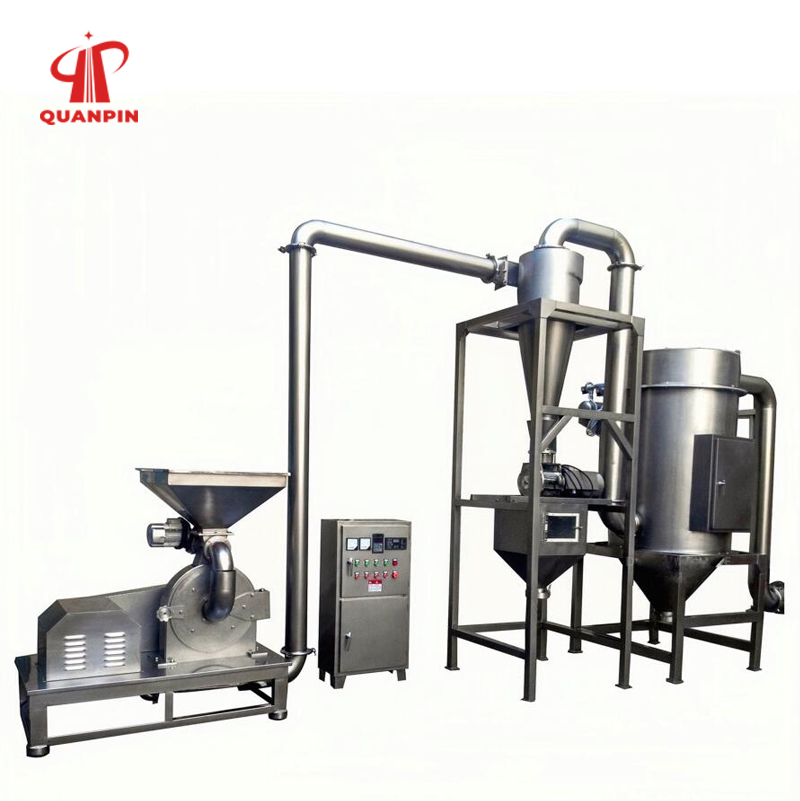
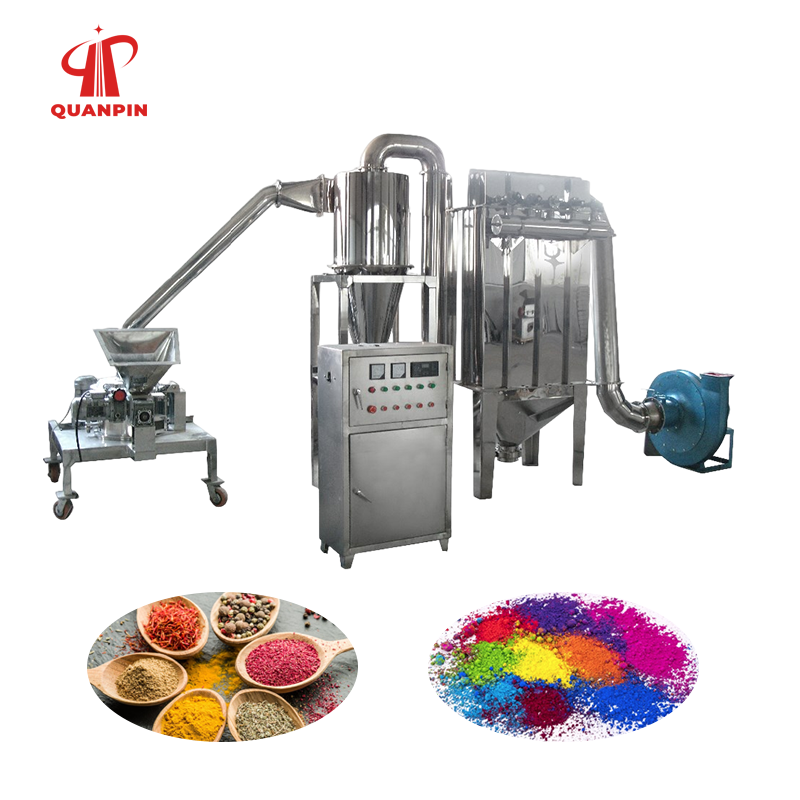
The WFJ combines grinding and classification for compatible dry feeds; finer material reaches collection while oversize returns for further reduction.
That air classifying mill principle does not identify which laboratory method or reporting basis the customer uses to assess a collected sample. Use product-specific development knowledge to justify the attributes being examined. See FDA ICH Q8 pharmaceutical development.
Define the Analytical Reporting Question
Ask whether the report describes a stated number, volume or other supported basis and keep the method’s terminology intact.
An unexplained descriptor should remain a question for the analytical reviewer rather than receive an assumed interpretation.
Five Steps for a Traceable Comparison
Identify the material and specimen
Identify the actual excipient and collected sample.
Preserve the complete report
Preserve the full report and its stated method.
Locate the reported basis
Locate the distribution basis and reported descriptors.
Review comparability
Compare only results whose relationship is understood.
State the supported conclusion
State which equipment conclusion the available evidence supports.
Separate the Four Relevant Records
A method identifies how the measurement was obtained.
A reporting basis identifies how the distribution is expressed within that method’s description.
A size descriptor summarises part of the reported distribution rather than all sample properties.
The collected powder identity connects that analytical result to the actual milling trial.
Equipment and Evidence Interfaces
Incoming feed
Feed identity establishes which prepared material entered the reviewed system.
Grinding arrangement
The grinding arrangement supplies the size-reduction operation under assessment.
Classification
Classification contributes the separation within the configured WFJ process.
Powder collection
Collection determines which external powder fraction supplied the specimen.
Laboratory preparation and measurement
Laboratory preparation and measurement establish the analytical observation.
Reporting basis and descriptors
The report’s basis and descriptors determine what the displayed distribution represents.
Interpret the Actual Results
Define the reference
An ACM mill comparison should begin with the complete reports rather than cropped graphs missing method information.
If one report has an unclear basis, preserve that gap before interpreting a difference as classifier performance.
Do not relabel a distribution simply because another report uses more familiar terminology.
Preserve the actual records
A fine powder grinder sample needs its analytical preparation identified as well as its collection boundary.
Different preparation or measurement methods can create a separate comparability question from the equipment operation.
A report expressed on one stated basis should not be converted to another through an undocumented assumption. For pharmaceutical specifications, identify the applicable analytical procedure and acceptance basis through the relevant product-development and quality review. FDA ICH Q6A addresses specifications and test procedures for new drug substances and products; it does not establish a universal conversion between particle-distribution reporting bases. See FDA ICH Q6A pharmaceutical specifications and test procedures.
Review the application evidence
Any proposed conversion needs an appropriate analytical justification for the actual method and material.
An industrial fine powder grinder enquiry should define the required result in the customer’s confirmed reporting terms.
The supplier can review that defined duty without claiming that every distribution graph proves an equivalent product.
Benefits and Limits of the Review
Clear reporting information can reveal that an apparent milling difference is not yet a like-for-like analytical comparison.
It can also prevent a summary descriptor from being expanded into unsupported conclusions about the complete powder. A development comparison should not be presented as complete validation of an untested production process. See FDA process validation guidance.
This review provides no universal conversion between number-based, volume-based or other reported distributions.
The appropriate analytical interpretation depends on the actual method, preparation and product question.
Identify the Material and Method
Record the excipient identity and the milling configuration used.
Identify the collected fraction represented by each specimen. Assess relevant quality risks using the actual material and process context. See FDA ICH Q9 quality risk management.
Records, Handling and Safe Access
Preserve the complete method and specimen-preparation description.
State the reporting basis using the original report’s terminology.
Retain descriptors with their units and definitions rather than transcribing unexplained values alone.
Document unresolved method or reporting differences before extending a process conclusion.
Powder collection must follow the installed equipment’s approved sampling and safe-access procedures.
An analytical information gap does not justify obtaining another sample through unsafe access to operating equipment.
Provide QUANPIN with the Application Scope
Send QUANPIN the actual reports and the required pharmaceutical powder attributes.
Ask for review of the milling duty while keeping unresolved analytical questions identifiable for the relevant laboratory.
Preserve the Evidence and Its Limits
Retain the agreed interpretation with the sample identities and original reports.
Further development should address the actual evidence gap rather than reproduce a familiar graph without its basis. Retain knowledge and manage adopted process changes through the pharmaceutical quality system. See FDA ICH Q10 pharmaceutical quality system.
Frequently Asked Questions
Does a graph alone establish comparability?
A distribution graph does not establish comparability when its reporting basis is unknown.
Which reporting terminology should be preserved?
The original method and report terminology should remain identifiable.
Does one descriptor establish every sample attribute?
A summary size descriptor does not describe every relevant sample attribute.
Can an undocumented conversion be called a measurement?
An undocumented conversion should not be presented as another measured distribution.
Does one result establish every milling condition?
A favorable powder result remains evidence for its actual material, configuration and analytical scope.
What should the report-basis enquiry include?
The enquiry should include complete reports, preparation, distribution basis, collected-powder identity and the defined product requirement.
Discuss the Confirmed Application with QUANPIN
Discuss the confirmed WFJ Air Classifier Mill application with QUANPIN. Use the enquiry form or the contact page to describe your project.
Email sales@qpdryer.com or stacie@qpdryer.com. Call +86 19850785582, or contact us on WhatsApp: +86 15921493205.