V Blender Trials: Record Ingredient Loading Profiles before Comparing Mixing Results
By QUANPIN
A V blender trial should record where ingredients entered the vessel, not simply which ingredients were charged. Loading arrangement can influence the interpretation of a mixing comparison.
For pharmaceutical powder development, describe the starting distribution before discussing the final samples. A repeated recipe does not necessarily mean a repeated initial material arrangement. Explore our pharmaceutical processing applications.
What Was the Initial Ingredient Distribution?
Consider two trials using the same powders but different charging sequences. If their initial distributions differ, attributing every later difference to mixing time can be misleading.
The V mixer enquiry should explain how the intended charging method will be reproduced. This makes the proposed trial easier to evaluate and repeat.
Treat Charging as a Trial Condition
Identify the formulation revision and material lots. Preserve changes in powder condition that could otherwise be mistaken for an effect of the loading arrangement.
Describe which charging opening is used and how each ingredient enters. Avoid an instruction that depends entirely on an operator remembering the previous trial.
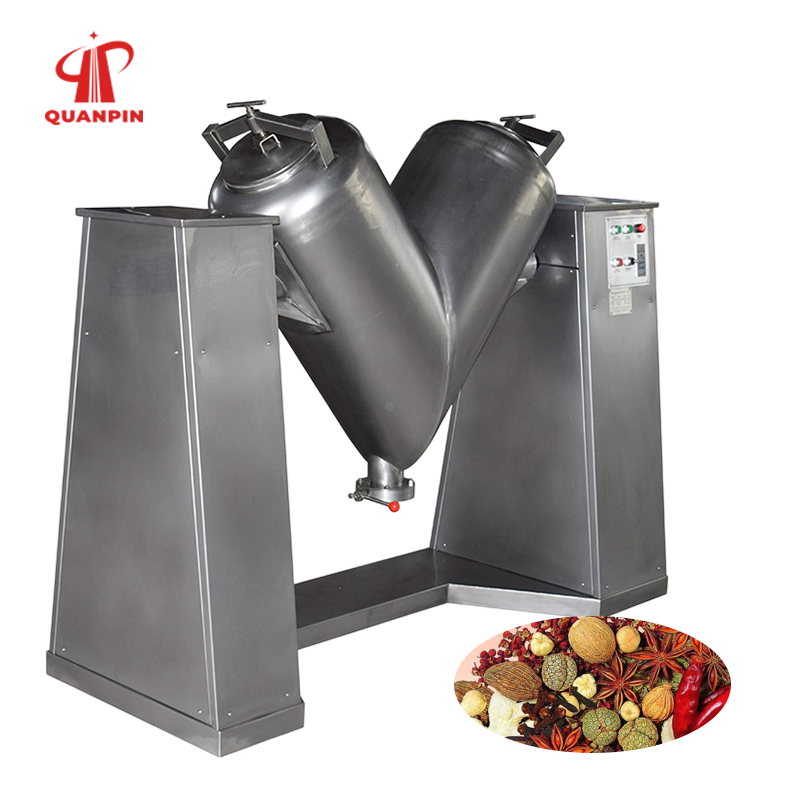
Five Details to Record before Mixing
Formulation identity
Record ingredient order and any planned preblend. A preblend changes the starting material presented to the main blending operation and deserves its own identity.
Charging opening
Describe any deliberate placement pattern within the vessel. Use an understandable drawing or written description instead of an unexplained local abbreviation.
Ingredient order
Identify the point where charging is complete. Material held in a scoop or transfer container should not silently become a later addition.
Placement pattern
A V cone blender trial begins with an actual distribution of ingredients. The initial arrangement is part of the process description rather than background paperwork.
Charging completion
Research on granular mixing distinguishes loading profiles because material initially placed in different regions can follow different routes during tumbling.
Interpret Loading Research within Its Scope
The practical implication is to keep the charging method visible. It does not establish one universally superior arrangement for every pharmaceutical formulation.
Free-flowing model granules and cohesive pharmaceutical powders can behave differently. Preserve the limits of a published comparison when translating it into trial questions.
Do not replace formulation evidence with a familiar mixer shape. Equipment geometry alone does not demonstrate that the intended ingredients will mix adequately.
Before charging, identify the receiving equipment and its approved state. Keep the material plan separate from the equipment-readiness decision.
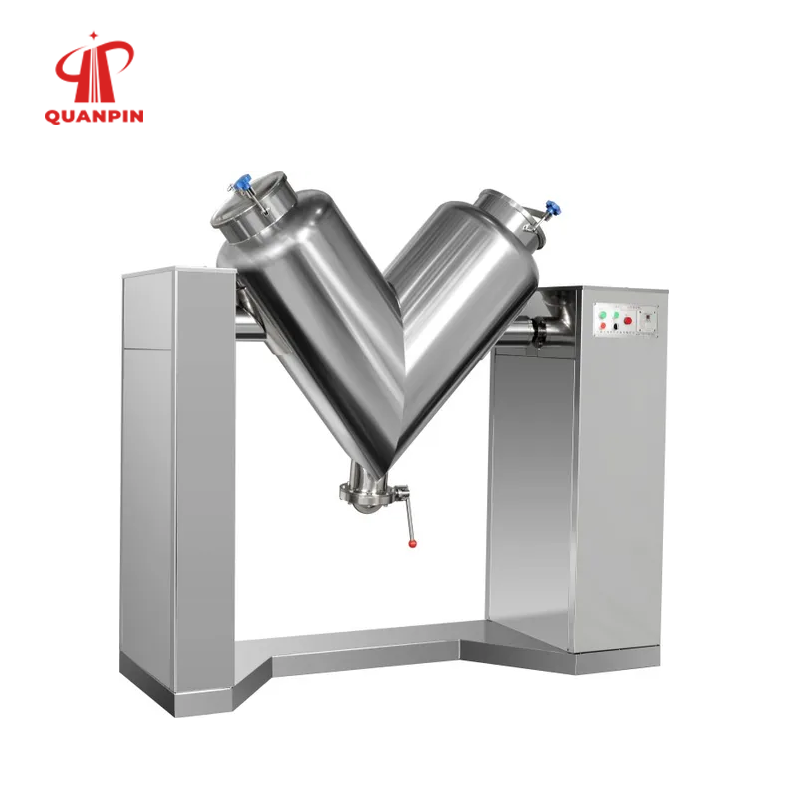
Follow Six Charging and Evaluation Stages
Equipment readiness
During ingredient transfer, record the actual order and relevant observations. An interruption or partial addition should remain visible in the trial history.
Actual transfer sequence
At the final addition, identify whether any material remains outside the vessel. Record the disposition rather than assume the nominal recipe entered completely.
Remaining material
During blending, preserve the actual sequence and observations within the agreed trial scope. A planned instruction and its execution are different records.
Blending record
At sampling, identify the location and method used. A result becomes harder to interpret when the sample’s relationship to the initial distribution is unknown.
Sample identity
At discharge, retain the trial identity through the receiving route. Avoid combining different experimental conditions before the intended evaluation is complete.
Discharge collection
A V type mixer comparison should define which factors change and which remain consistent. This gives an observed difference an interpretable context.
Design an Interpretable Comparison
Define changed factors
Where feasible, compare charging arrangements with the same formulation and analytical approach. Changing several major factors together complicates a simple explanation.
Record deviations before reviewing the preferred result. Otherwise a successful-looking batch may receive a clearer history than an unsuccessful one.
A V powder blender enquiry should describe practical charging constraints. Access, transfer containers and ingredient handling can determine whether a proposed arrangement is reproducible.
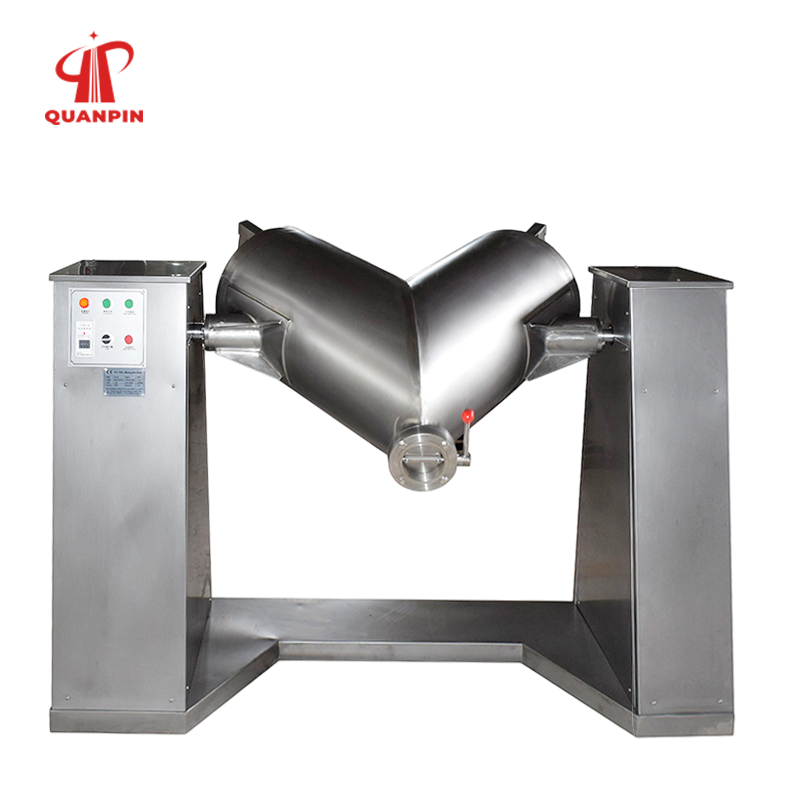
Describe access constraints
Ask QUANPIN to confirm the supplied charging and discharge interfaces. Do not assume a photograph establishes every opening, accessory or installation condition.
Where an intermediate preblend is proposed, identify who prepares it and how it is transferred. Its condition becomes an input to the main trial.
The pharmaceutical V blender model does not establish a validated charging sequence. The operation needs evidence appropriate to the formulation and intended duty.
Assign trial responsibilities
Separate trial observations from equipment specifications. A result obtained with one material combination should not become a general uniformity guarantee.
Confirm which party records charging details during supplier trials. Responsibilities should remain clear when analytical testing occurs elsewhere.
Use a practical charging description that another trained operator can follow. Vague directions such as loading normally do not define a reproducible experimental condition.
Research Context for the Loading Plan
Original research used compartment modelling to study a V-blender and illustrate effects of vessel loading and sampling. Its defined model conditions support recording a reproducible starting description without replacing representative formulation trials. See original research on compartment models and V-blender loading.
Research on V-blender segregation patterns examined how material distributions changed under different conditions. Its model materials do not establish a pharmaceutical acceptance criterion. See research on V-blender capacity and fill-level segregation.
Another experimental V-blender study described distinct segregation patterns in mixtures differing in particle size. This cautions against assuming all visible movement produces uniformity. See experimental research on V-blender segregation patterns.
Experimental and simulation work on granular blending examined particle and blender size. Its findings support keeping material characteristics visible in the trial description. See experimental and DEM research on particle and blender size.
Respond to Deviations in Actual Charging
These papers provide context for study design. Their numerical settings and conclusions should not be copied as operating parameters for QUANPIN equipment or another formulation.
If ingredient order differs from the plan, record the actual sequence. Determine whether the trial still answers the intended comparison before interpreting its results.
Use Models within Explicit Boundaries
If a preblend is omitted or altered, preserve that change as a distinct input. Do not describe the trial as an exact repeat.
If material remains in a transfer container, identify the observation. A missing portion can affect interpretation independently of the blender’s mechanical operation.
If sample results disagree, retain their locations and methods. Combining them prematurely can remove information relevant to the material distribution being investigated.
Validated computational research has compared granular motion in tumbling geometries with experiments. Such work illustrates the value of explicit model conditions and experimental boundaries. See experimentally validated simulations of tumbling blenders.
A model can help formulate questions without replacing representative testing. Its assumptions need to match the question before the prediction becomes useful.
Keep unsuccessful charging trials in the development account. Their actual conditions may explain why a proposed method needs refinement.
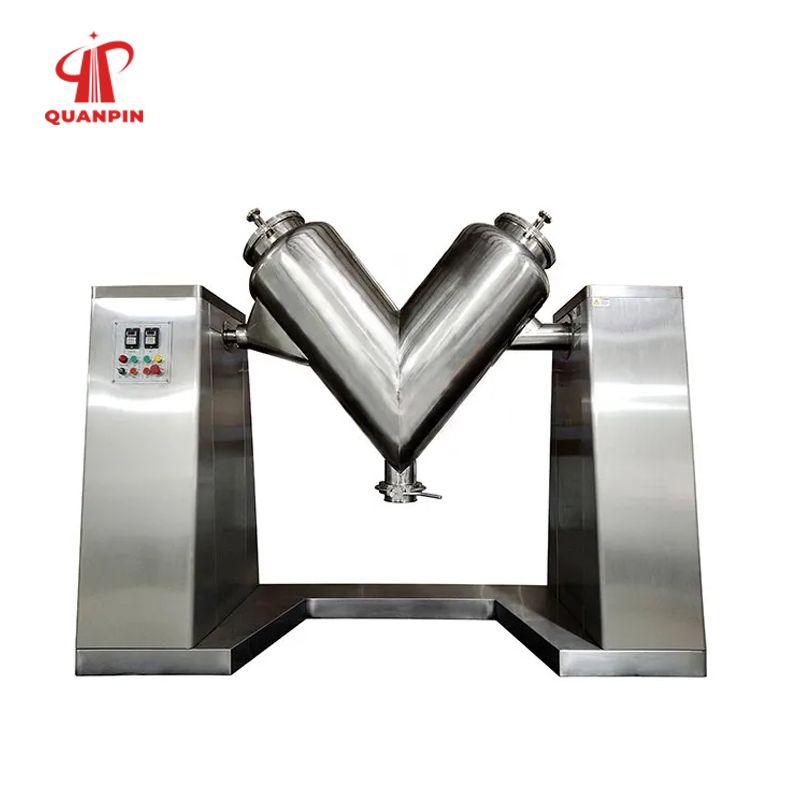
Prepare the V-Mixer Trial Enquiry
Send QUANPIN the ingredient forms, proposed charging order and intended trial questions. Include any practical limitations on access or transfer handling.
Ask for confirmation of the supplied interfaces and trial responsibilities. Keep pharmaceutical acceptance decisions within the operation’s development and quality arrangements.
Retain the Starting Condition with Results
A useful proposal connects the equipment duty with a reproducible charging description. It should identify remaining test questions rather than imply unsupported outcomes.
Retain the loading description beside the analytical results. Later reviewers should be able to understand the starting condition as well as the reported final samples.
Frequently Asked Questions
Does loading order belong in the record?
Yes. Charging order and initial placement describe the starting distribution and can be relevant when comparing experimental mixing outcomes.
Is one loading pattern always best?
Not universally. Published model-material results cannot establish one preferred charging arrangement for every pharmaceutical powder or equipment configuration.
What if charging is interrupted?
Record the actual sequence, the interruption and the affected material. Assess whether the resulting trial remains comparable to the planned condition.
Can model granules represent every powder?
Not necessarily. Particle characteristics, formulation behaviour and test conditions determine how useful that comparison is for the intended pharmaceutical application.
What should accompany a sample result?
Identify the sample location, method and trial condition. A laboratory result without those links provides less information about the investigated distribution.
What information supports a trial?
Provide the formulation family, powder condition, charging plan, transfer arrangements and intended tests so equipment interfaces and trial responsibilities can be agreed clearly.
Discuss Your V-Blender Charging Plan with QUANPIN
Discuss the QUANPIN V series mixer with QUANPIN. Use our contact page or the enquiry form to explain the intended food application.
Email sales@qpdryer.com or stacie@qpdryer.com. Call +86 19850785582, or contact us on WhatsApp: +86 15921493205.