Rice Flour Milling: Separate Powder Fineness from Gluten-Free Evidence
By QUANPIN
A rice powder can meet its particle-size specification while its gluten-related documentation remains incomplete. These are different acceptance questions: the mill produces a physical powder specification, while ingredient identity and appropriate product evidence support any subsequent claim.
For food manufacturers assessing an air classifier mill, separating those questions prevents a misleading purchase specification. Ask QUANPIN to evaluate the actual feed and required powder characteristics, and retain responsibility for product release within the food-quality system.
Define the Rice Powder Duty
Start with the intended rice ingredient, incoming lot identification and the downstream food application. Record whether the project involves rice alone or several cereals; the equipment photograph cannot establish the composition of materials previously or subsequently processed.
An air classifying mill enquiry should therefore describe both the physical processing duty and the information needed by the quality team. Neither a finer-looking powder nor a classifier setting is a substitute for gluten-specific evidence.
Select an Equipment Reference
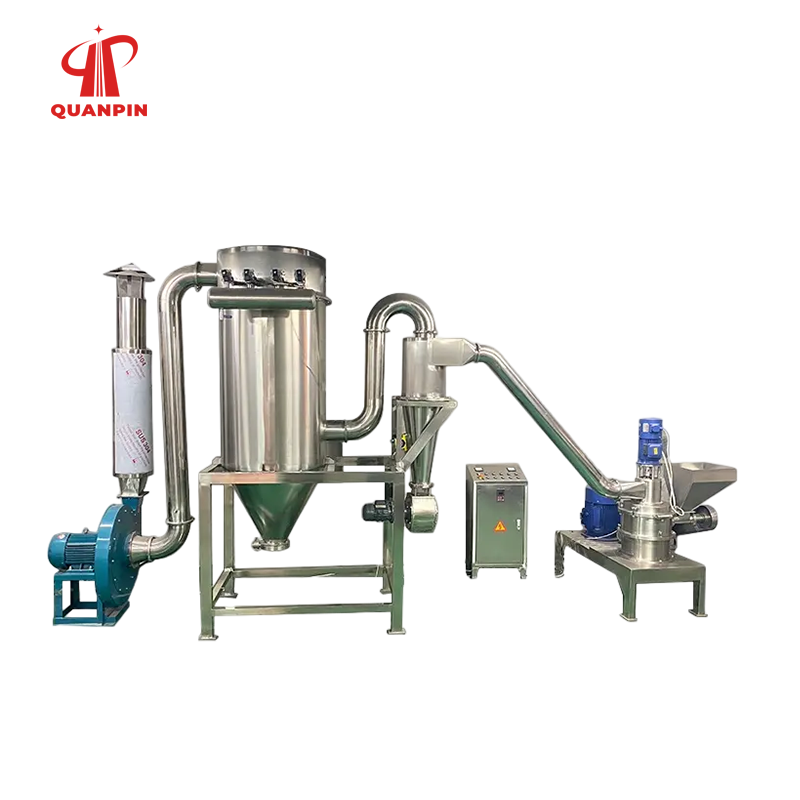
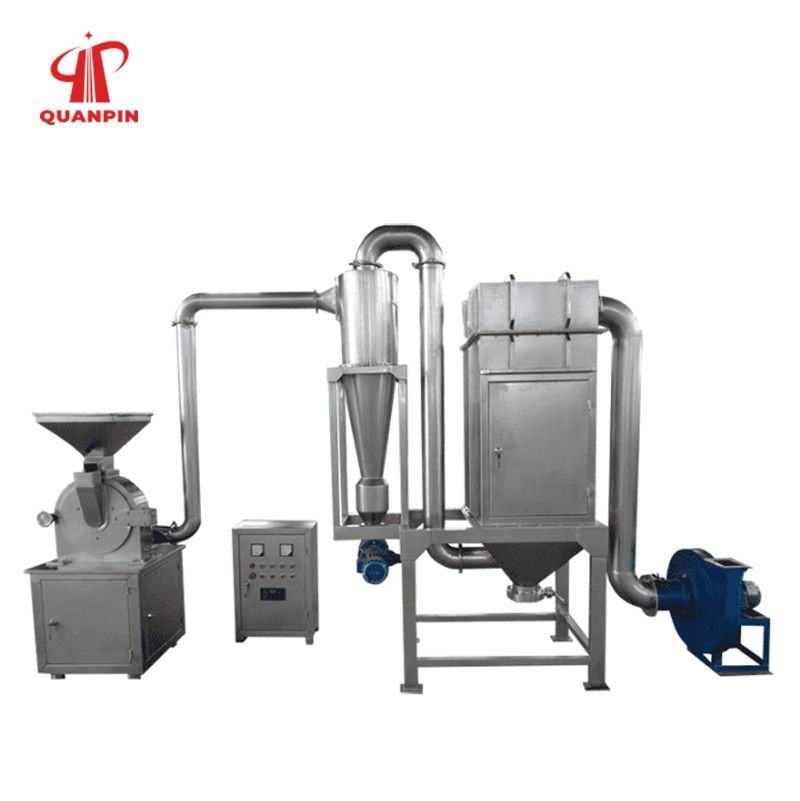
The WFJ equipment reference provides a starting point for discussing fine pulverizing. Confirm the proposed configuration directly with QUANPIN for the supplied material rather than assuming that every photographed arrangement has an identical scope.
Treat the product page as an equipment reference, not proof of a gluten-free production line. Final suitability depends on the complete installation, ingredient controls, operating arrangements and the manufacturer’s separate assessment of the finished food.
Five Information Gaps to Close
Incoming Material
Identify the feed as rice flour, broken rice or another agreed material. Changes in incoming form can change the processing task, so a trial report should name the actual material tested.
Powder Measurement
Describe the powder measurement method alongside its target. A sieve observation and another particle-size method should not be compared without understanding what each result represents.
Collection Point
Record the intended collection point. A sample taken from a retained laboratory container does not automatically describe every discharge period or all material remaining elsewhere in the installation.
Ingredient Identity
Keep ingredient identity in the trial record. White powder appearance cannot reliably distinguish one cereal ingredient from another or identify an unintended component at a low concentration.
Trial Decision
Agree which decisions the trial will support. A physical milling demonstration can inform equipment selection without becoming evidence that a label claim has been established.
Process Overview and Working Principle
The processing overview should describe size reduction and the agreed powder collection arrangement. Avoid adding a gluten-removal stage to the description unless a separate, actually specified process has been established and evaluated.
A fine powder grinder is not an analytical instrument for gluten. Its discharge can be assessed for physical properties while samples are independently submitted for the analytical question defined by the food manufacturer.
Keep laboratory sample preparation distinct from production. Grinding a test portion may improve the preparation of a sample for analysis; that action does not demonstrate destruction of the substance being measured.
Where the proposed installation handles more than one ingredient, discuss the actual material route and access requirements. Equipment selection should provide the information needed for the site’s own assessment without promising a universally approved operating procedure.
Six Separate Records
Feed Record
Feed identity should remain traceable from the trial request through the retained samples. A changed ingredient supplier or recipe deserves a clearly identified record rather than reuse of an unrelated report.
Physical Test
Document the agreed physical test on the milled powder. Include its method and sample identity so that a passing result has a defined meaning.
Analytical Question
Document the analytical question separately. Ask the laboratory what food matrix it will receive, what result it reports and which limitations accompany the chosen method.
Target Market
Name the intended market when discussing a commercial claim. Different official documents have different scopes, and an equipment supplier’s quotation does not replace that review.
Evidence File
Retain the relevant food documentation together with the trial results. This makes it possible to see which evidence addresses powder performance and which addresses composition.
Release Responsibility
Make release responsibility explicit. An ACM mill trial should end with an equipment assessment, while the authorized food-quality team considers the separate evidence required for its product.
What the Evidence Actually Establishes
A Claim Is Not a Size Class
The FDA gluten-free labeling FAQ describes conditions for a voluntary food claim. Its relevance here is the separation between a composition-related claim and an equipment fineness result; this article does not determine whether an individual product qualifies.
Accordingly, a purchase specification should not use “gluten-free” as a synonym for fine, white or rice-based. Those descriptions answer different questions and can leave important assumptions hidden.
Ask for the underlying ingredient and product records when evaluating the intended claim. Preserve the distinction even if the same project team is responsible for purchasing the mill and preparing the food documentation.
Preparation Comes Before Analysis
The FDA analytical compliance program explicitly places grinding and homogenization before gluten analysis. It also distinguishes sample handling where distribution is assumed homogeneous from cases requiring separately homogenized subsamples. This is an agency laboratory program, not a prescribed QUANPIN operating instruction.
The useful lesson for a milling enquiry is limited but clear: sample preparation and analytical determination are separate operations. A sample having been ground does not itself provide a gluten result.
Agree the sample plan with the responsible quality personnel and laboratory. Avoid inventing a universal sampling frequency, acceptance value or cleaning instruction from the equipment description.
An Actual Rice Investigation
In the University of Zagreb rice investigation, 41 market samples were ground and sieved before duplicate ELISA testing. Gluten was not detected, with a reported quantification limit of 5 mg/kg. This was a defined set of rice samples, not an industrial mill validation.
The experimental sequence is particularly relevant: the investigators prepared powder and then performed a separate assay. The grinder was a preparation tool, rather than the basis for the analytical conclusion.
Do not extend that finding to every incoming rice lot or to a mixed-cereal plant. The tested products and method define the observation; a new manufacturing project needs evidence appropriate to its own materials.
From Trial Results to a Purchase Decision
A practical trial comparison can hold the feed identity constant while comparing agreed powder conditions. This isolates the equipment question more clearly than changing the ingredient and measurement method simultaneously.
Keep the physical and analytical reports side by side. If one is missing, describe that gap directly instead of treating the available result as an answer to both questions.
When the powder is intended for a downstream blend, identify the transfer and packaging boundaries. The milling result should not silently be presented as certification of later operations.
Discuss access, retained material and the proposed product route using the actual installation information. Confirm the supplied arrangement before attributing additional isolation or inspection features to the equipment.
Commercial Scope and Deliverables
Commercial discussions should distinguish the fine-pulverizing scope from laboratory services and product-claim assessment. Identify who supplies each deliverable and which documents accompany the final equipment proposal.
This separation also improves comparison between quotations. A lower equipment price does not answer whether analytical work, installation review or food-quality documentation has been included.
Materials and Application Boundaries
The CFIA original oat-product survey examined 261 products with gluten-free claims, including oat flour, and reported 18 samples with detectable undeclared gluten. These oat findings are not a rice contamination rate or evidence of a particular milling effect.
For a rice project, the relevant comparison is the need for product-specific evidence. Neither a label already present on a market product nor a familiar powder appearance should be substituted for the actual report.
Define the material supplied for a QUANPIN trial and keep a retained identification record. If several lots are evaluated, make their results distinguishable rather than combining them into one undifferentiated success statement.
Request a concise trial summary covering the agreed physical observations and any unresolved equipment questions. Avoid adding microbiological, allergen-removal or regulatory guarantees that were not demonstrated.
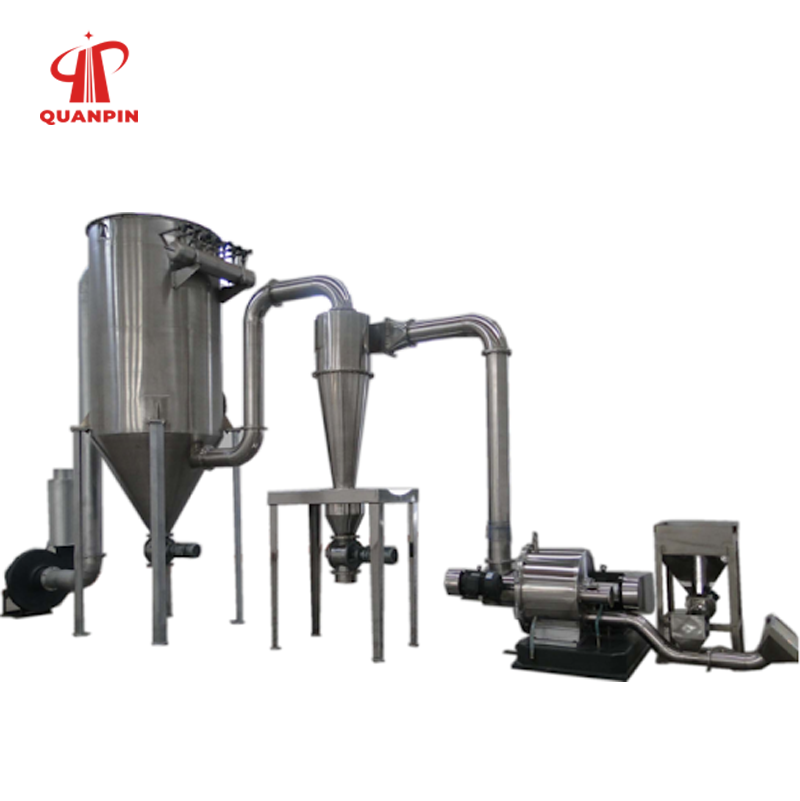
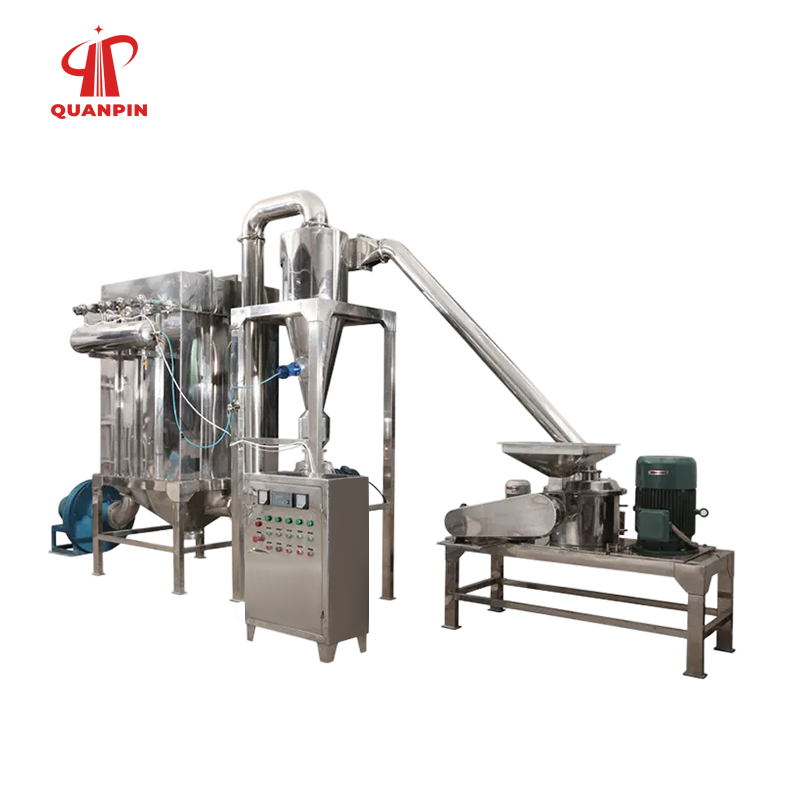
Use genuine matching equipment images to explain the proposed machine reference. Captions should identify an equipment view; they should not imply that a photograph depicts a certified gluten-free site.
Before ordering, review the connection between the milling stage and the rest of the food process. Equipment selection, material controls and finished-food release are related responsibilities with different evidence requirements.
Prepare a Useful Project Enquiry
Prepare the enquiry with the actual feed, required powder condition, intended use and the available installation information. This gives the supplier a concrete physical duty to assess.
Add a separate list of food-quality questions for the responsible manufacturer and laboratory. Keeping that list explicit helps prevent an unresolved analytical question from disappearing inside a general machine specification.
Keep Cereal Identity and Claims Distinct
The UK official allergen technical guidance distinguishes named cereal declarations from voluntary gluten-related claims. Its oats example illustrates why those concepts cannot simply be collapsed. Its stated jurisdiction must be respected when reviewing a target-market label.
Use that distinction when organizing project documents, without presenting this equipment article as labeling advice. Confirm the applicable requirements through the business’s responsible food-compliance process.
Frequently Asked Questions
Does Fineness Establish the Claim?
Does a finer rice powder establish gluten-free status? No. Particle fineness describes a physical characteristic; an appropriate product assessment addresses the separate composition-related question.
Does Grinding Prove Removal?
Does laboratory grinding prove gluten removal? No. Grinding can prepare a test portion for a subsequent assay, as illustrated by the rice investigation and FDA analytical program.
Can a Published Rice Survey Certify My Lot?
Can the Croatian rice result certify my lot? No. It describes the particular market samples and analytical conditions studied, not all rice ingredients or industrial processing routes.
Are Oat Findings a Rice Failure Rate?
Can the Canadian oat findings be used as a rice failure rate? No. They concern another cereal and a specific targeted survey; they support the need to identify the actual product being evaluated.
Can the Milling Duty Be Evaluated?
Can QUANPIN assess the physical milling duty? Supply the actual material and required powder characteristics for discussion. Confirm the final configuration and scope through the project enquiry.
What Documents Support the Decision?
What should accompany the purchase decision? Keep the equipment assessment, material identification and relevant food-quality evidence together, with their scopes and remaining questions clearly stated.
Discuss Your Milling Requirement
Discuss the material, processing objective and required trials with QUANPIN. Review the equipment information and the relevant industry applications, or send an enquiry through our contact page.
Email sales@qpdryer.com or stacie@qpdryer.com. Call +86 19850785582 or contact WhatsApp +86 15921493205 to discuss the proposed scope.