Ribbon Mixer for Food Powders: Define the Measurement Basis for a Discharge Residue Check
By QUANPIN
A ribbon mixer discharge-residue check should state what was inspected or measured, when the observation occurred and which contact surfaces were included. Residue observations are difficult to compare when these boundaries change silently.
For food powders, distinguish a physical remaining-material check from cleaning verification and from the amount of accepted blend discharged. Explore matching food applications.
What Does the Residue Check Cover?
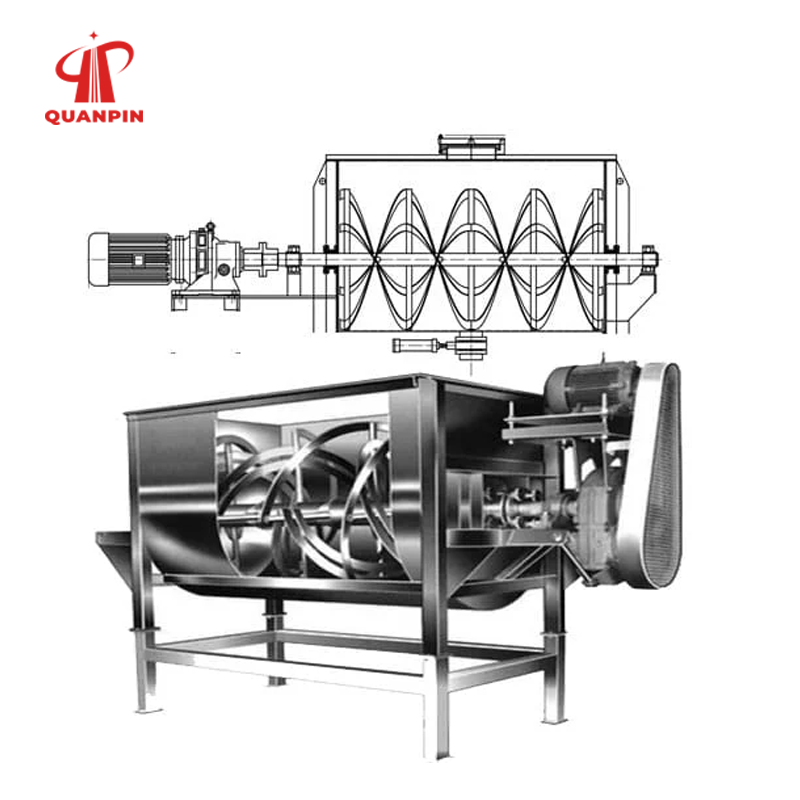
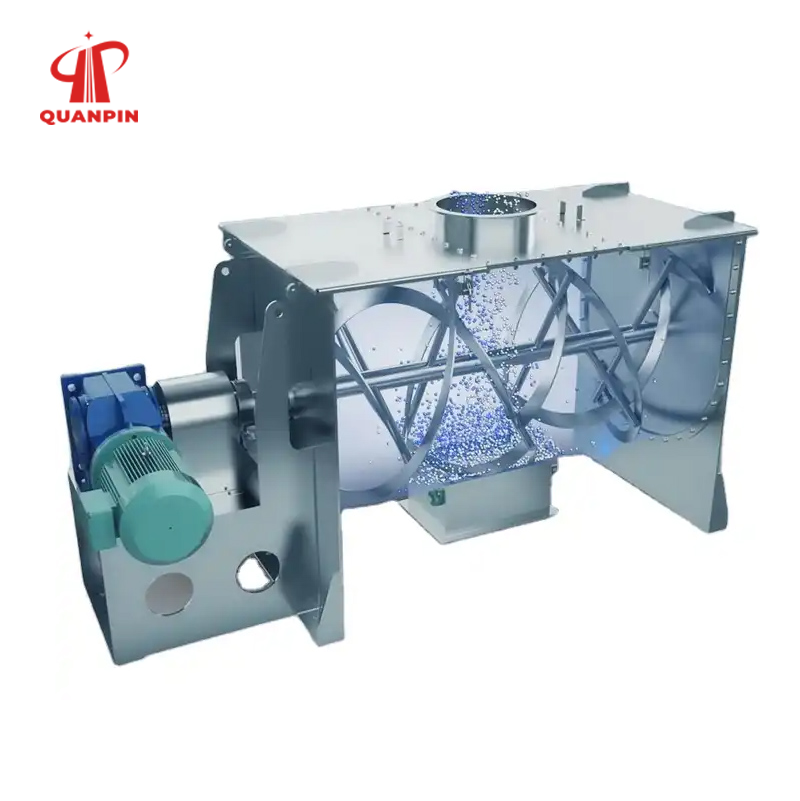
The WLDH ribbon blender uses inner and outer helical ribbons to circulate compatible material through a trough.
That mixing arrangement does not establish a universal residue quantity or prove that every product-contact location is visible after discharge.
Ribbon Mixing and Discharge Configuration
A horizontal ribbon mixer enquiry should identify the actual discharge configuration and the access available under approved procedures.
Describe a proposed residue-assessment boundary without assuming an automatic emptying or self-cleaning function.
Five Steps to Define a Residue Observation
Identify the formulation
Identify the actual food formulation and the discharge operation.
Define the locations
Define the locations included in the residue check.
State the method
State the observation or measurement method.
Record the operating sequence
Record the material condition and point in the operating sequence.
Compare the same boundary
Compare only results with understandable assessment boundaries.
Separate the Physical and Quality Questions
Residue visible inside the mixing vessel is not necessarily the complete amount remaining throughout an installation.
Material in external connections belongs to a separately identified handling boundary.
An appearance check and a collected mass result are different observations.
A cleanliness decision has its own procedure and cannot be inferred solely from a small reported residue quantity.
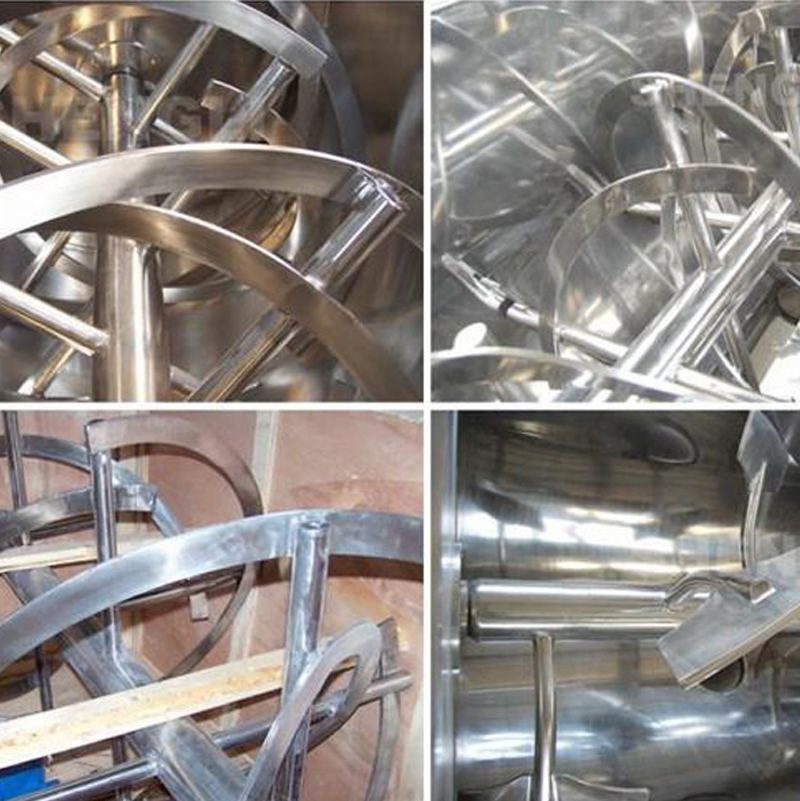
Equipment Locations and Inspection Interfaces
Working trough
The trough provides product-contact surfaces within the confirmed mixing scope.
Ribbon assembly
The ribbon assembly creates circulation but also defines components relevant to the inspection boundary.
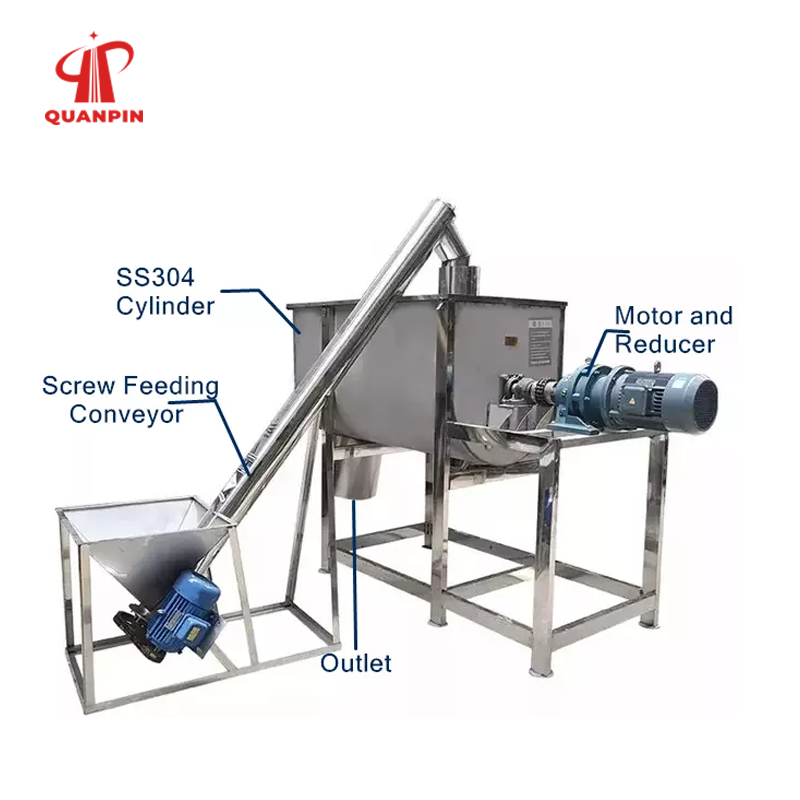
Discharge opening
The discharge opening establishes where material exits the vessel.
External connections
Connected receivers or transfer parts introduce additional material-holding locations.
Inspection access
Access provisions determine which areas can be examined safely under the installed procedure.
Recovery tools
Sampling or recovery tools require appropriate food-contact and cleaning consideration.
Comparing the Actual Discharge Conditions
Preserve the actual recipe
A ribbon powder mixer study should retain the actual recipe and ingredient preparation used for the observed discharge.
Identify whether the inspection followed normal discharge, an additional approved action or a cleaning operation.
Do not describe those different sequences as identical emptying conditions.
Identify observed and unobserved material
If a mass is reported, identify the material actually recovered and the method used to obtain that quantity.
Keep unrecovered or inaccessible locations explicit rather than treating them as measured zero.
If an image is used, identify its location and the material condition it records.
Separate transfer from vessel assessment
A visual reference can support a defined comparison without establishing composition or food-safety acceptance.
Review connected transfer equipment separately when the question concerns material delivered to a receiver.
An industrial ribbon blender comparison should align these boundaries before interpreting a difference as equipment performance.
Food-Powder Acceptance and Evidence Limits
A defined check can reveal that two reported residue observations cover different surfaces or operating sequences. Food equipment and processing need appropriate hygiene controls. See FDA food manufacturing practices.
It can also identify an access or documentation question for the proposed equipment. Identify allergens and cross-contact requirements when ingredients or carriers introduce them. See FDA food allergen information.
The result does not establish a universal acceptable residue limit. Water activity describes a property different from total moisture content. See FDA water activity background.
Food formulation, allergen requirements and the relevant cleaning programme determine the separate acceptance questions.
Document the Recipe and Discharge Arrangement
Record the actual recipe and supplied ingredient forms.
Identify the discharge configuration and connected equipment.
Inspection Records, Access and Sanitation
List the contact locations examined or measured.
State the inspection sequence and material condition.
Preserve the measurement method and any unresolved locations.
Keep the original observation distinct from the subsequent cleaning or material-disposition decision.
Inspection and recovery must follow the installed mixer’s isolation and safe-access procedures. Include relevant sanitation and handling requirements in the food-process review. See FDA sanitation and transportation resources.
Food-contact sanitation remains a requirement across the actual product and handling scope.
Provide QUANPIN with the Residue-Assessment Scope
Send QUANPIN the confirmed arrangement and a clear description of the residue question.
Identify whether the requested review concerns discharge, access, an external connection or cleaning provisions. Food hazard analysis and relevant preventive controls are separate from demonstrating a preferred ingredient appearance. See FDA preventive controls for human food.
Retain the Defined Boundary and Its Limits
The enquiry should request confirmation of equipment scope rather than a generic zero-residue promise.
Retain the agreed assessment boundary alongside the actual recipe and discharge records.
Frequently Asked Questions
Does vessel residue cover the full installation?
A vessel observation is not automatically a complete installation residue measurement.
What does a recovered quantity need?
A recovered quantity should identify what was collected and how it was measured.
Can an inaccessible location be treated as zero?
An inaccessible location should not be silently assigned a measured zero.
Why record the discharge sequence?
Different discharge or cleaning sequences can create different observation conditions.
Does low residue prove cleanliness?
A residue check does not independently establish cleaning effectiveness or food safety.
What should the enquiry specify?
The enquiry should state the surfaces, operating sequence, method and material condition being compared.
Discuss Your Ribbon-Mixer Duty with QUANPIN
Discuss the matching QUANPIN equipment with QUANPIN. Use the enquiry form or our contact page to describe the actual application.
Email sales@qpdryer.com or stacie@qpdryer.com. Call +86 19850785582, or contact us on WhatsApp: +86 15921493205.