Dried ginger powder production links preparation, size reduction and powder collection. A pulverizer machine can reduce suitable dried pieces, but the result depends on fibre, moisture, feed size and temperature sensitivity. The milling stage should be planned around the intended condiment ingredient and the handling route that follows it.
Grinding serves the next process. Feed preparation, controlled particle reduction and receiving equipment should form one connected material route. Define whether the powder will be blended, screened or packed, and explain what condition that operation needs from milling.
- The universal pulverizer application page describes clean dried ginger pieces prepared to an accepted inlet size. That preparation is a process requirement, not a minor purchasing detail. Remove unsuitable foreign material through the agreed upstream controls and keep the feed protected during storage. A milling chamber cannot turn an unsuitable incoming botanical lot into an acceptable food ingredient.
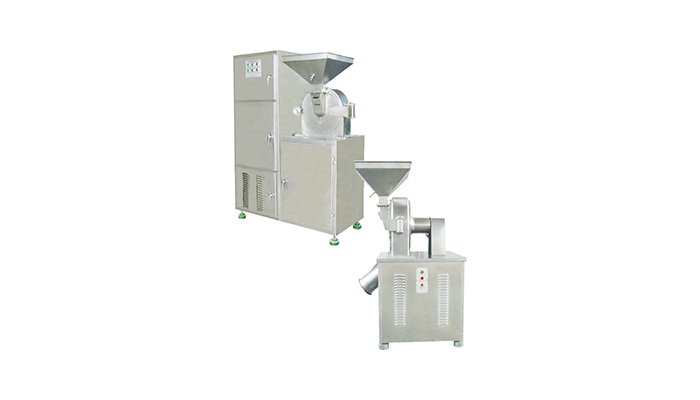
- The industrial pulverizer uses impact and cutting in a high-speed chamber. Repeated mechanical contact breaks the incoming pieces into smaller particles. Ginger fibres may respond differently from the more brittle portions of a piece, so a powder can contain a mixture of particle shapes. Assess the actual dried material rather than assuming all botanical powders behave alike.
- The powder grinding machine is connected to conveying air and collection equipment. The stated route includes cyclone and bag-collection stages. These separate product from air at different points in the system. Define the intended destination of each collected fraction, the emptying sequence and the receiver arrangement before selecting how the powder moves to sieving or packing.
- Temperature belongs in the ginger milling discussion because mechanical work can warm the product. The verified application page specifically calls for reviewing temperature and botanical quality markers. Avoid assuming that airflow alone preserves aroma or that every component remains unchanged. Describe the maximum acceptable product condition and ask how the proposed equipment configuration addresses it.
- The process can support a more organized powder-making workflow by connecting feeding, grinding and collection in one reviewed assembly. This is a handling advantage, not a promise that all incoming ginger grades will produce the same powder. Fibre content, prior drying history and the chosen outlet condition still influence how the ingredient behaves after milling.
- After collection, protect the powder from unnecessary open transfers. A sieve may be needed for an agreed final fraction, followed by a receiver that suits the packing line. Keep rejected coarse material separate until its disposition is decided. Returning an uncertain fraction to the process without identification can create a different blend from the one originally specified.
- CFIA describes hazards that may enter spices through incoming materials, preparation, movement or storage. Apply that process view to dried ginger: distinguish treated and untreated material, keep receivers identified and decide where rejected coarse fractions go. Milling itself does not establish that a botanical ingredient is microbiologically acceptable. Read the CFIA spice preparation controls for the supporting context.
- North Carolina Department of Labor identifies crushing and grinding among mechanical actions associated with combustible dust. Review the dust characteristics of the actual ginger feed and collected fractions with the responsible specialists. An integrated cyclone and bag collector still requires a suitable system-level assessment. Read the North Carolina dust guidance for the supporting context.
- WorkSafeBC notes that cutting, grinding, mixing and screening can create or release combustible dust. In a ginger line, consider the connection between the pulverizer, collection stage and downstream sieve. Review dust escape and accumulation at transfer points rather than looking only at the visible grinding chamber. Read the WorkSafeBC combustible dust guidance for the supporting context.
- CCOHS discusses unexpected startup and stored energy during servicing and maintenance. Provide a defined isolation procedure for access to the grinding chamber and collection equipment. A routine cleaning instruction should identify the relevant energy sources and who is responsible for securing the machine before access. Read the CCOHS lockout guidance for the supporting context.
- CFIA distinguishes cleaning from sanitizing and asks food businesses to specify what, where, when and how equipment is cleaned. For ginger powder, include the cyclone, bag-collection receiver and outlet in that plan. Choose methods suited to the actual installation rather than assuming that the main chamber alone determines changeover cleanliness. Read the CFIA cleaning and sanitation guidance for the supporting context.
- Specify a practical production cycle. Include loading, processing, discharge, inspection and changeover when discussing the required output. Give QUANPIN the complete formulation, feed condition, bulk density, target batch or hourly duty and downstream equipment arrangement. Request a configuration review with representative material before committing to the final scope. Acceptance should describe the usable product and operating conditions, rather than an unsupported promise of perfect powder or uniformity.
YANCHENG QUANPIN MACHINERY CO.. LTD
Sales Manager – Stacie Tang
MP: +86 19850785582
Tel: +86 0515-69038899
E-mail: stacie@qpdryer.com
WhatsAPP: 8615921493205
https://quanpindrying.en.alibaba.com/
Address: Jiangsu Province, China.