The defining feature of this process is indirect heat contact on successive drying surfaces. Equipment selection becomes clearer when the team follows the material from preparation through the working zone and into the receiving operation. For pharmaceutical manufacturing, that route must be developed around the actual formulation. A supplier description explains the mechanism; a representative trial establishes whether the selected configuration can produce the condition required by the next stage.
This guide focuses on observable material behavior rather than unsupported output or quality promises. Establish the incoming condition, identify samples by their location or collection time, and compare physical handling with the chosen analytical endpoint. The discussion assumes an appropriately assessed pharmaceutical process. It does not establish suitability for every solvent, potent substance or regulated product, and the equipment itself does not confer regulatory approval.
- Characterize how the wet solid moves when pushed. Cohesive paste, granular cake and free-flowing powder respond differently to a scraper. Include the wettest expected condition in a trial because a feed that flows after partial drying may still bridge before reaching the first working surface. Discuss the Continuous Disc Dryer when reviewing this part of the process.
- Meter the charge into the dryer consistently. Sudden large additions can create a local layer that differs from the intended operating condition. Observe the feed connection for adhesion and retained material. Feed continuity matters because each portion should enter a comparable sequence of heat contact and mechanical movement. For finished-drug operations within its scope, 21 CFR 211.68 addresses automatic and electronic equipment; apply that requirement through the manufacturer’s quality system.
- Follow the indirect heat path. Heating medium transfers energy through the drying surfaces into contacting solids rather than relying on a large hot-air stream as the primary energy carrier. Surface contact and layer condition therefore matter. Product temperature must be interpreted separately from the utility setting.
- Observe how scrapers redistribute material. Their movement advances solids across the working surfaces and exposes material to further contact. Check for stationary deposits and for channels where material travels unusually quickly. A nominal travel arrangement needs confirmation with the real formulation rather than an unloaded mechanical demonstration. Discuss the rotary disc dryers when reviewing this part of the process.
- Examine the transition from sticky to granular behavior. Wet solids may smear initially and later form crumbs or powder. This change affects contact, movement and discharge. Record where it happens during the test and whether buildup persists after the material appears dry enough to flow. For finished-drug operations within its scope, 21 CFR 211.80 addresses component handling; apply that requirement through the manufacturer’s quality system.
- Review vapor removal independently from heat supply. Evaporated liquid must leave the working space through the selected arrangement. Establish the intended liquid phase and containment requirements with the supplier. Do not infer solvent suitability, hazardous-area suitability or emission performance from the indirect heating principle alone.
- Treat residence time as a distribution. Some solids may remain in deposits while other portions pass readily through the working path. Use appropriate trial observations and sampling to examine this difference. A single average operating time can conceal material that has experienced a different thermal history. Discuss the indirect contact dryer when reviewing this part of the process.
- Evaluate pharmaceutical intermediates against downstream handling. A friable dried solid may suit subsequent milling, while a smear-forming product may require a different route. Measure the intended final condition and inspect recovered material for agglomerates. The goal is usable solids rather than merely continuous movement through the machine. For finished-drug operations within its scope, 21 CFR 211.82 addresses receipt and storage of untested components; apply that requirement through the manufacturer’s quality system.
- Collect outlet samples after steady conditions develop. Keep startup and shutdown fractions identified because their histories can differ from normal production. Compare moisture and physical condition across time. This approach helps identify a slowly accumulating deposit before its eventual release changes the discharge composition.
- Review access to discs and material-moving parts. Cleaning effort depends on where residues lodge and whether staff can inspect those places. Ask how components are restored after intervention. Product-contact geometry should be considered alongside thermal duty when assessing a campaign change or a difficult formulation. For finished-drug operations within its scope, 21 CFR 211.84 addresses component testing and approval; apply that requirement through the manufacturer’s quality system.
- Compare the advantages within their operating limits. Indirect contact can deliver heat without making the drying gas the main energy carrier, while mechanical travel supports a continuous route. Those features do not establish energy savings or product quality for every material. Require a relevant comparison before making either claim. Discuss the conductive drying when reviewing this part of the process.
- Provide QUANPIN with representative wet solids and the full receiving requirement. Include stickiness, feed variability, liquid identity and the next operation. Review discharge behavior and cleaning alongside evaporation. A useful trial report connects material movement, heat exposure and recovered product condition within the proposed configuration. For finished-drug operations within its scope, 21 CFR 211.86 addresses component inventory rotation; apply that requirement through the manufacturer’s quality system.
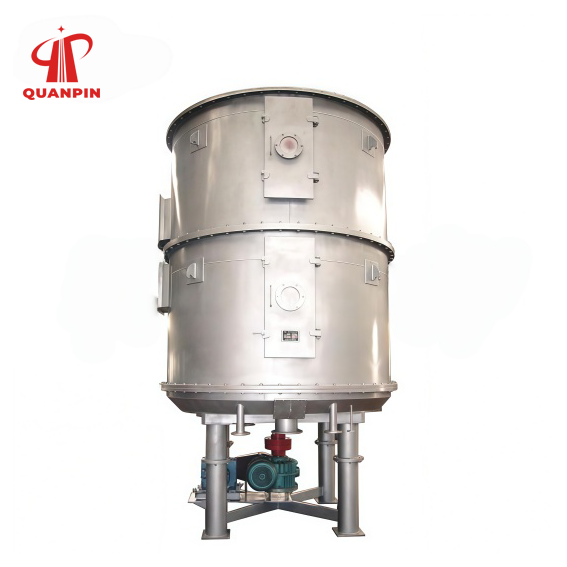
Discuss your material and production route with QUANPIN. Review the corresponding equipment information before arranging a material trial.
YANCHENG QUANPIN MACHINERY CO.. LTD
Sales Manager – Stacie Tang
MP: +86 19850785582
Tel: +86 0515-69038899
E-mail: stacie@qpdryer.com
WhatsAPP: 8615921493205
https://quanpindrying.en.alibaba.com/
Address: Jiangsu Province, China.