Ginger powder processing requires more than reducing a dried rhizome into visible fines. The useful route links prepared pieces, impact and cutting, conveying air and collected ingredient fractions. Product temperature, fibre behaviour and the transfer to screening or packing should be considered together when reviewing the high-efficiency pulverizer application.
The following production sequence explains how the equipment fits between ingredient preparation and the next operation. Equipment-specific settings, contact materials and performance depend on the selected configuration and actual feed. Define the required product condition and the complete batch or hourly duty before finalizing the supply scope.
- Begin with clean dried ginger prepared for the agreed inlet. A pulverizer machine cannot correct a lot that contains unacceptable contamination or has not reached a suitable feed condition. Explain how material arrives, whether coarse preparation has already occurred and which upstream controls protect it before the milling hopper is charged.
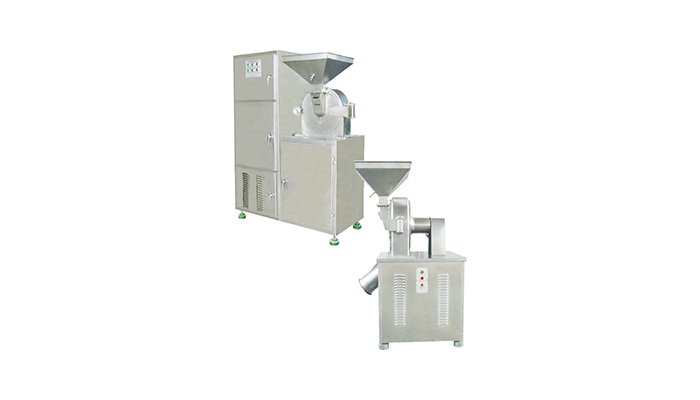
- The universal pulverizer application uses high-speed impact and cutting. Brittle portions can fracture while fibrous portions may resist or form elongated particles. The resulting material should therefore be described using its intended handling and ingredient condition rather than assuming that every particle becomes an identical shape after passing through the chamber.
- An industrial pulverizer operates as part of an air-and-solids route. On the verified ginger application page, cyclone and bag-collection stages separate powder from conveying air. Define the role of every receiver, including how it is emptied and cleaned. Material collected in different positions should remain identified until the intended product handling has been agreed.
- The powder grinding machine must be considered alongside the ginger quality target. The application page specifically calls for reviewing product temperature and botanical quality markers. Set out the intended limit and the material condition that matters to the buyer. Avoid describing airflow as a guarantee of aroma retention or claiming that size reduction leaves every constituent unchanged.
- An integrated arrangement offers a practical way to connect feeding, reduction and recovery. That can help organize a powder production route with fewer undefined handoffs between operations. The benefit depends on the actual configuration and plant layout; it should not be converted into an unsupported promise about yield, energy savings or production rate.
- Plan the route after collection. If sieving is required, explain the accepted fraction and the destination of coarse retained material. Keep the receiving container closed and identified where the agreed handling arrangement permits. The milling cycle ends with an ingredient ready for its next operation, so packing access and changeover time belong in the production discussion.
- CFIA describes hazards that may enter spices through incoming materials, preparation, movement or storage. Apply that process view to dried ginger: distinguish treated and untreated material, keep receivers identified and decide where rejected coarse fractions go. Milling itself does not establish that a botanical ingredient is microbiologically acceptable. Read the CFIA spice preparation controls for the supporting context.
- North Carolina Department of Labor identifies crushing and grinding among mechanical actions associated with combustible dust. Review the dust characteristics of the actual ginger feed and collected fractions with the responsible specialists. An integrated cyclone and bag collector still requires a suitable system-level assessment. Read the North Carolina dust guidance for the supporting context.
- WorkSafeBC notes that cutting, grinding, mixing and screening can create or release combustible dust. In a ginger line, consider the connection between the pulverizer, collection stage and downstream sieve. Review dust escape and accumulation at transfer points rather than looking only at the visible grinding chamber. Read the WorkSafeBC combustible dust guidance for the supporting context.
- CCOHS discusses unexpected startup and stored energy during servicing and maintenance. Provide a defined isolation procedure for access to the grinding chamber and collection equipment. A routine cleaning instruction should identify the relevant energy sources and who is responsible for securing the machine before access. Read the CCOHS lockout guidance for the supporting context.
- CFIA distinguishes cleaning from sanitizing and asks food businesses to specify what, where, when and how equipment is cleaned. For ginger powder, include the cyclone, bag-collection receiver and outlet in that plan. Choose methods suited to the actual installation rather than assuming that the main chamber alone determines changeover cleanliness. Read the CFIA cleaning and sanitation guidance for the supporting context.
- Specify a practical production cycle. Include loading, processing, discharge, inspection and changeover when discussing the required output. Give QUANPIN the complete formulation, feed condition, bulk density, target batch or hourly duty and downstream equipment arrangement. Request a configuration review with representative material before committing to the final scope. Acceptance should describe the usable product and operating conditions, rather than an unsupported promise of perfect powder or uniformity.
Discuss your material and production route with QUANPIN. Review the corresponding equipment information before arranging a material trial.
YANCHENG QUANPIN MACHINERY CO.. LTD
Sales Manager – Stacie Tang
MP: +86 19850785582
Tel: +86 0515-69038899
E-mail: stacie@qpdryer.com
WhatsAPP: 8615921493205
https://quanpindrying.en.alibaba.com/
Address: Jiangsu Province, China.