A preliminary cutting stage makes a botanical powder line easier to organize when incoming material arrives as irregular pieces. The WF route uses rotating and fixed cutting elements before the discharged material proceeds through a sieve. Its role is preparation for the next operation, with the incoming botanical condition determining whether the route is suitable.
The following production sequence explains how the equipment fits between ingredient preparation and the next operation. Equipment-specific settings, contact materials and performance depend on the selected configuration and actual feed. Define the required product condition and the complete batch or hourly duty before finalizing the supply scope.
- A coarse crusher should receive an identifiable botanical feed. Specify whether the lot consists of dried root pieces, bark fragments or another agreed material. Describe the largest pieces and the way they bend, break or splinter. Two feeds sold under the same botanical name can behave differently after different drying and storage histories.
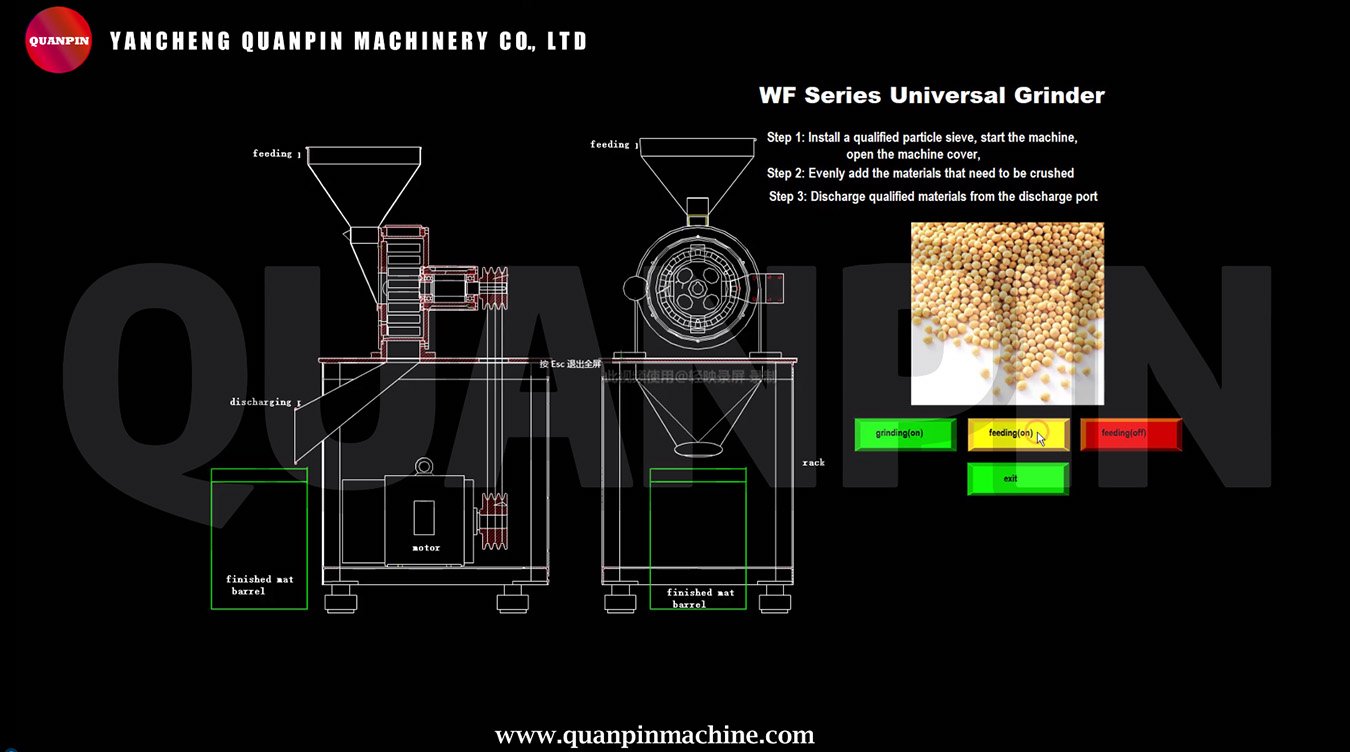
- The coarse grinding machine described on the WF page cuts and crushes between a spinning blade and a fixed cutter. Feed enters through a hopper and the prepared material leaves through a sieve toward the outlet. This explains why both cutter condition and the selected discharge arrangement belong in the process review rather than being treated as interchangeable accessories.
- Use the coarse pulverizer to establish an acceptable intermediate material. Preliminary reduction can help prepare pieces for a downstream fine mill, but it should not be presented as producing the final ingredient specification automatically. Define the next machine inlet and identify any fragments that must be separated or returned before material enters that operation.
- An industrial coarse grinder may be useful when large-piece preparation is the limiting handling task. Its value is the division of duties: first make an irregular feed manageable, then perform the required fine milling separately. Do not assume that an extra machine always reduces energy or increases capacity. Those outcomes depend on the complete material route.
- Arrange collection so that coarse material does not build up against the outlet. The receiver needs enough operating space and a clear emptying sequence. Where the next machine requires continuous feeding, discuss a suitable buffer or metering arrangement. A batch of irregular botanical pieces and a steadily fed fine mill often work to different operating rhythms.
- Include knife and screen inspection in the production cycle. Worn, damaged or obstructed parts can change how pieces leave the chamber. Access for inspection must follow the agreed safe procedure. Keep removed fragments and foreign matter identified so that maintenance activity cannot accidentally send rejected material back into the ingredient stream.
- FAO describes a dry grinder as a means of preparing ingredients for mixing and subsequent manufacturing. The broader lesson for botanical preparation is to define what the next operation needs. Coarse reduction should solve an inlet-handling problem rather than being judged only by the appearance of the discharged pieces. Read the FAO compound feed manufacturing manual for the supporting context.
- FAO identifies incoming quality, processing, packaging and storage as connected concerns for herbs and spices. Preliminary cutting cannot substitute for sorting and clean raw material. Keep rejected foreign matter and unsuitable botanical pieces out of the intended process feed before they enter the crusher hopper. Read the FAO herb and spice processing guidance for the supporting context.
- CCOHS describes housekeeping as an ongoing activity that includes material flow, dust removal and clear work areas. Include dust released at coarse-crusher feeding and discharge in the housekeeping plan. A coarse product does not mean that the operation generates no fine particles. Choose a suitable removal method and define responsibility for cleaning the receiver and surrounding surfaces. Read the CCOHS housekeeping guidance for supporting context.
- CCOHS explains that guarding protects people from hazards associated with moving machinery. The coarse crusher has cutting elements, so feeding and chamber access need a defined arrangement. Review how a blockage will be addressed without improvising access to the cutter while the machine remains capable of movement. Read the CCOHS working around machinery guidance for the supporting context.
- FDA has assessed pathogens and filth in spices as distinct public-health concerns. A coarse crusher reduces piece size; it is not a microbial decontamination treatment. Define any required spice safety treatment separately and preserve the identity of material that has already completed that treatment. Read the FDA spice risk profile for the supporting context.
- Specify a practical production cycle. Include loading, processing, discharge, inspection and changeover when discussing the required output. Give QUANPIN the complete formulation, feed condition, bulk density, target batch or hourly duty and downstream equipment arrangement. Request a configuration review with representative material before committing to the final scope. Acceptance should describe the usable product and operating conditions, rather than an unsupported promise of perfect powder or uniformity.
Discuss your material and production route with QUANPIN. Review the corresponding equipment information before arranging a material trial.
YANCHENG QUANPIN MACHINERY CO.. LTD
Sales Manager – Stacie Tang
MP: +86 19850785582
Tel: +86 0515-69038899
E-mail: stacie@qpdryer.com
WhatsAPP: 8615921493205
https://quanpindrying.en.alibaba.com/
Address: Jiangsu Province, China.