Banana Flour Drying: Keep Maturity and Later Cooking in Starch Comparisons
By QUANPIN
A banana-flour drying trial should identify the incoming fruit’s maturity and the later processing applied before starch testing. A resistant-starch result from an uncooked flour is not automatically a specification for the bread, snack or extruded food subsequently made from it.
For a hot air circulation oven development enquiry, define the intended ingredient first: peeled pulp flour, whole-fruit flour or another stated fraction. Then agree whether the acceptance sample is the dried material, the milled flour or a prepared food made from that flour.
Identify the Banana Ingredient Before the Drying Trial
The starting material belongs in the experimental design. Cultivar, maturity description and use of peel should remain attached to each batch rather than be replaced by the general description banana flour.
An original study of banana maturity and flour modification compared immature and mature green banana flour under several treatments. Its reported changes in starch structure and functional properties show why maturity and treatment history belong in the ingredient specification. Those experimental findings do not establish a drying recipe or a clinical benefit for a commercial flour.
Read Drying Studies Within Their Tested Conditions
Whole green banana flour has been studied under different oven-drying conditions and freeze drying. The original study abstract reports differences in resistant starch and functional properties across the tested samples; its findings apply to those materials and conditions.
Do not turn the best result in a particular experiment into a universal temperature recommendation. A proposed tray dryer trial still needs its own product preparation, loading description and acceptance tests.
Five Fields That Define the Test Material
Cultivar and lot
Record the cultivar and supplier lot. If either changes during development, keep the new material identifiable rather than pooling its result with the original reference batch.
Maturity description
Describe maturity using the agreed method and the observations available at intake. A supplier’s green or ripe label should not silently stand in for a measurement procedure that the project has not defined.
Peel inclusion
Specify whether peel is retained. An original study of unpeeled banana flour compared drying routes for unpeeled flour; those samples should not be treated as compositionally interchangeable with pulp-only flour.
Preparation route
Describe cutting, pretreatment and transfer to trays. Keep these preparation steps consistent within an equipment comparison so that a change in sample preparation is not attributed entirely to the dryer.
Analytical sample state
Identify the test state and reporting basis. State whether the laboratory receives dried pieces, milled flour, cooked flour or a prepared food, and retain the method and units with the result.
Keep Starch and Functional Tests Distinct
Resistant starch describes the fraction that resists digestion under the specified analytical procedure. Use the laboratory’s defined method and reporting basis rather than substituting a pasting curve, colour measurement or total-starch value.
Keep total starch and resistant starch as separately labelled results. A percentage of the flour and a percentage of total starch have different denominators and should not be compared as if the numbers used the same basis.
If moisture correction is used, retain the moisture result and calculation. A dry-basis value should remain distinguishable from a value for flour as received at the laboratory.
Also keep functional tests tied to their procedures. Water holding, pasting behaviour and the intended food test provide different information; no single one establishes every aspect of ingredient suitability.
Include the Processing That Follows Drying
Drying and processing comparisons
A study of banana flour processing compared oven drying, freeze drying and extrusion and reported changes in starch digestibility and phenolic profiles. It supports treating processing history as an experimental variable, not a guarantee that any drying method preserves every desired property.
Extrusion and subsequent storage
An original extrusion-cooking study investigated feed conditions and storage after extrusion. Its reported changes show why the thermal and storage steps between flour production and analysis belong in the record.
Equipment scope
These extrusion studies concern downstream food processing. They do not establish that a hot air drying oven performs extrusion, or that an oven quotation includes an extruder or a controlled storage system.
Intended food use
For a flour sold to a food manufacturer, ask what happens after delivery. A development sample intended for baking should be assessed in the agreed baked formulation as well as by the chosen flour tests.
Preparation before the assay
Preserve sample preparation before each assay. If one laboratory tests the flour directly and another cooks it first, the comparison includes that difference and should be described accordingly.
Limits of health interpretation
Avoid predicting a human health response from an equipment trial. An analytical starch fraction and an in vitro result do not demonstrate a clinical outcome for a finished food.
Plan Material, Drying and Application Comparisons
Incoming-material comparison
Begin the development brief with the raw-material identity and the intended use. Agree the reference sample and the questions the comparison is expected to answer before choosing a dryer setting.
For an initial material comparison, keep the drying route documented while examining clearly identified starting lots. State which differences in maturity or fraction are deliberate.
Retain a reference portion from each incoming lot under a documented handling procedure. Its purpose is to support the planned analysis, not to imply that storage leaves every material property unchanged.
Drying-condition comparison
For a drying-condition comparison, prepare a common lot and document how it is divided among runs. Keep the tray loading and preparation records with the run identifiers.
Collect the agreed dried-material and flour samples separately. Record the milling step when a dried ingredient is converted to flour, since the laboratory must know which physical form it receives.
Measure the agreed product endpoint and functional properties using the predefined methods. The resistant-starch assay should be one named result in the acceptance package, not an inferred consequence of a dryer temperature.
Finished-food application
For the application stage, use the same food formulation and processing instructions across the selected flour samples. Record ingredient substitution levels rather than leaving the recipe to an operator’s judgement.
Keep the flour result and finished-food result linked by sample identifiers. A bread observation cannot be traced to a drying condition if its flour source or recipe is uncertain.
Report what the comparison establishes and where further work is needed. A successful small trial can justify another development step without proving a production-scale performance guarantee.
Investigate Differences Through the Full Process History
If resistant-starch results differ, first check that the material fraction, maturity description, assay method and reporting denominator match. An apparent processing effect may include differences in the tested material.
Next review the complete preparation history, including pretreatment, drying, milling, cooking and storage. Do not reduce a multi-step route to the name of the dryer alone.
If the comparison remains unclear, plan a controlled follow-up that addresses the disputed step. A targeted test is more informative than changing several process conditions together and selecting the most favourable result.
Preserve the original observations when repeating a test. Replacing an unfavourable result without its reason and sample history weakens the comparison instead of resolving it.
Prepare a Product-Specific Equipment Enquiry
Send the hot air circulation oven manufacturer the fruit fraction, preparation route, proposed tray load and intended flour tests. Ask what material trial is needed to assess the proposed duty.
For a hot air tray dryer price comparison, check which preparation, loading and product-acceptance assumptions the quotation uses. A purchase price alone does not explain the evidence behind the proposed process.
Maintain Traceable Samples and Methods
Include the raw-material lot, preparation date and run identifier on the sample record. Add the identity of the portion sent for each separate laboratory or application test.
Retain the agreed handling instructions and the actual sample condition at receipt. If the received portion differs from the intended test state, record that difference before interpreting the measurement.
Keep a separate field for analytical method and reporting basis. A result without those fields is difficult to reconcile with a later laboratory report, even when both use the term resistant starch.
Keep flour storage conditions and elapsed time visible in the record. The downstream study’s conditions should be described as its own processing step, not hidden inside the drying result.
Archive the application recipe alongside its observations. Texture or loaf-volume results only become useful for future development when the flour proportion and preparation procedure can be reconstructed.
Record changes to the agreed plan as changes. If a lot is replaced or a milling step is added, explain which comparisons remain valid rather than treating the work as an unchanged repeat.
Understand the Limits of Equipment References
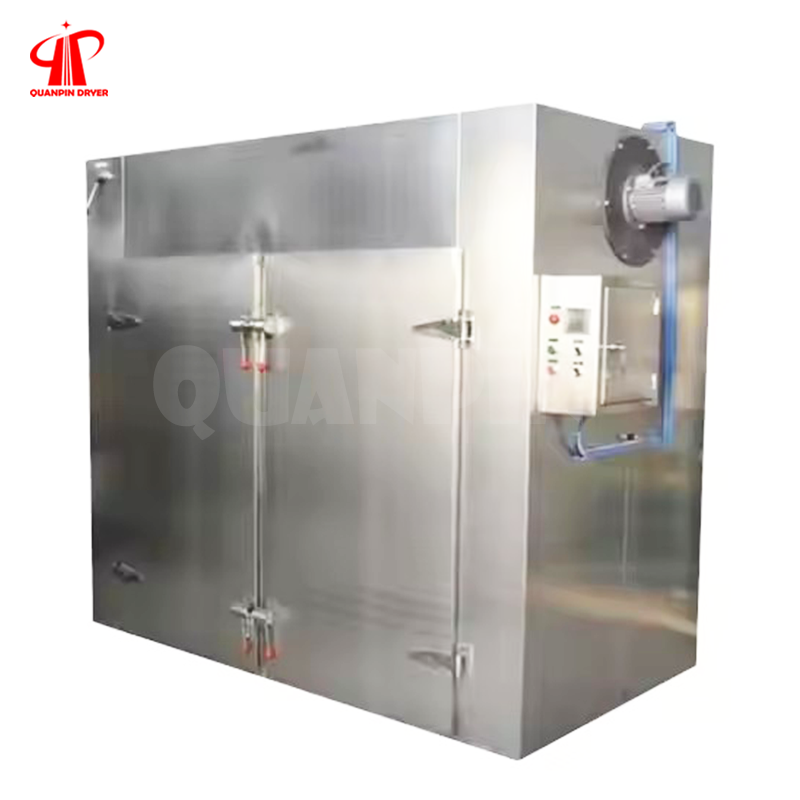
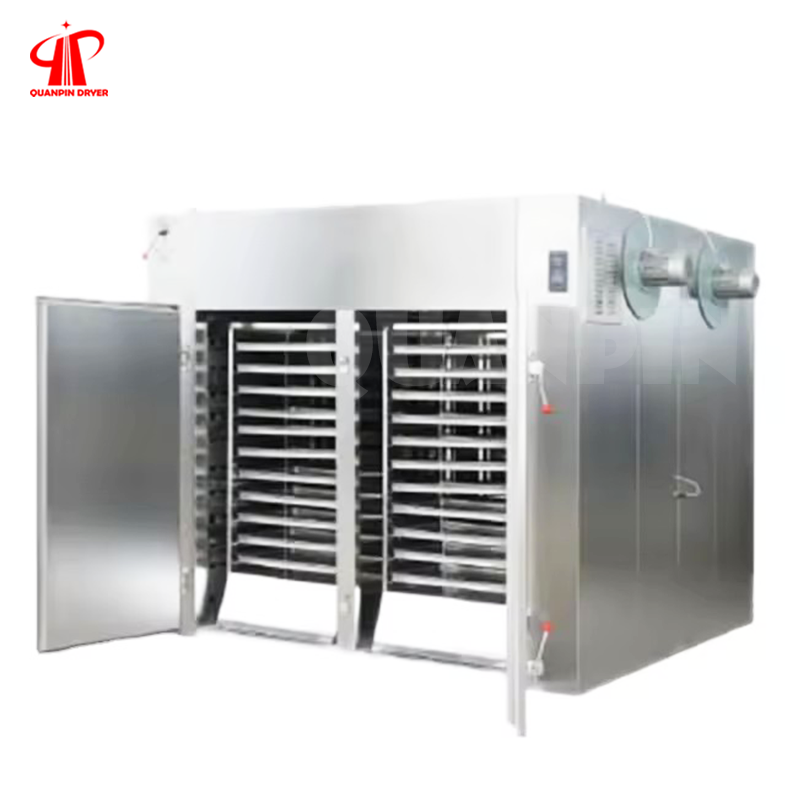
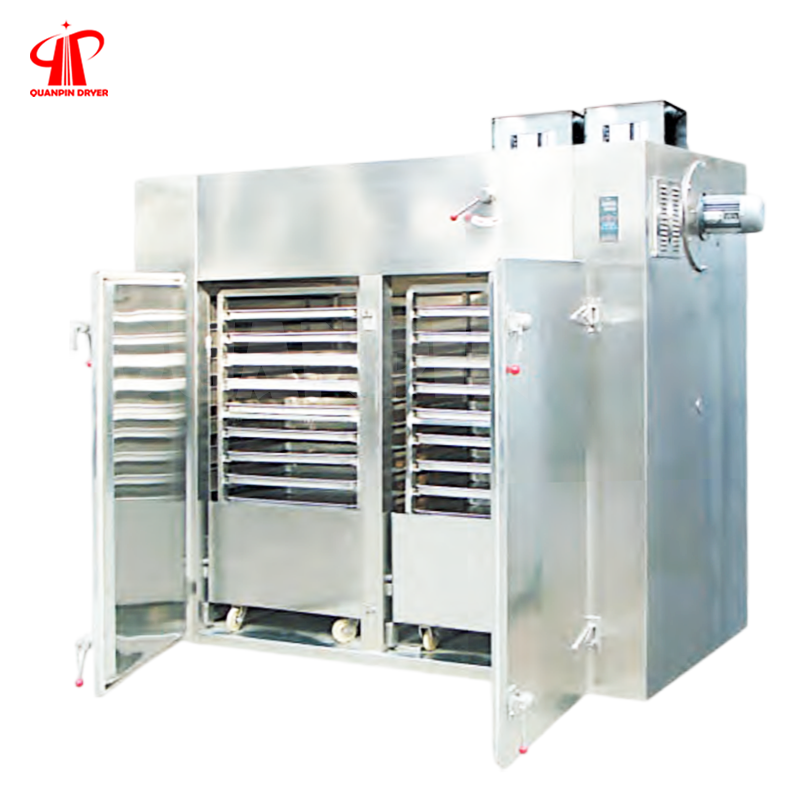
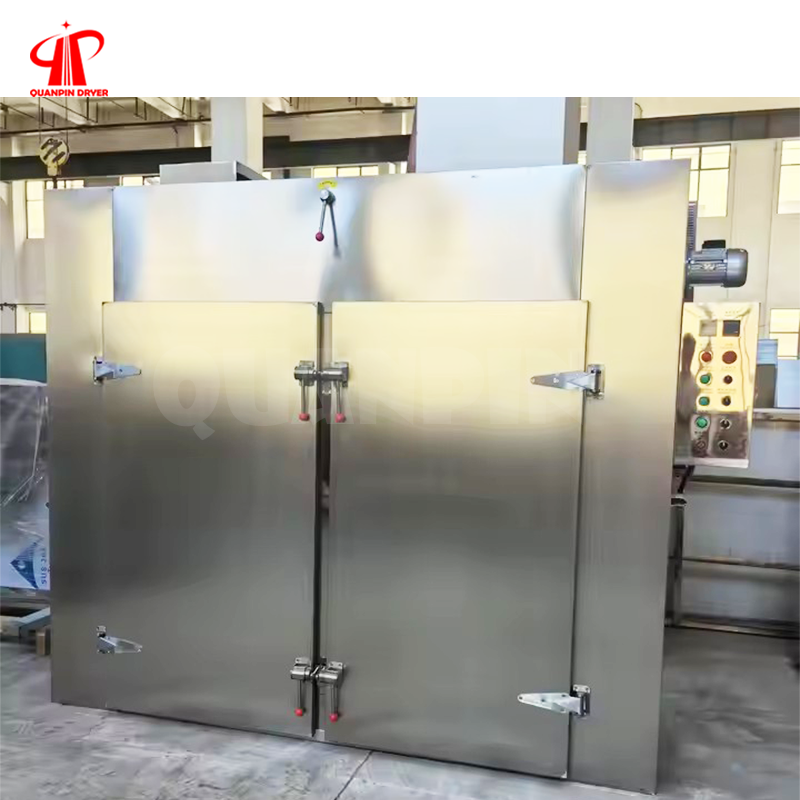
The equipment images illustrate the QUANPIN oven family. They do not show the analytical laboratory, prove a resistant-starch target or establish a supplied downstream food-processing line.
Research samples are not QUANPIN customer performance demonstrations. Use the cited work to frame questions and identify variables, then ask for the proposed equipment scope and a material-specific trial.
Define an Acceptance Package for the Intended Food
A useful acceptance package separates dried-material condition, flour composition and the intended food result. Each result should answer a named question with a traceable sample and method.
Update the brief if the ingredient changes from pulp flour to unpeeled flour or the intended use changes from uncooked incorporation to a cooked product. Those changes alter the comparison that the development work must support.
Questions About Banana-Flour Drying Trials
Does green fruit establish a resistant-starch value?
No. A green-fruit description helps identify the raw material, but it does not establish a resistant-starch value without the specified analysis and sample preparation.
Can pulp flour and unpeeled flour be compared directly?
No. The tested fraction must be stated. Research on whole or unpeeled banana flour should not be transferred directly to pulp-only flour without a supporting comparison.
Can dryer temperature replace a resistant-starch assay?
No. Resistant starch needs the agreed analytical method. Temperature and moisture records describe the drying process and sample condition, not the measured starch fraction.
Does the flour result specify the cooked food?
No. Later cooking, extrusion and storage can change the material being tested. Assess the finished food under its stated recipe and method when that is the intended product.
Is one drying route best for every ingredient property?
No. Different drying routes and conditions can produce different functional outcomes. Select the tests needed for the intended ingredient instead of assuming one route is superior for every property.
What information belongs in the equipment enquiry?
Provide the raw-material identity, maturity description, fraction, preparation and loading plan, intended laboratory methods and final food application. Ask the supplier to confirm the proposed drying scope and trial requirements.
Discuss a Food-Ingredient Drying Trial
Discuss the material, processing objective and required trials with QUANPIN. Review the equipment information and the relevant industry applications, or send an enquiry through our contact page.
Email sales@qpdryer.com or stacie@qpdryer.com. Call +86 19850785582 or contact WhatsApp +86 15921493205 to discuss the proposed scope.
For process evaluation, consider the hot air oven for batch tray drying with circulating hot air. Confirm suitability with representative material, the required product properties and the proposed process conditions.