Sesame Powder Mixing: Validate Analytical Recovery Before Judging Ingredient Distribution
By QUANPIN
A conical screw mixer trial containing sesame powder needs an analytical method that can recover its target from the actual recipe. Differences between portions cannot automatically be assigned to poor mixing.
Analytical recovery describes how much of a known addition the method measures. Ingredient distribution describes how material is dispersed through a batch. These questions require different evidence.
Recognize What Each Assay Measures
An enzyme-linked immunosorbent assay, or ELISA, detects proteins through antibody recognition. Its result depends on extraction and on the specific proteins the antibodies recognize.
A DNA assay detects genetic material instead. Detecting sesame DNA does not directly quantify recoverable sesame protein or establish a finished food’s clinical safety.
Define the Sesame Mixing Duty
For a double screw cone mixer enquiry, describe sesame flour or seed particles accurately. Keep the intended recipe and the laboratory’s measurement responsibility visible from the outset.
The studies discussed here concern analytical methods in defined foods. They provide no universal mixer duration, cleaning validation, allergen release decision or equipment performance guarantee.
Five Inputs for the Laboratory Brief
Sesame preparation
Identify whether sesame enters as flour, intact seed or another preparation. A material change can affect both sampling behaviour and the laboratory extraction procedure.
Recipe matrix
Record the accompanying ingredients and their proportions. A method demonstrated in bread or oil requires evaluation before use in a different dry premix.
Target and units
Define the analytical target and reporting basis. Sesame ingredient mass, sesame protein and sesame DNA are different quantities and should retain their own units.
Processing history
Describe any roasting, heating or subsequent processing. Compare material sampled at equivalent processing stages when evaluating an apparent change in analytical response.
Sample preparation
Agree how portions will be collected and prepared. Grinding, extraction and subsampling should remain identifiable alongside the original sampling location and batch stage.
Check Extraction in the Actual Recipe
Use these inputs to write the laboratory brief before conducting a mixing comparison. Otherwise analytical uncertainty may be mistaken for a processing explanation.
A 2024 sesame ELISA investigation developed monoclonal antibodies and a dedicated extraction buffer, evaluating both raw ingredients and foods containing sesame during manufacture.
Its reported recoveries in processed foods were incomplete despite good repeatability. Repeating an assay precisely therefore does not by itself establish complete extraction from every recipe.
For a double screw conical mixer assessment, this supports checking method suitability before comparing locations. It does not establish a correction factor for another laboratory or formulation.
Six Stages through the Trial
Retain materials
First retain the actual sesame preparation and recipe components. Give the laboratory sufficient material to examine the matrix rather than only an isolated ingredient.
Define the question
Next agree the target, units and decision question. Recipe distribution and investigation of unintended carryover should have explicitly different interpretation plans and sampling designs.
Evaluate extraction
Evaluate extraction with suitable controls selected by the laboratory. Keep samples with sesame incorporated during preparation distinguishable from samples fortified immediately before extraction.
Collect portions
Collect independently identified blend portions using the agreed plan. Preserve location or discharge-stage information rather than pooling every portion before the uniformity question is assessed.
Run controlled measurements
Run the agreed method with its controls and record any required dilution. Keep results outside the validated working range separate from valid quantitative comparisons.
Review combined evidence
Review recovery, analytical variation and between-portion variation together. Investigate conflicting results before changing the mixing programme or assigning the batch an acceptance status.
Compare Matrix-Dependent and DNA Evidence
Matrix-dependent ELISA
An original sesame sandwich ELISA study compared assays across food matrices and found that relative recovery depended on the food being tested.
An assay performing well for tahini in peanut butter did not perform equally well in baked bread. A favourable result in one matrix cannot settle another recipe’s suitability.
This distinction makes a matrix-matched control useful when troubleshooting. Changing mixer settings while the extraction remains unsuitable may leave the underlying measurement problem unresolved.
DNA markers
A real-time PCR marker study developed sesame and flax detection methods for amaranth-containing products and evaluated their practical application in commercial foods.
Its target was DNA. Such an approach can support an identity investigation, but its reported signal should not be relabelled as a direct sesame-protein concentration.
Decide whether a second method addresses the same measurand or a different question. Agreement about sesame presence is different from agreement about numerical protein recovery.
Colour-based DNA detection
A DNA-functionalized gold nanoparticle investigation used a colour response to detect sesame DNA, including an amplification strategy and software-based colour analysis.
The method demonstrates another recognition principle. It does not establish that visual colour changes in a production powder are a substitute for validated ingredient assays.
For a conical screw blender comparison, retain the distinction between the laboratory platform and the mixer. A product image cannot establish that analytical instruments are included.
Assign Responsibilities and Select Targets
The equipment supplier should receive the process duty and material description. The laboratory should define assay suitability, controls, reporting limits and interpretation of the resulting measurements.
Neither responsibility disappears when a method has a low published detection limit. That limit belongs to the tested method and conditions, not automatically to every production sample.
A further sesame immunosensor investigation specifically targeted the oleosin allergens Ses i 4 and Ses i 5 rather than sesame DNA.
This adds a target-selection question to method comparison. Two platforms recognizing different biological components should not be expected to produce interchangeable numerical results without validation.
Interpret Conflicting Portion Results
If portion results vary, first review controls and preparation records. Then consider whether genuine ingredient variation remains after the analytical contribution has been understood.
If controls perform acceptably, compare the independent portions under the agreed criteria. If controls fail, resolve the analytical problem before interpreting any apparent spatial pattern.
Prepare the Equipment Enquiry
A conical powder mixer enquiry should include material forms, ingredient proportions and the intended batch process. State the sampling and analytical work required for the trial.
Provide the downstream use of the blend and any processing before testing. These facts help define relevant samples without asserting a universal analytical method or machine configuration.
Ask the supplier to confirm the proposed equipment scope against the actual application. Published laboratory studies cannot establish an offered machine’s construction, capacity or operating settings.
Keep acceptance decisions with the responsible food-quality team and its validated procedures. This article supplies a development framework rather than a food-release or labelling decision.
A uniform distribution of a declared sesame ingredient is a different objective from demonstrating control of unintended sesame in another recipe. Record which objective the trial addresses.
Retain sufficient documentation to interpret later recipe changes. A new ingredient matrix or sesame preparation may justify reassessing the method before comparing new and previous batches.

Connect the Trial to Equipment Selection
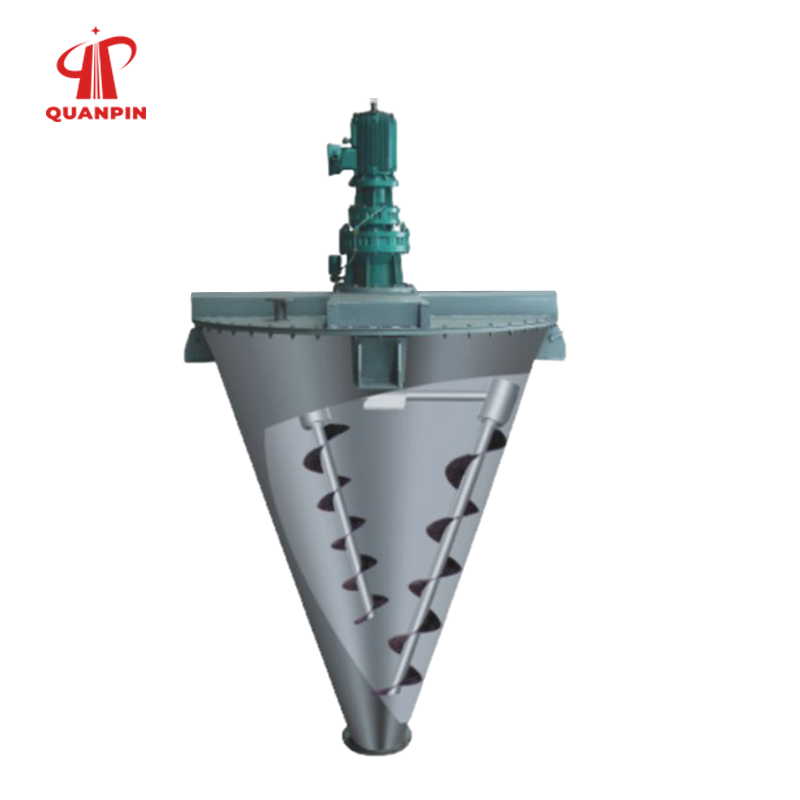
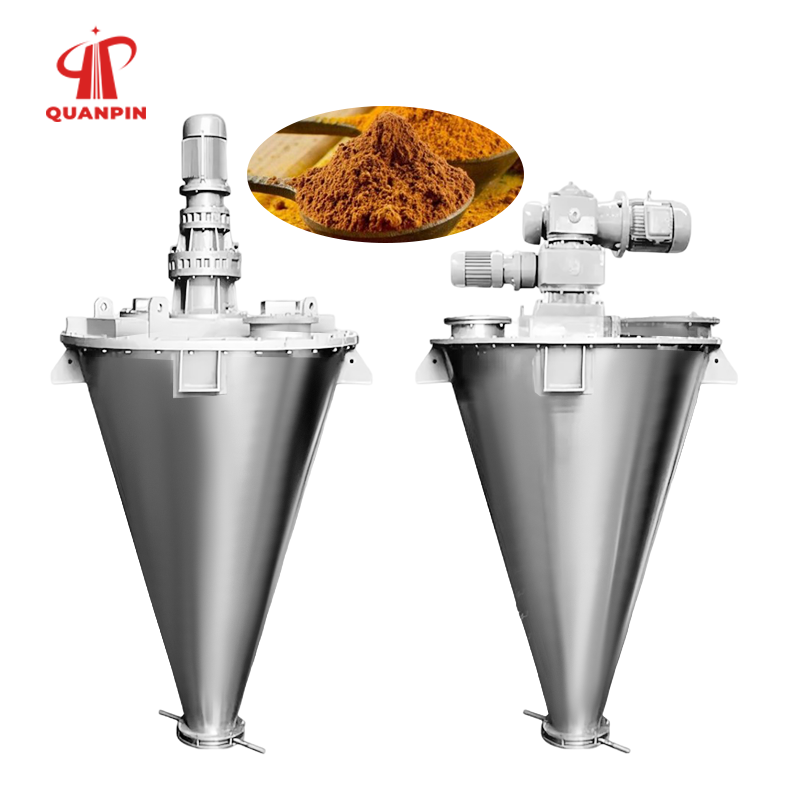
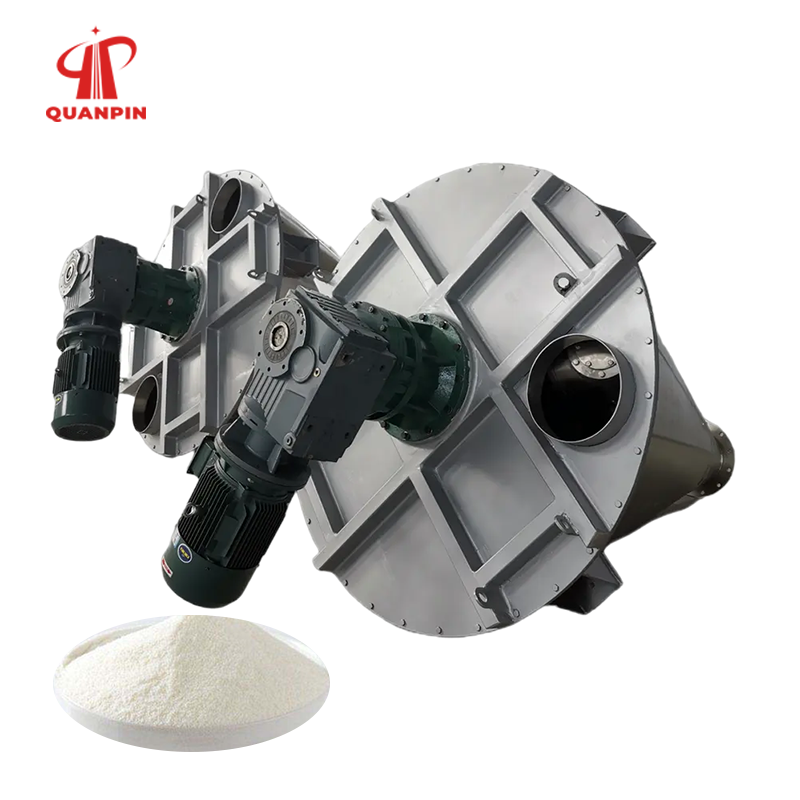
Review the DSH Series Double-Screw Conical Mixer with the supplier against the documented powder forms, recipe and process duty.
Bring the laboratory’s extraction and target-selection questions into the equipment discussion. This helps define which samples the trial must supply for meaningful evaluation.
Confirm the Decision Responsibilities
Discuss the intended sesame-containing blend with QUANPIN and retain the agreed equipment scope alongside the analytical brief.
Confirm the quality team’s decision criteria before the trial begins. Interpretable laboratory results support that decision; a research paper alone cannot authorize batch release.
Frequently Asked Questions
Does low recovery prove poor mixing?
No. Low recovery can arise from an unsuitable extraction or assay response. The mixing interpretation requires appropriate analytical controls and a defensible sampling plan.
Does PCR measure sesame protein?
No. A DNA-positive finding concerns the genetic target under the assay conditions. It does not independently establish the mass of recoverable sesame protein.
Can a published detection limit be transferred?
No. A published detection limit is method-specific. The laboratory should establish whether the actual matrix and preparation support the intended quantitative or qualitative decision.
Will a bread assay suit a dry premix?
Not automatically. The sesame ELISA comparison showed matrix-dependent recovery, so suitability should be examined in the actual premix and relevant processing condition.
Should a second method be used?
It can help answer another question, such as ingredient identity, when appropriately validated. Methods measuring different targets require interpretation rather than simple numerical averaging.
What should the enquiry include?
Include the recipe, sesame preparation, processing stage, sample plan and laboratory method. Add the proposed equipment duty so the supplier can assess the relevant mixing application.
Discuss Your Sesame Mixing Application
Discuss the material, processing objective and required trials with QUANPIN. Review the equipment information and the relevant industry applications, or send an enquiry through our contact page.
Email sales@qpdryer.com or stacie@qpdryer.com. Call +86 19850785582 or contact WhatsApp +86 15921493205 to discuss the proposed scope.