Double Cone Blending: Separate Electrostatic Charge Measurements from Pharmaceutical Composition Uniformity
By QUANPIN
A double cone blender trial can change electrostatic charge without demonstrating a more uniform pharmaceutical composition. Evaluate the charging result alongside an ingredient assay, rather than treating either measurement as interchangeable.
Net charge describes an electrical balance over the collected sample. Ingredient concentration describes composition; two portions can have comparable net charge while containing different proportions of a drug.
Charge and Concentration Answer Different Questions
Triboelectric charging arises during contact and separation. The observed response depends on the material pair, movement history and environment, not simply whether the powder was mixed.
An electrometer connected to a Faraday cup measures collected net charge. Dividing by collected mass produces charge-to-mass ratio under the stated sampling conditions.
Define the Proposed Equipment Boundary
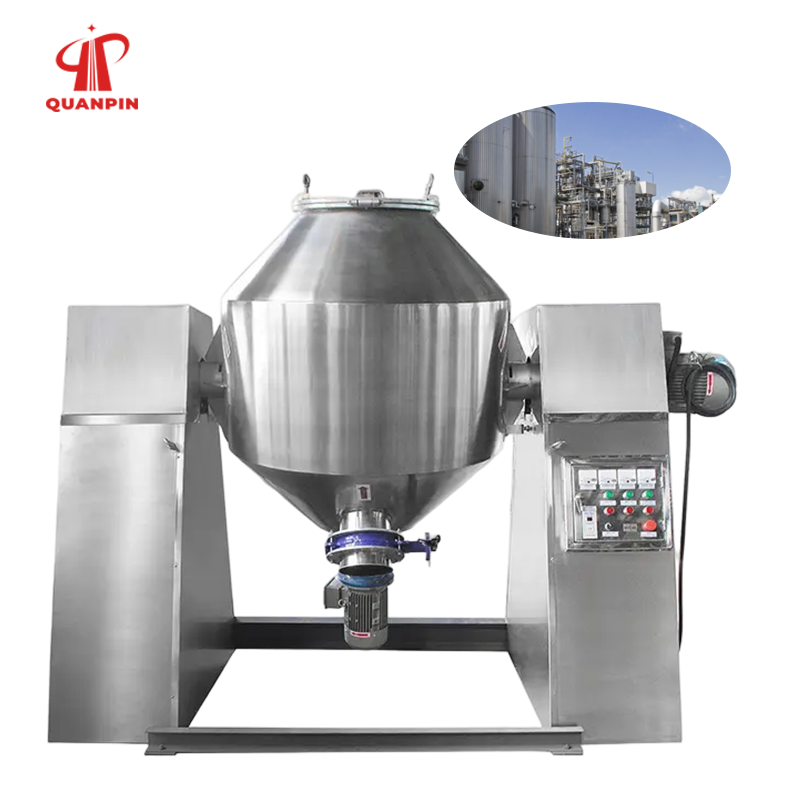
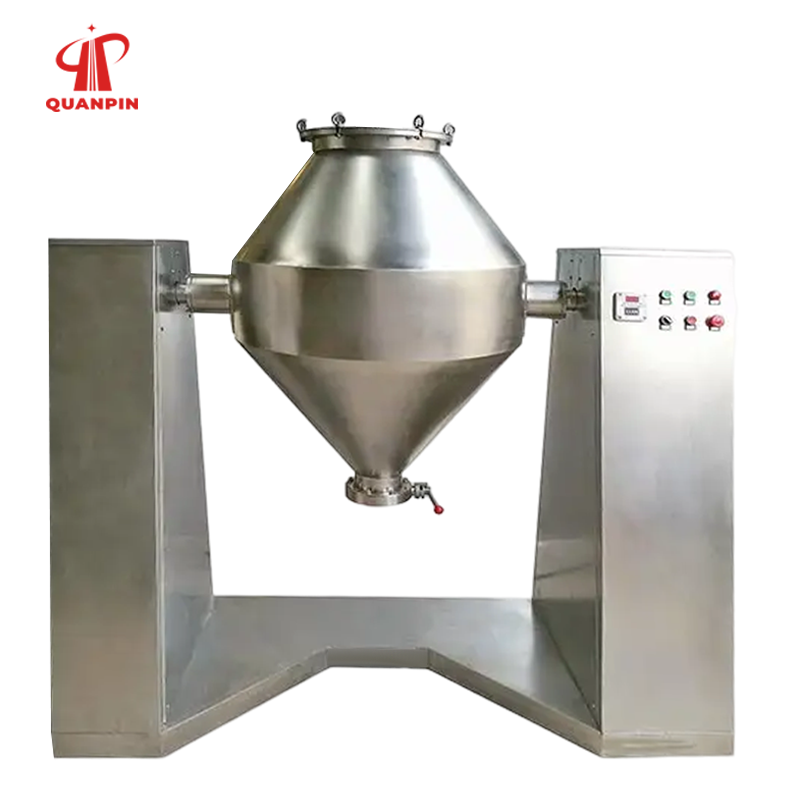
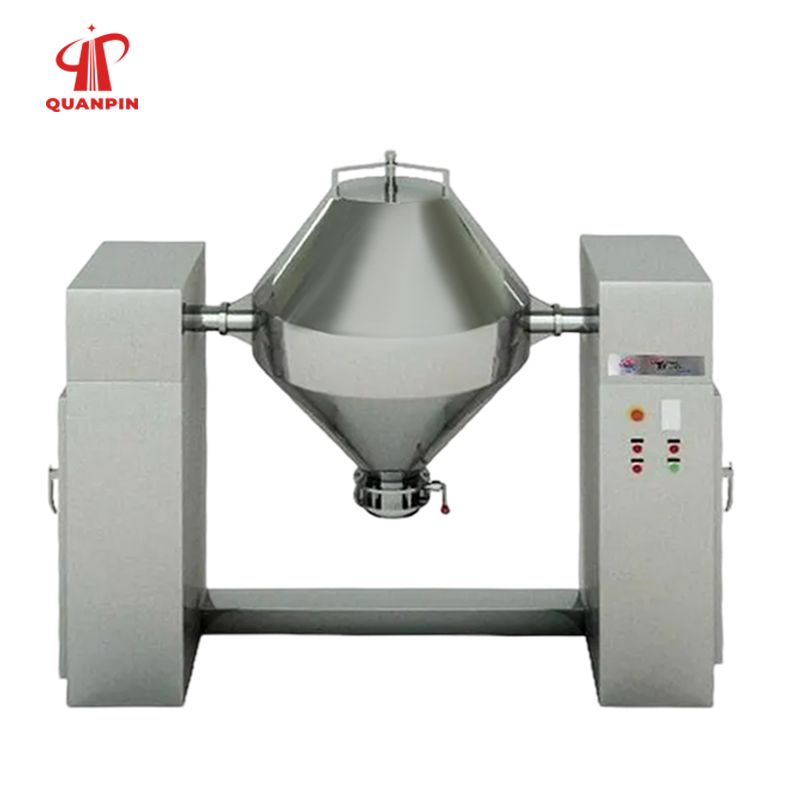
The proposed double cone mixer configuration needs its own material trial. Laboratory shaking containers and modified V-blenders discussed here do not establish its performance.
Confirm product-contact materials and the agreed processing duty. No charge-neutralization system, specialized surface treatment or electrical measurement instrument is assumed included.
Five Inputs for an Electrical Comparison
Ingredient identity
Identify the actual drug and excipient grades. A change in chemical form can affect charging even when the ingredient is described by the same parent-drug name.
Contact surfaces
Record the contacting surfaces along the relevant handling route. The mixer wall is not necessarily the only surface encountered before measurement.
Humidity and conditioning
Describe powder conditioning and surrounding relative humidity. A common environmental reading does not demonstrate equivalent water uptake by different ingredients.
Charge collection
Define the collection point and delay before charge measurement. The specimen’s handling history remains part of what the electrical result represents.
Independent assay
Set an independent ingredient-assay and sampling plan. A charge result alone cannot supply an unmeasured concentration distribution across the batch.
Examine Wall-Retained Material Separately
Wall adhesion can change which material reaches the collected specimen. Examine the retained fraction as a separate observation when the trial question requires it.
An original lactose and hydroxypropyl-cellulose experiment measured charging in a shaking apparatus and compared the composition of bulk and wall-adhered material.
The authors used selective dissolution and gravimetric analysis to investigate segregation. Their wall-adhered fraction could differ substantially from the bulk mixture.
That finding supports distinguishing retained material from the discharged sample. It does not provide a universal acceptable charge level for a double cone powder mixer.
Six Stages from Ingredients to Interpretation
Incoming material
Before mixing, preserve ingredient identity and conditioning records. Otherwise a charging difference may reflect a changed starting material rather than processing.
Mixing history
During mixing, record the actual equipment and movement programme. Research times from a shaking instrument cannot specify a production tumble-blending endpoint.
Transfer history
During transfer, identify relevant contact surfaces. A specimen collected after a chute or receiving vessel includes more history than the blending operation alone.
Electrical measurement
During charge measurement, report the method and mass basis. Retain the polarity as well as the magnitude instead of reporting only an unsigned number.
Composition measurement
During composition testing, use the agreed analytical procedure. Keep assay specimens associated with the material fraction they actually represent.
Joint interpretation
During interpretation, compare the electrical and compositional results separately. An apparent relationship requires validation for the particular formulation and method.
Read Material-Specific Charging Evidence
Humidity response
Environmental adjustment needs material-specific evidence. Increasing humidity should not be presented as a universally effective means of reducing powder charging.
An original humidity-conditioning investigation compared pharmaceutical powders including mannitol, paracetamol, microcrystalline cellulose and magnesium stearate.
Most investigated charging responses decreased as humidity increased, but mannitol showed a contrasting increase. Its findings do not establish a universal humidity target.
Formulation and adhesion
Formulation changes can alter charging and surface adhesion together. A measured relationship does not establish that electrical forces are the only adhesion mechanism.
An original theophylline and cellulose-ether study varied polymer properties and concentration and measured charging and adhesion in a defined laboratory arrangement.
The work included a separate dissolved-sample composition assay. Its charge-versus-adhesion relationship did not remove the need for independent compositional evidence.
Modified contact surfaces
Equipment-contact material provides another experimental variable. Its influence needs confirmation within the actual apparatus rather than a generic metal-versus-polymer ranking.
An original surface-modified V-blender investigation tested ibuprofen in conductor, insulator and combined-contact laboratory vessels and compared charging with a computational model.
The modified arrangements reduced measured charge in that experiment. They were specifically fabricated research equipment, not demonstrated features of the proposed QUANPIN double cone tumble blender.
Keep Chemical Form Distinguishable
Ingredient chemical form can also change the response. That makes an electrostatic reading dependent on formulation identity as well as equipment history.
An original flurbiprofen salt-screening experiment examined counterion-dependent charging and measured compression and adhesion as separate properties.
Its tested salts differed from the parent drug in charge and adhesion. This does not authorize changing a pharmaceutical formulation to simplify mixing.
Use the study as a boundary on interpretation: a charge difference may reflect chemistry. Formulation decisions require the appropriate pharmaceutical development assessment.
Define the Trial and Analytical Scope
For a double cone blender price discussion, identify the equipment duty and the separate laboratory responsibilities. An equipment quotation cannot replace analytical development.
Agree whether the trial will collect wall-retained material, transferred powder or another defined fraction. These observations answer different questions about the run.
Interpret Different Electrical and Assay Results
If net charge falls while assay variation remains unchanged, retain both findings. Reduced electrical balance alone does not establish improved concentration uniformity.
If retained wall material has a different composition, investigate the material balance and sampling basis. Do not silently combine it with the accepted collected fraction.
If polarity changes after a surface modification, document the actual surface and formulation. The result cannot automatically be transferred to another contact material.
If humidity affects two ingredients differently, assess the mixture experimentally. Averaging the separate ingredient responses is not a demonstrated blend prediction.
If a formulation change alters charge, distinguish its chemical contribution from the mechanical processing contribution. Multiple simultaneous changes make causal attribution harder.
If electrical and assay results appear correlated, preserve the validation conditions. A relationship demonstrated for one formulation is not an independent universal composition method.
Prepare a Pharmaceutical Blending Enquiry
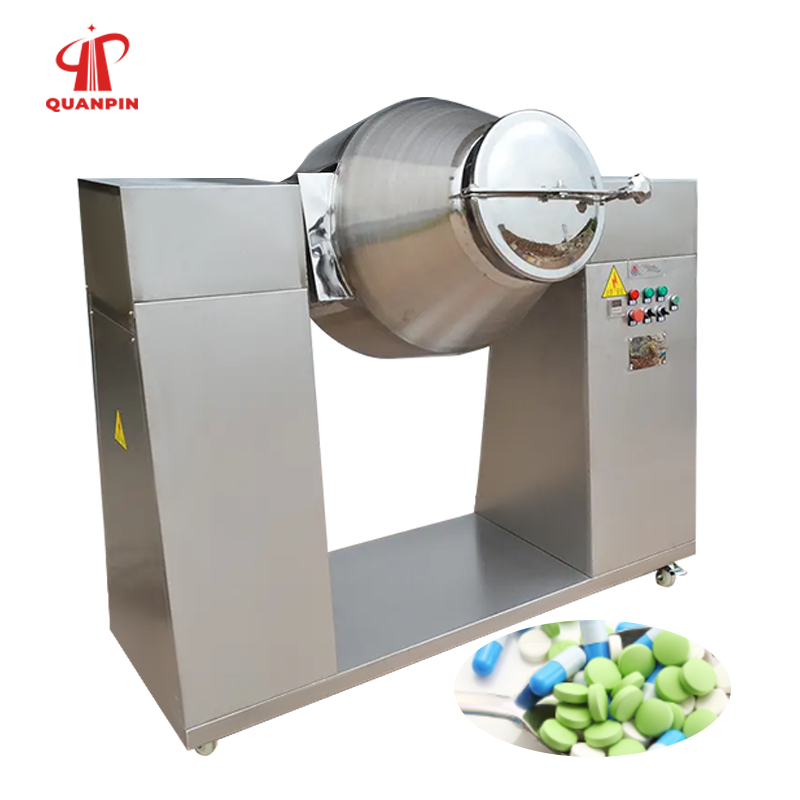
Prepare the enquiry with ingredient identities, intended use and the electrical question to investigate. Include the independent concentration-uniformity objective for the pharmaceutical blend.
Describe the available analytical facilities and the collection route. Confirm what representative samples the equipment trial can provide for those evaluations.
Confirm the Development Responsibilities
When reviewing the proposed scope, distinguish mixing, powder transfer and charge measurement. Each introduces a different task and may require separate equipment or laboratory work.
The useful conclusion states what changed electrically, what changed compositionally and what remains unresolved. It does not reduce the batch decision to one charge number.
Frequently Asked Questions
Does low net charge establish uniformity?
No. Net charge is an electrical balance over collected material, while blend uniformity requires evidence about ingredient concentration across representative portions.
Does humidity always reduce charging?
No. The humidity study found material-dependent responses, including a contrasting response for mannitol. Confirm the actual formulation rather than choosing a universal adjustment.
Does charge explain every adhesion result?
Not automatically. Adhesion involves electrical and other interactions, and the experiments do not establish one universally decisive mechanism for every powder.
Does research prove supplied surface modification?
No. Surface-modified research vessels were purpose-built experimental equipment. Their findings do not establish that a standard commercial mixer contains those surfaces.
Can salt form be changed to simplify mixing?
No. Salt selection is a separate pharmaceutical development decision. Its electrostatic consequences cannot justify changing an approved or developing formulation without appropriate assessment.
What should the enquiry include?
Provide ingredient identities, contact materials, conditioning history, charge method and a separate assay plan. Define the material fractions each proposed observation will represent.
Discuss Your Blending Application
Discuss the material, processing objective and required trials with QUANPIN. Review the equipment information and the relevant industry applications, or send an enquiry through our contact page.
Email sales@qpdryer.com or stacie@qpdryer.com. Call +86 19850785582 or contact WhatsApp +86 15921493205 to discuss the proposed scope.
For process evaluation, consider the double-cone blender for gravity-driven blending in a rotating double cone. Confirm suitability with representative material, the required product properties and the proposed process conditions.