KZL Granulator-Crusher: Distinguish Granule Friability from Sieve-Size Classification
By QUANPIN
A granule-size report and a friability result describe different aspects of a pharmaceutical material. Passing a selected sieve does not establish how readily the granules break or abrade under a particular test.
When evaluating granulation equipment, identify the question before comparing results. An output-size objective, resistance to handling damage and suitability for later compression need their own evidence.
Define the Property Being Evaluated
Sieve classification groups material according to a defined procedure and openings. Its report should identify the tested specimen and the method used to produce the distribution.
Friability describes the response to an identified mechanical test. The applied stress, sample preparation and calculation basis matter when interpreting the result.
Separate Classification from Mechanical Response
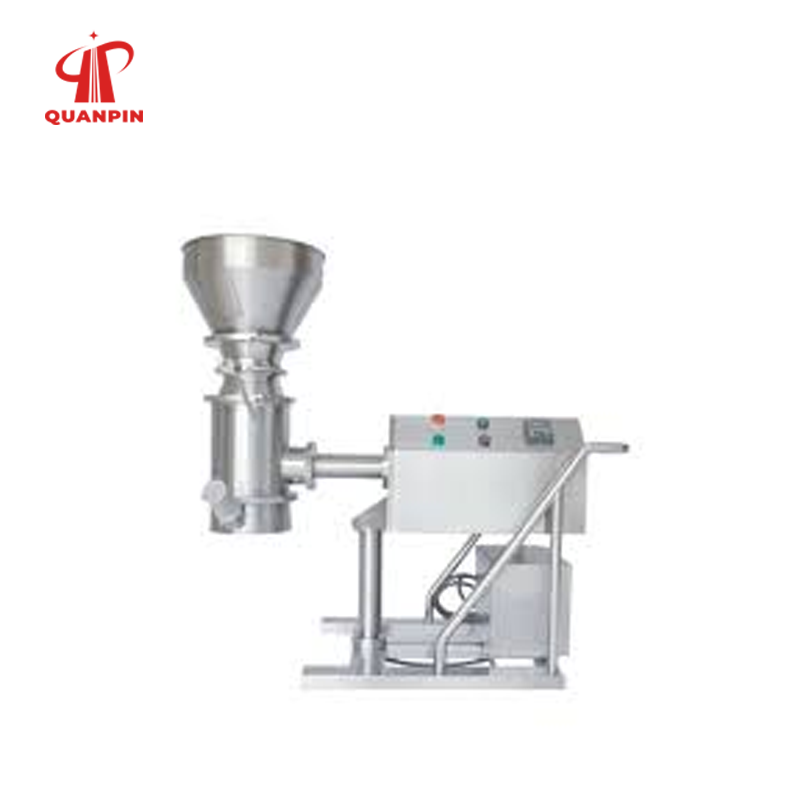
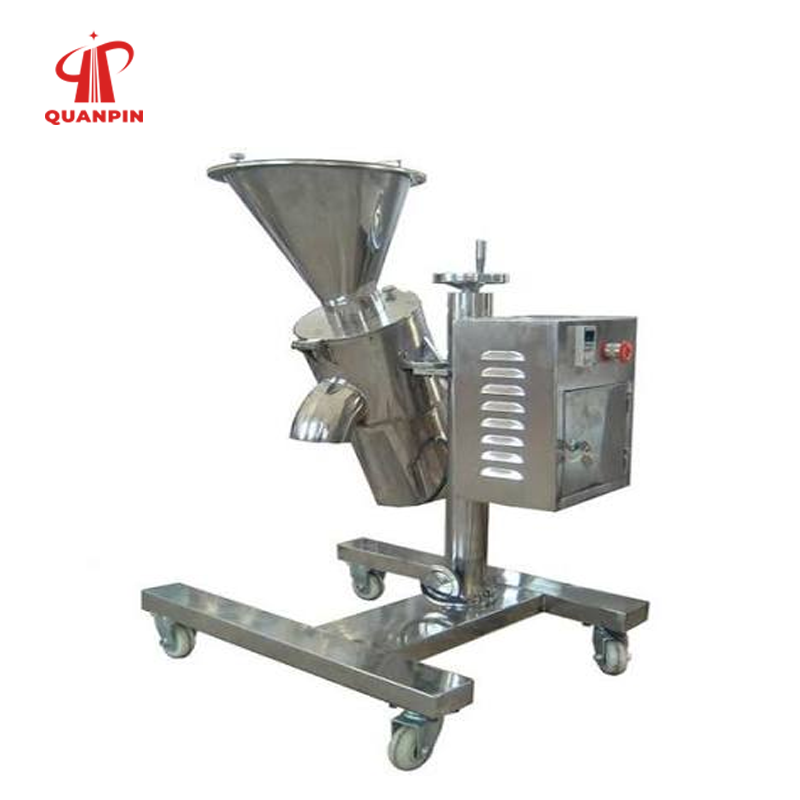
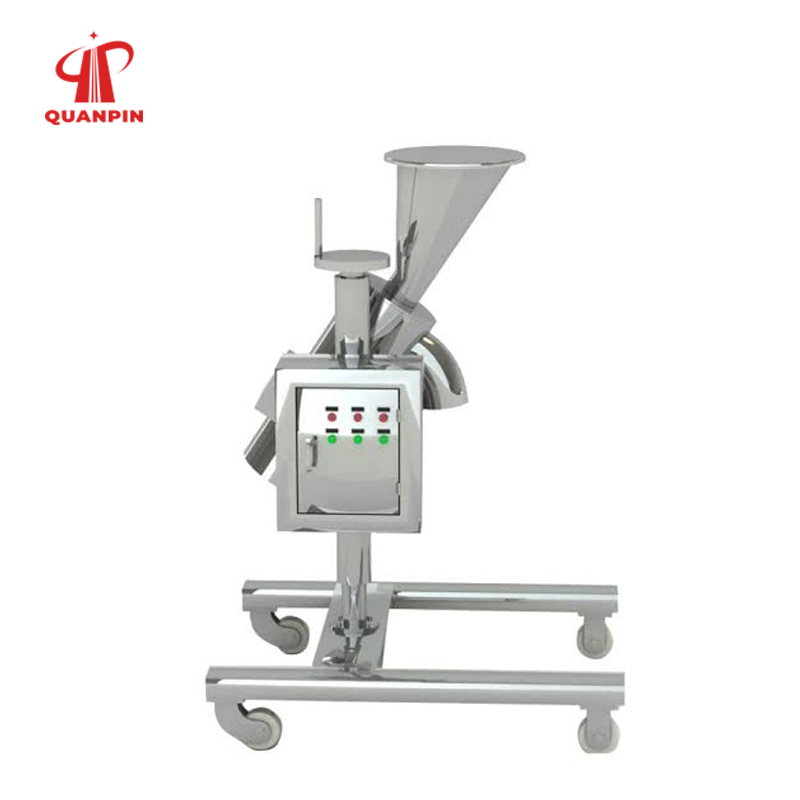
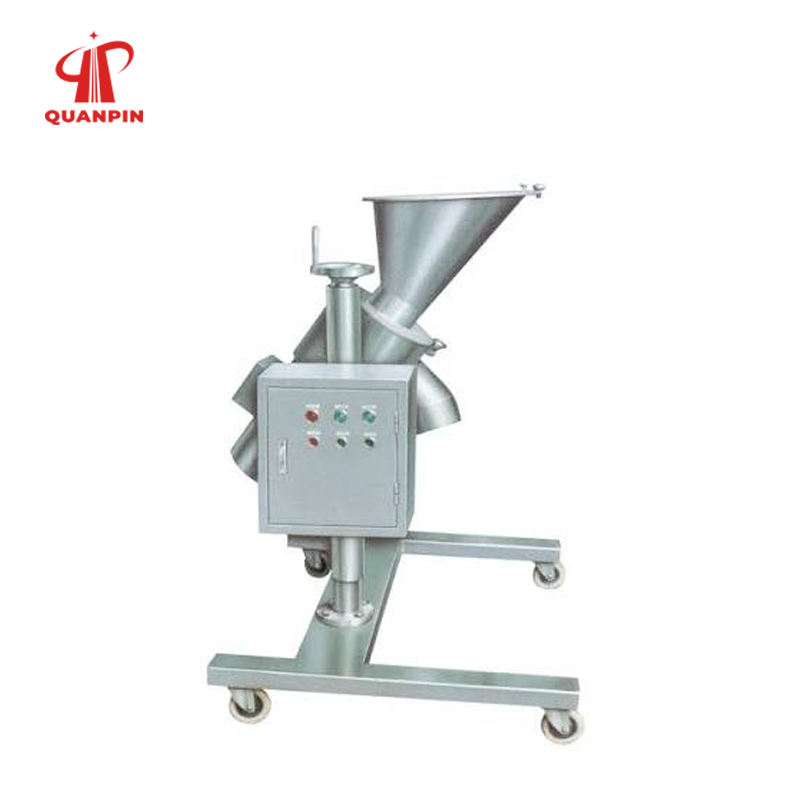
A KZL High-Speed Granulator/Crusher enquiry should connect the intended sizing operation with a representative feed description. It should not describe the screen opening as a mechanical-strength specification.
Two specimens within the same size class can differ in preparation, composition or internal structure. Those differences deserve consideration before an observed response is attributed to the sizing equipment.
Record Five Specimen Details
Formulation identity
Identify the formulation and lot. A broad excipient description is insufficient when the comparison depends on the actual composition.
Preparation history
Retain the preparation history, including relevant upstream wet granulation and drying steps. Sizing is a separate operation from creating the original granules.
Size fraction
Identify the tested size fraction and how it was isolated. A selected fraction should not silently represent the entire collected output.
Test procedure
Record the mechanical-test procedure and any sample conditioning. A change in method can prevent a direct numerical comparison even when the material name remains unchanged.
Result basis
Specify the calculation and reporting basis. Distinguish mass loss, fracture load and other measured quantities rather than using strength as an unexplained umbrella term.
Understand Why Size Alone Is Insufficient
Original research on dry-granulated cellulose/lactose mixtures investigated composition and compression behaviour across prepared granules. Its material-dependent findings show why an external size class cannot alone describe the subsequent mechanical response. See original research on composition and granule compression.
That experiment did not test a QUANPIN KZL. Its numerical conditions and outcomes cannot be copied into a sizing proposal as a performance guarantee.
Mechanical response involves the actual formulation and its preparation history. Retain separate measurements rather than treating one favourable size distribution as proof of later performance.
The value of this comparison is its explicit measurement of multiple attributes. It does not establish that every formulation follows the same ranking between techniques.
Follow Six Evaluation Boundaries
Upstream processing
At the upstream boundary, identify the granules entering the sizing operation. Preserve the actual preparation and material condition rather than assuming equivalent feed across trials.
Sizing configuration
At configuration review, record the installed sizing arrangement. Ask QUANPIN to confirm the supplied components relevant to the intended duty.
Collection
At collection, identify the receiving vessel and collection interval. Retain enough information to connect each specimen with the actual trial.
Sample division
During sample division, preserve specimen identity and the division method. Do not combine different processing conditions before their intended comparison is complete.
Mechanical evaluation
During mechanical evaluation, follow the agreed test procedure. Record deviations before interpreting a preferred outcome.
Downstream assessment
At downstream assessment, identify what is actually tested. Compression performance or final-tablet quality should not be inferred solely from a granule-size result.
Use a Defined Test Method
Describe the applied stress
For a high speed granulator trial, define the required output and the tests that will evaluate it. Specify which party supplies and interprets each test.
Original dry-granulation research studied deformation and fragmentation during compression using mixtures of systematically varied composition. The distinct mechanical responses were linked to tableting performance rather than inferred from a size class alone. See original research on granule deformation and fragmentation.
Original research on dry-granulated microcrystalline cellulose measured granule fracture strength and friability while examining size enlargement and hardening. See research distinguishing granule size and mechanical characteristics.
Compare equivalent specimens
The study supports asking separate questions about size and mechanical response. It does not introduce a universal release criterion for other pharmaceutical formulations.
When comparing specimens, keep the selected size range and preparation procedure visible. If they differ, explain the implications rather than treating the values as interchangeable.
Compare samples using an appropriate consistent method where feasible. A method change should remain part of the result’s interpretation.
Keep conclusions bounded
A pharmaceutical granulator model name does not identify an approved analytical method. The operation’s development and quality arrangements determine which evidence is suitable.
Record the limits of each observation. An acceptable test result for one attribute does not establish every other property required by the intended manufacturing route.
Preserve unsuccessful or unexpected observations. They may reveal that the comparison includes a material or method difference requiring investigation.
Interpret Formulation Research Carefully
Original research assessing plasticity of dry-granulated particles examined mechanical response in relation to tabletability. It provides a separate material-characterisation question from sieve classification. See original research on dry-granule plasticity and tabletability.
Its conclusions concern defined materials and preparation methods. Do not assume identical porosity or breakage behaviour in another formulation because a sieve result appears similar.
Where a proposed trial uses a surrogate, identify what it represents. A convenient specimen may demonstrate a transfer arrangement without reproducing the target material’s mechanical behaviour.
Do not treat a model study as a certificate for the supplied machine. Supplier configuration confirmation and material testing have distinct evidentiary roles.
Separate Granules from Finished Tablets
A study of real tableting mixtures compared selected granule-size fractions with unsieved mixtures and evaluated compression and tablet properties. See original research on granule fractions and tableting behaviour.
Keep the object of each test clear. Friability measured on finished tablets is not the same measurement as friability of the granules entering compression.
Investigate Changes without Assuming Their Cause
If the size distribution changes after handling, retain the relevant before-and-after specimen identities. Do not immediately assign the change to a particular machine component.
Review possible differences in feed preparation, collection and test execution within the investigation. The record should support the explanation being considered.
Obtain specimens only through agreed safe arrangements. Do not open operating equipment or improvise access to inspect granules.
A sizing enquiry should respect material hazards, containment and cleaning requirements. This discussion does not specify changes to protective equipment or safe operating procedures.
Send QUANPIN the formulation family, feed condition, required sizing duty and the attributes to be evaluated. Explain how representative specimens will be supplied.
Ask for confirmation of configuration and trial responsibilities. Avoid asking a supplier to guarantee an unspecified friability result without a defined material and method.
Prepare a KZL Trial Enquiry
Retain the size report, mechanical-test report and specimen history together. A reviewer should be able to identify which conclusion each item supports.
Record unresolved questions explicitly. Clear boundaries are more useful than describing one favourable number as proof of complete suitability.
Retain the Evidence for Each Conclusion
Discuss the intended KZL sizing duty through the verified product and contact links below. Describe the material and evidence needed to assess the proposed arrangement.
A useful trial keeps size classification, mechanical response and downstream suitability connected to identifiable specimens. It does not replace those distinct questions with a single equipment label.
Frequently Asked Questions
Does a sieve result measure friability?
No. A sieve procedure classifies size under defined conditions. Friability requires an appropriate mechanical test and its own reporting basis.
Can equal-sized granules differ mechanically?
Yes. Preparation, composition and structure can differ within a size class. The actual material and relevant testing determine whether that difference matters.
Is tablet friability a granule test?
No. Finished-tablet friability evaluates tablets, while granule friability evaluates granules under its specified method. Preserve that distinction when citing results.
Does sizing establish downstream performance?
Not independently. Later manufacturing stages require evidence appropriate to their own objectives and material conditions.
Can one published result define an acceptance limit?
No. A published experiment does not establish a universal limit for another formulation, test method or equipment arrangement.
What should QUANPIN receive?
Provide the actual feed description, sizing objective and proposed tests. Identify who collects specimens, performs measurements and reviews acceptance.
Discuss Your Granule-Sizing Duty
Discuss the QUANPIN KZL granulator-crusher for your application through our contact page.
Email sales@qpdryer.com or stacie@qpdryer.com. Call +86 19850785582, or contact us on WhatsApp: +86 15921493205.