Pharmaceutical V Blender: Distinguish Ingredient Potency Basis from Weighed Material Quantity
By QUANPIN
An ingredient’s potency basis and the mass of material weighed are different formulation inputs. A pharmaceutical V-blending enquiry should not treat one as a complete description of the other.
For a pharmaceutical V blender study, preserve the approved formulation information and the actual supplied material before interpreting ingredient quantities. See pharmaceutical applications.
Equipment Principle and Evidence Limits
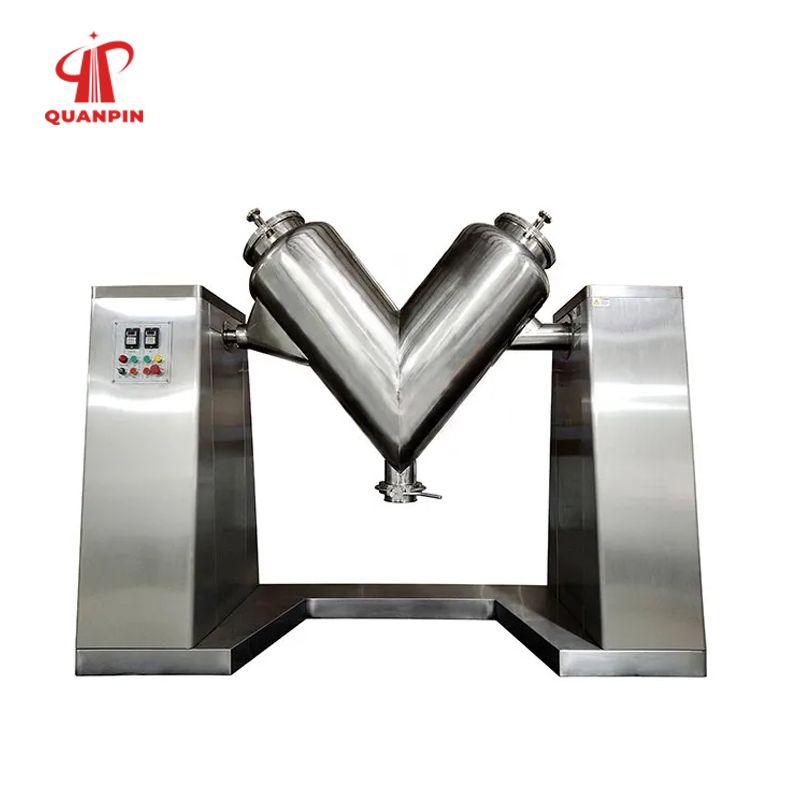
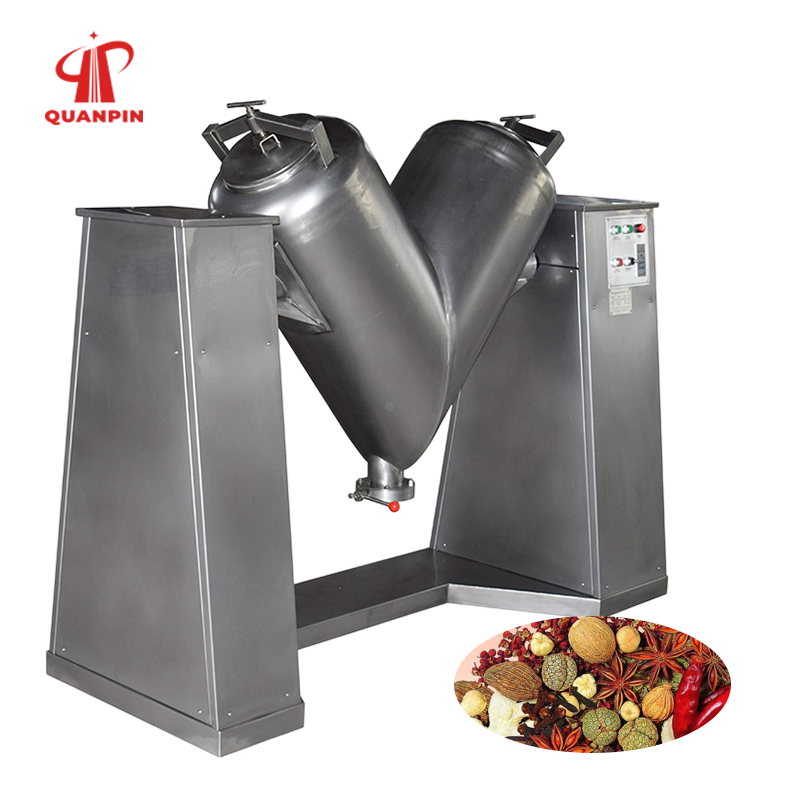
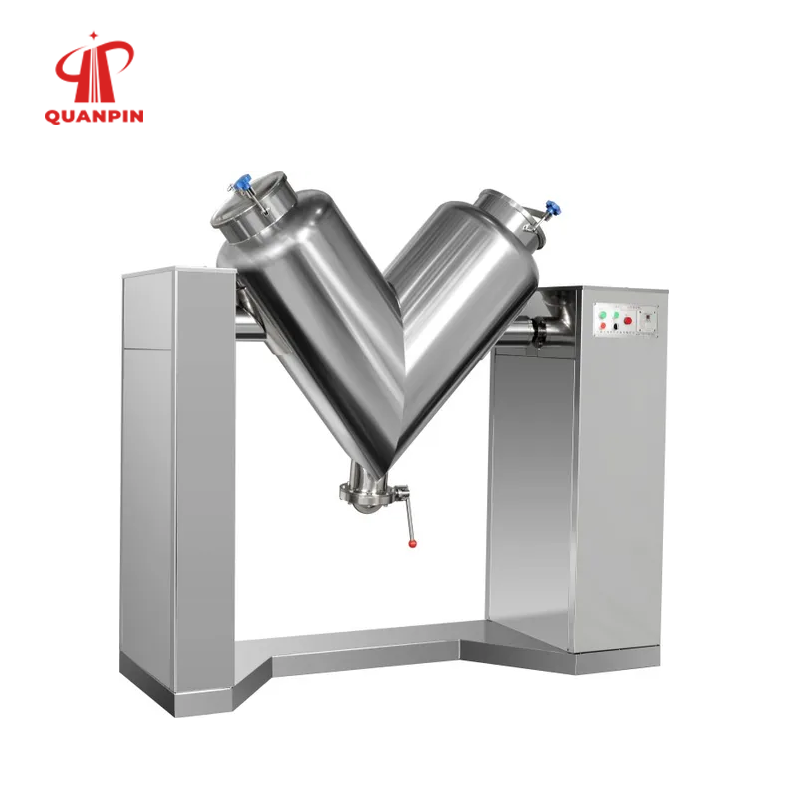
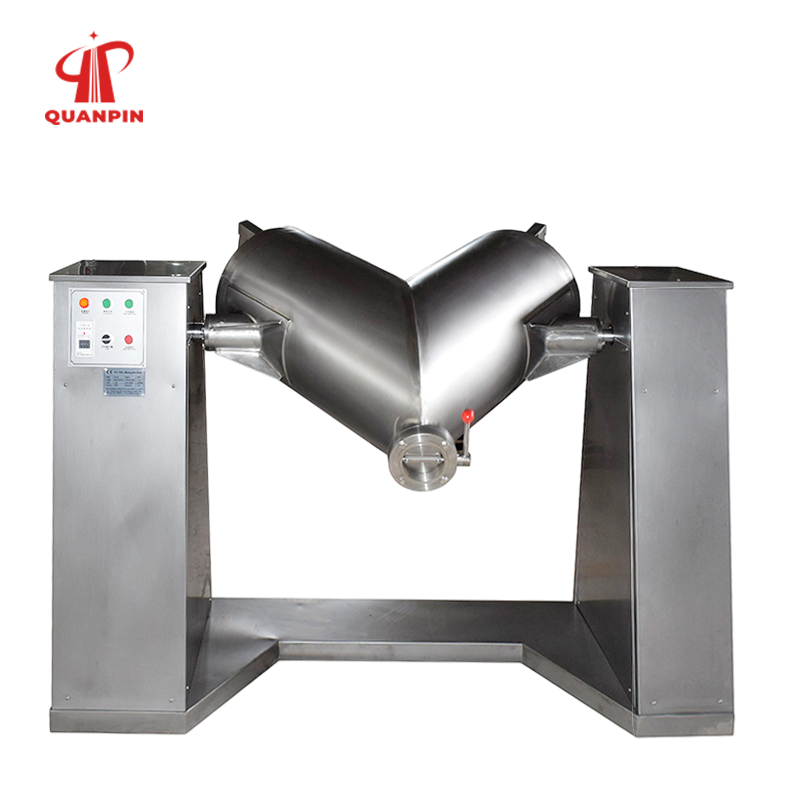
The V blender divides and recombines compatible dry ingredients through rotation of its vessel.
That V mixer mechanism does not determine a formulation’s potency correction or verify the customer’s calculation basis. Use product-specific development knowledge to justify the attributes being examined. See FDA ICH Q8 pharmaceutical development.
Define the Formulation and Charge Basis
Identify the supplied ingredient and the approved basis used to interpret its required contribution.
An unresolved formulation calculation belongs with the responsible formulation and quality review rather than an assumed mixer function.
Five Steps for a Traceable Comparison
Identify supplied ingredient and formulation
Identify the formulation and supplied ingredient reference.
State the confirmed composition basis
State the confirmed potency or other composition basis where applicable.
Preserve the approved calculation
Preserve the approved calculation and dispensing information.
Record actual vessel charging
Record the actual material charged into the vessel.
Interpret the identified formulation
Interpret blend evidence against the correctly identified formulation.
Separate the Four Relevant Records
A supplier material reference identifies what was supplied.
A potency or composition statement describes an attribute on its documented basis.
A weighed quantity records a physical amount through the actual dispensing record.
A formulation decision explains how those inputs relate to the intended batch under the applicable approved procedure.
Equipment and Evidence Interfaces
Vessel and loading
The vessel and loading arrangement define the actual dry-blending scope.
Charging record
The charging record identifies the material introduced to that scope.
Rotating assembly
Rotation supplies the reviewed division-and-recombination action.
Blend sampling
Blend sampling provides material observations at stated collection boundaries.
Analytical method
The analytical method establishes the result for the identified sample.
Receiving process
The receiving process defines later operations beyond the blender’s confirmed function.
Interpret the Actual Results
Define the reference
A V cone blender enquiry should distinguish an ingredient’s commercial name from its actual supplied grade and applicable documentation.
Do not assume that two supplied materials contribute identically merely because the same nominal mass is listed.
A V type mixer study should retain the formulation basis used for the trial rather than update it silently when reviewing results.
Preserve the actual records
If information changes, identify the revised basis and preserve the original record of what was done.
The V powder blender cannot independently resolve an ambiguous potency statement or an undocumented calculation.
Likewise, an apparently uniform powder does not establish that the intended quantity of each formulation constituent was supplied.
Review the application evidence
Keep the calculation, dispensing and actual charging records distinguishable when investigating a concern.
The appropriate pharmaceutical team should determine whether a change requires further development or another authorized action.
This article does not calculate a batch adjustment or prescribe one universal correction for pharmaceutical ingredients.
Benefits and Limits of the Review
Separating the inputs can reveal a formulation-description issue before it is treated as a mixing-performance problem.
It can also prevent a material change from disappearing behind an unchanged recipe name. A development comparison should not be presented as complete validation of an untested production process. See FDA process validation guidance.
The distinction does not establish ingredient suitability or finished-product acceptance.
Those decisions require the actual formulation, material information and relevant product evidence.
Identify the Material and Method
Record the approved formulation reference and version.
Identify the actual supplied ingredient and available documentation. Assess relevant quality risks using the actual material and process context. See FDA ICH Q9 quality risk management.
Records, Handling and Safe Access
Preserve the confirmed potency or composition basis without guessing missing values.
Keep the authorized calculation and dispensing record identifiable.
State the actual charge and any recorded difference from the plan.
Retain analytical evidence with the material and formulation basis it represents. Interpret measurements through process understanding rather than treating an isolated instrument reading as product acceptance. See FDA process analytical technology framework.
Charging and sampling require the installed mixer’s approved operating and safe-access procedures.
Material identity, product-contact cleaning and relevant exposure requirements remain part of the actual application review.
Provide QUANPIN with the Application Scope
Send QUANPIN the material-handling duty and confirmed ingredient forms needed for equipment selection.
Keep pharmaceutical calculation and ingredient-disposition questions identifiable for the responsible formulation and quality reviewers.
Preserve the Evidence and Its Limits
Retain the equipment boundary separately from the authorized formulation decision.
Further mixing evidence should address the actual stated product question without implying that equipment supply approves a recipe calculation. Retain knowledge and manage adopted process changes through the pharmaceutical quality system. See FDA ICH Q10 pharmaceutical quality system.
Frequently Asked Questions
Are potency basis and weighed quantity equivalent?
Potency or composition information and a weighed material quantity answer different formulation questions.
Does a shared commercial name prove composition?
A shared commercial ingredient name does not establish equivalent supplied composition.
Which formulation records must remain identifiable?
The approved calculation basis should remain identifiable alongside the actual dispensing and charging records.
Does the blender provide potency correction?
The blender does not supply an unconfirmed potency-correction function.
Does visual uniformity prove correct inputs?
A uniform-looking sample cannot prove that all intended formulation inputs were correct.
What should the formulation-scope enquiry distinguish?
The enquiry should distinguish material identity, approved formulation basis, actual charge and the dry-blending equipment scope.
Discuss the Confirmed Application with QUANPIN
Discuss the confirmed ZKH(V) V-Type Mixer application with QUANPIN. Use the enquiry form or the contact page to describe your project.
Email sales@qpdryer.com or stacie@qpdryer.com. Call +86 19850785582, or contact us on WhatsApp: +86 15921493205.