Horizontal Ribbon Mixer for Food Powders: Define Post-Mixing Lump Assessment
By QUANPIN
A horizontal ribbon mixer trial should distinguish lumps visible after mixing from an incomplete distribution of ingredients. Appearance, agglomerate condition and composition answer different acceptance questions.
For food powders, define the required delivered product before deciding whether the observed lumps represent a problem. Explore matching food applications.
What Does the Reported Lump Represent?
The WLDH ribbon blender circulates compatible material through a trough using inner and outer helical ribbons.
That verified mixing principle does not establish universal deagglomeration or a guarantee that every incoming lump will disappear.
Ribbon Mixing and Incoming Ingredient Condition
A ribbon mixer study should describe the initial condition of each ingredient and the preparation used before charging.
Record any upstream screening or breaking operation separately; an unconfirmed preparation function should not be attributed to the mixer.
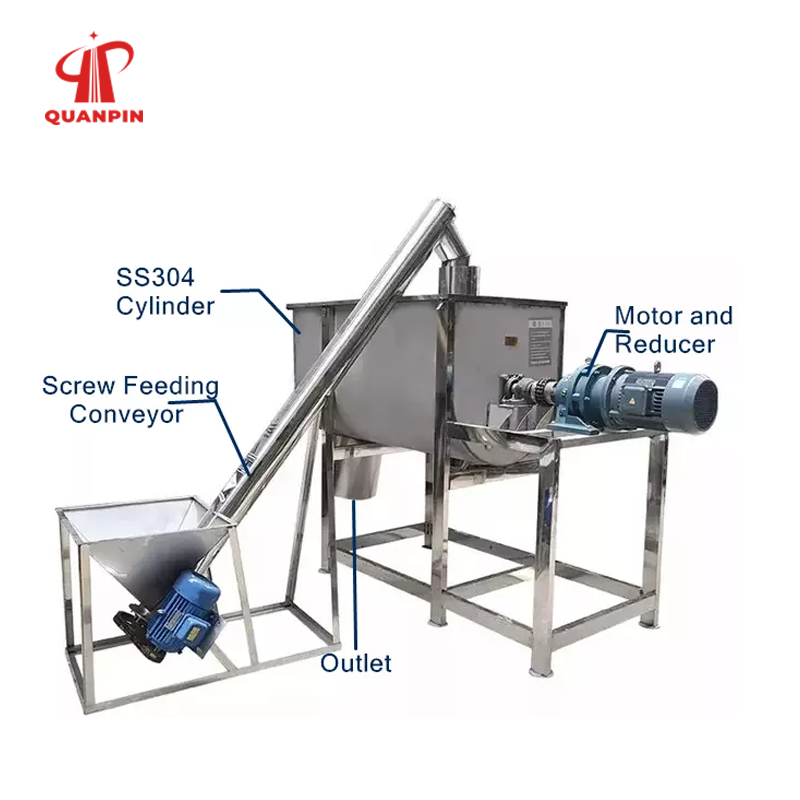
Five Steps for a Defined Assessment
Define the required product
Define the finished food-powder attributes that matter to its intended use.
Retain incoming references
Retain representative incoming ingredients with their preparation histories.
Specify the observation method
Describe how post-mixing lumps are identified and sampled.
Compare separate test results
Compare appearance and composition using appropriate separate methods.
Assess delivered material
Evaluate the material delivered after the agreed discharge and handling route.
Separate Observation from Sample Preparation
An ingredient particle, an agglomerate and a foreign object should not be grouped under an unexplained lump count.
Define the observation method so that different reviewers are examining the same product condition.
Record whether samples were assessed immediately or after a stated handling stage.
Avoid crushing the sample during collection and then describing the result as the undisturbed mixer output.
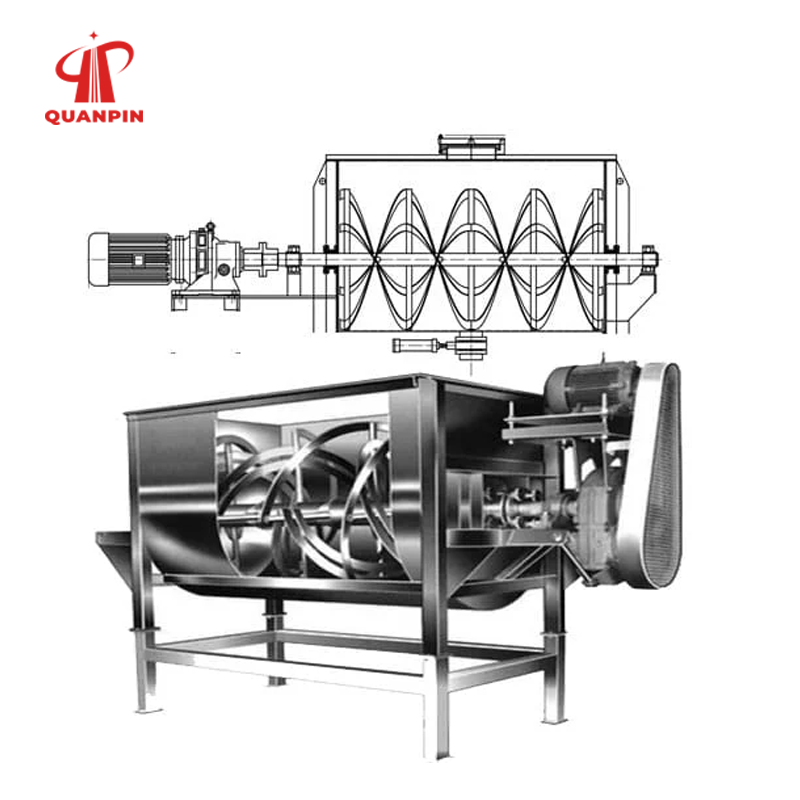
Mixing and Handling Interfaces
Working trough
The trough defines the working batch and the relevant product-contact surfaces.
Ribbon assembly
The ribbon assembly provides mechanical circulation rather than an assumed dedicated milling action.
Ingredient charging
The charging arrangement establishes how prepared ingredients enter the equipment.
Optional liquid addition
Any liquid-addition equipment must be expressly confirmed for the proposed configuration.
Mixer discharge
The discharge arrangement determines the immediate outlet sampling boundary.
Collection and packing
Collection and packing equipment create additional handling stages outside the vessel.
Investigating the Actual Food-Powder Finding
Investigate before assigning a cause
A ribbon powder mixer investigation should begin with retained ingredients when a post-mixing lump is reported.
Compare the observed material with the incoming references before assigning its origin to a machine setting.
Describe whether the lump contains one recognizable ingredient or an apparently mixed material, while keeping uncertain identification explicit.
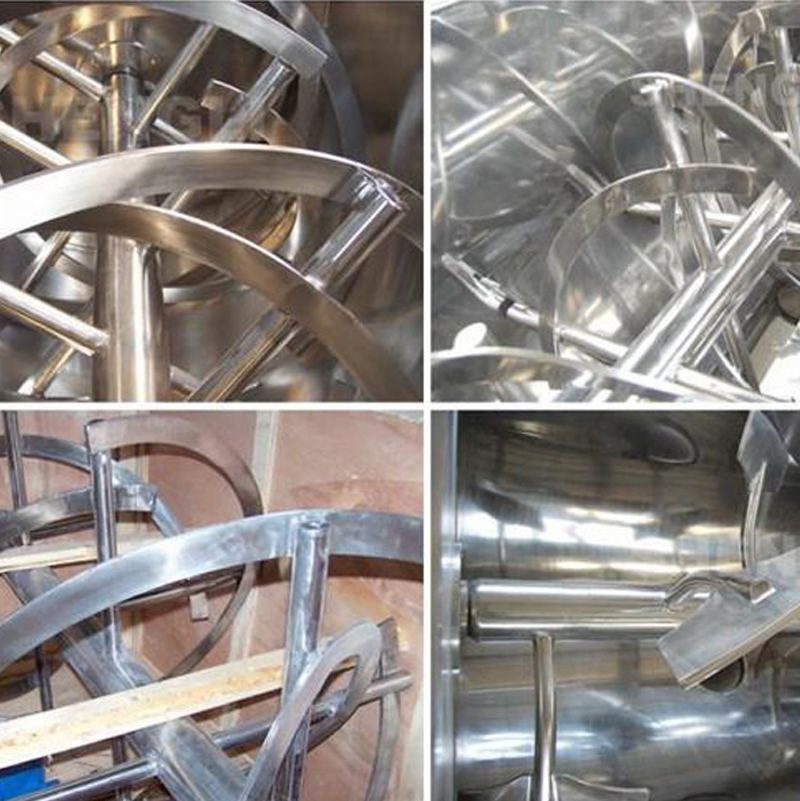
Separate physical and compositional evidence
Visual observations can guide an investigation but cannot establish composition or microbiological safety.
If laboratory examination is needed, preserve sample identity and explain how the specimen was prepared.
Separate an agreed physical-condition test from the analytical assessment of ingredient distribution.
Preserve the handling history
Review moisture information using its actual method and sampling point rather than assuming all lumps have the same cause.
Include the time and handling history between discharge and examination when interpreting the finding.
An industrial ribbon blender should be evaluated against the recipe and intended food application, not an undefined lump-free marketing phrase.
Food Application and Acceptance
A defined assessment can show whether an apparent difference arises before mixing, within the stated process or during later handling. Food equipment and processing need appropriate hygiene controls. See FDA food manufacturing practices.
It does not establish that every detected agglomerate is unacceptable or that a visually smooth blend is compositionally uniform. Identify allergens and cross-contact requirements when ingredients or carriers introduce them. See FDA food allergen information.
When moisture behavior is investigated, retain the measured properties with their actual methods and sampling points. Water activity describes a property different from total moisture content. See FDA water activity background.
A physical-condition finding should retain its exact observation method and cannot be treated as a compositional diagnosis.
Document the Recipe and Ingredient Preparation
Identify the actual recipe, ingredient grades and supplied premixes.
Record preparation steps such as separately confirmed sieving without assuming they are included with the mixer.
Assessment Records, Handling and Safe Access
Describe the fitted mixing arrangement and the supply boundary used for the trial.
State the collection point and the handling steps before inspection.
Define how physical-condition findings and composition results will be reported.
Preserve the retained samples and explain any preparation that could change an agglomerate.
Food-contact sanitation and handling requirements remain relevant even when the immediate investigation concerns appearance. Include relevant sanitation and handling requirements in the food-process review. See FDA sanitation and transportation resources.
Inspection or sampling must follow the installed equipment’s safe-access procedures; do not reach into a moving mixer.
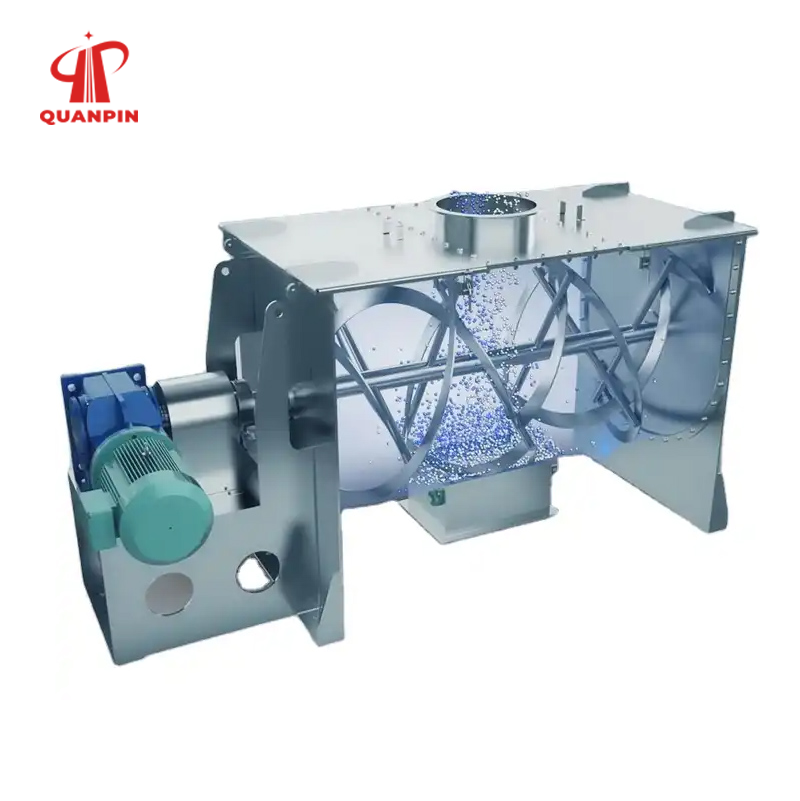
Provide QUANPIN with the Food-Powder Scope
Send QUANPIN the ingredient descriptions and photographs of the actual observed material with traceable sample identities.
Include the intended product condition, the observation method and the discharge-to-packing boundary. Food hazard analysis and relevant preventive controls are separate from demonstrating a preferred ingredient appearance. See FDA preventive controls for human food.
Retain the Mixing-Duty Evidence and Limits
The enquiry should distinguish a mixing duty from any separately proposed size-reduction requirement.
A representative trial can then address the specified physical condition without promising an untested product outcome.
Frequently Asked Questions
Does a lump prove poor distribution?
A visible lump does not by itself establish poor ingredient distribution.
Does ribbon mixing guarantee lump removal?
A ribbon assembly should not be described as a universal lump-removal device.
Why retain incoming ingredients?
Incoming references help investigate origin but do not replace appropriate identification or analytical tests.
Does smooth appearance prove food safety?
A smooth-looking powder does not establish allergen-control effectiveness or food safety.
Can later handling affect the observation?
Handling after discharge can create another observation boundary, so preserve the actual sample history.
What should the enquiry include?
The enquiry needs the recipe, incoming condition, agreed assessment methods and actual equipment scope.
Discuss Your Ribbon-Mixing Application with QUANPIN
Discuss the matching QUANPIN equipment with QUANPIN. Use the enquiry form or our contact page to describe the actual application.
Email sales@qpdryer.com or stacie@qpdryer.com. Call +86 19850785582, or contact us on WhatsApp: +86 15921493205.