V-Type Mixer for Pharmaceutical Powders: Plan the Interface with a Tablet-Press Feed System
By QUANPIN
A V-type blend accepted at discharge has not automatically been assessed at a tablet press. Define the receiving interface before describing a complete feeding route.
The pharmaceutical V blender enquiry should state where blending evidence ends and where later powder-handling evidence begins. See pharmaceutical applications.
Define Tablet-Press Feeding Interface
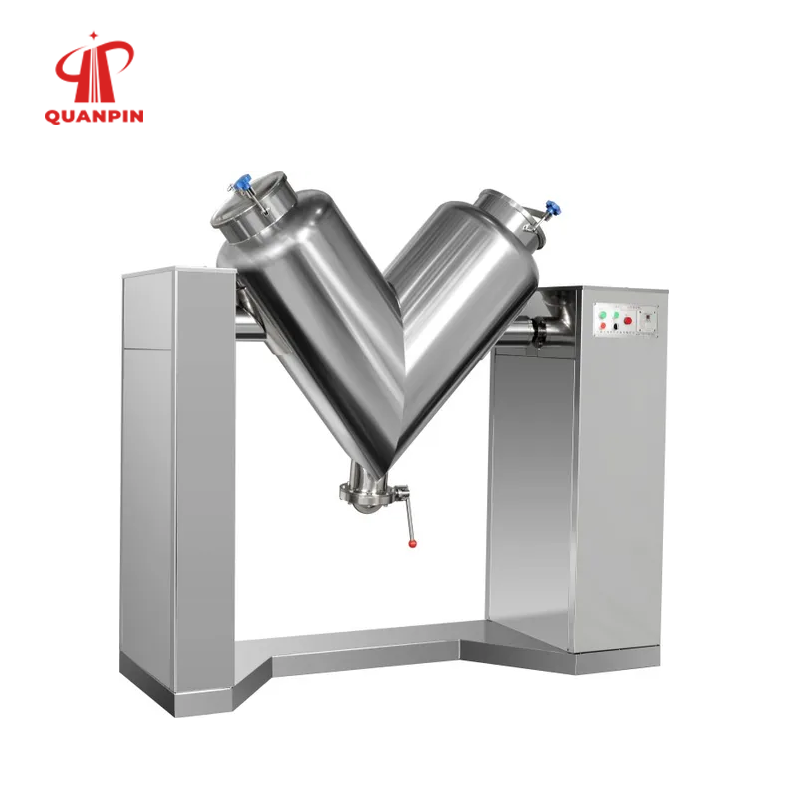
In the V blender, rotating vessel branches repeatedly divide and recombine compatible dry ingredients.
The V mixer mechanism does not establish the performance of a separately supplied tablet-press feeding system. Use product-specific development knowledge to justify the attributes being examined. See FDA ICH Q8 pharmaceutical development.
Equipment Principle and Application Scope
Describe the actual sequence between vessel discharge and the intended receiving operation.
Identify containers, holding stages and connections that were not present in the original blending study.
Five Steps for the Review
Blend Discharge
Locate the boundary used to accept the completed blend.
Receiving Container
Map the material route after discharge.
Transfer Connection
Identify each receiving container and connection.
Holding Stage
State where further product observations will be obtained.
Press Feed
Review responsibilities for the complete proposed interface.
Four Evidence Boundaries
An in-vessel sample and a sample collected near a press can represent different process stages.
Transfer or holding may occur between those observations and should remain traceable.
Do not assign a later change solely to the mixer before considering that intervening history.
The proposed route should identify who supplies external receiving and feeding equipment.
Components and Process Interfaces
Blend Discharge Evidence
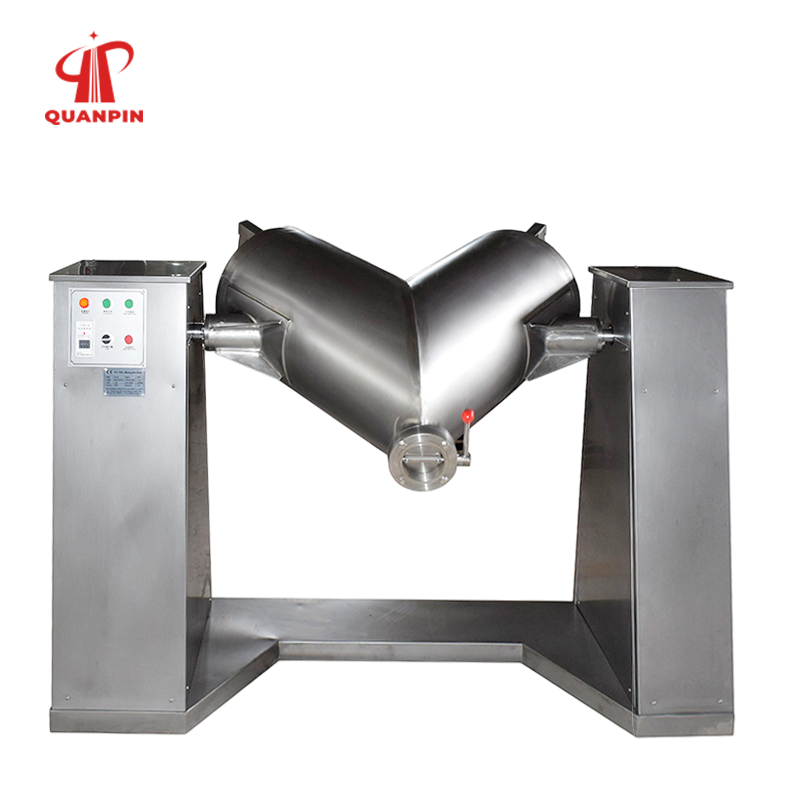
The vessel provides the reviewed dry-blending action.
Receiving Container Evidence
The discharge arrangement establishes how material leaves that vessel.
Transfer Connection Evidence
The receiving container contributes its own contact and holding boundary.
Holding Stage Evidence
A transfer connection defines an interface that requires actual confirmation.
Press Feed Evidence
Any press-feed arrangement performs a downstream function requiring its own scope.
Sampling Boundary Evidence
Sampling and cleaning provisions must cover the parts included in the proposed assessment.
Comparison Records and Interpretation
Define the Reference
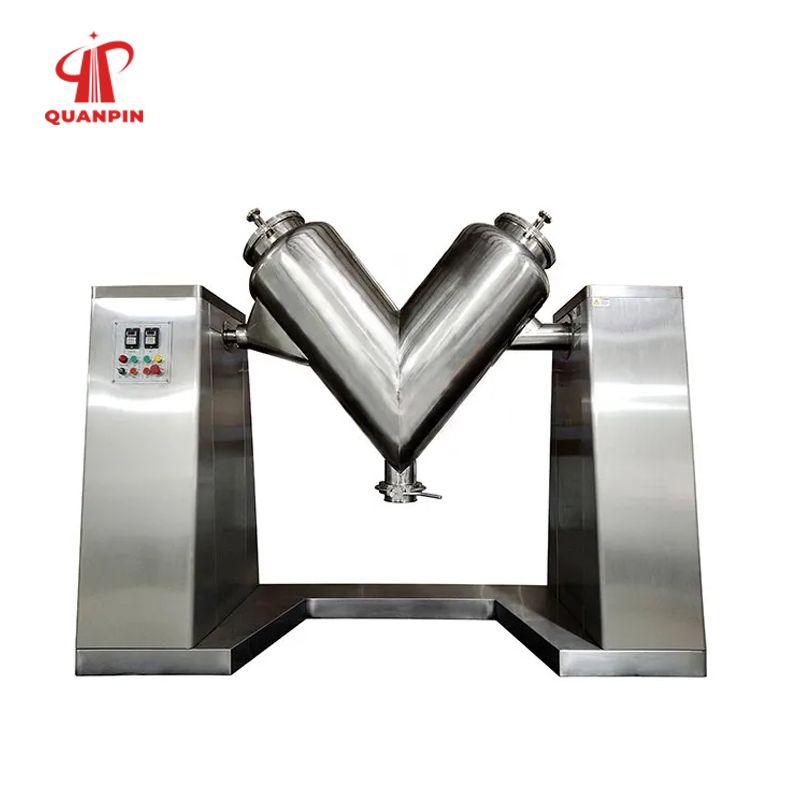
A V cone blender comparison should preserve the actual discharge and transfer sequence.
A V type mixer description cannot establish that every downstream connection is included.
The V powder blender’s accepted sample needs its location and collection stage attached.
Preserve the Actual Conditions
If a different receiving container is proposed, record the changed boundary instead of calling the complete route unchanged.
A later powder observation should identify whether holding, transfer or another operation occurred before testing.
Do not infer an integrated tableting line from the presence of a mixer and a general process diagram.
Review the Receiving Process
The appropriate product tests depend on the formulation and the receiving-process question.
A confirmed mixer configuration can support an interface review without demonstrating an untested press-feeding result.
Keep unresolved handling questions visible when comparing equipment proposals.
Benefits and Limits of the Review
A route map can reveal an omitted holding stage or unassigned transfer connection.
It can also help distinguish supplier scope from the customer’s existing equipment. A development comparison should not be presented as complete validation of an untested production process. See FDA process validation guidance.
The map is not evidence that every stage preserves all required powder attributes.
That conclusion needs representative observations appropriate to the actual route.
Document the Material and Configuration
Record where the original blend was sampled and accepted.
Identify the container receiving the discharged material. Assess relevant quality risks using the actual material and process context. See FDA ICH Q9 quality risk management.
Records, Handling and Safe Access
Describe any holding stage before onward transfer.
Confirm external connections and their supply responsibilities.
State the receiving-process sampling and analytical requirements.
Include product-contact cleaning across the reviewed route. Interpret measurements through process understanding rather than treating an isolated instrument reading as product acceptance. See FDA process analytical technology framework.
Follow the actual equipment’s safe discharge, handling and sampling procedures.
A desire to observe the receiving process does not authorize access to moving downstream equipment.
Provide QUANPIN with the Application Scope
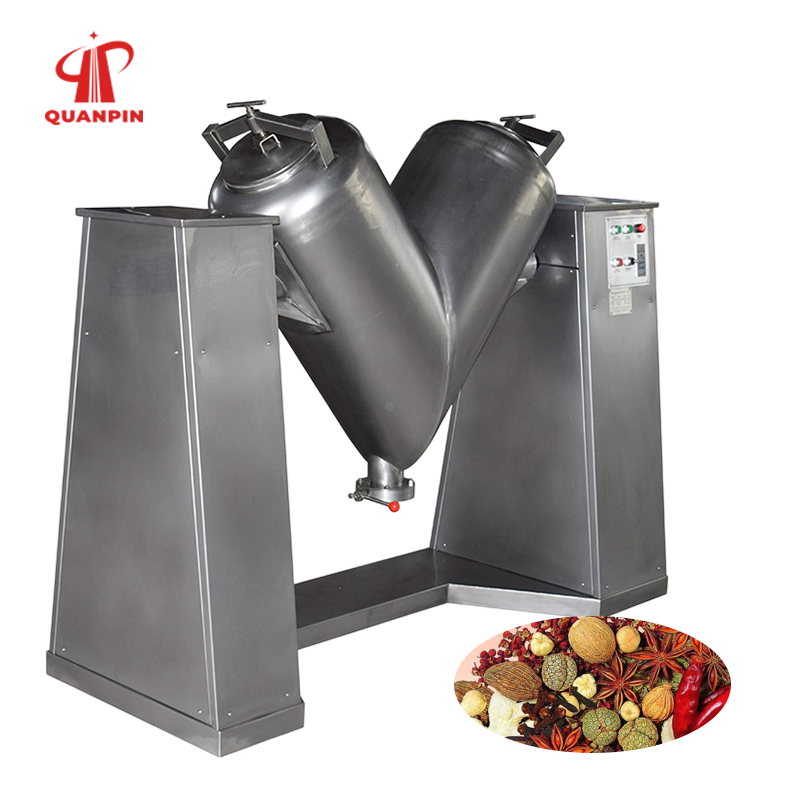
Send QUANPIN the proposed mixer discharge boundary and receiving-route description.
Identify existing equipment separately from functions requested in the new supply.
Preserve the Evidence and Its Limits
Ask for confirmation of the mixer-side interfaces and unresolved connection information.
Retain the final scope with the actual sampling boundary used to support product acceptance. Retain knowledge and manage adopted process changes through the pharmaceutical quality system. See FDA ICH Q10 pharmaceutical quality system.
Frequently Asked Questions
Does blend acceptance establish press-feeding performance?
A completed blend result does not automatically establish tablet-press feeding performance.
Can holding create another assessment boundary?
A container or holding stage can create an additional boundary requiring identification.
Does another installation prove accessory inclusion?
An accessory shown in another installation is not proof of inclusion in the proposal.
What belongs with a later powder observation?
Later powder observations should preserve the intervening handling history.
Does a general diagram establish a complete tableting line?
A general process diagram is not a confirmed specification for a complete tableting line.
What should the receiving-route enquiry identify?
The enquiry should identify discharge, receiving container, transfer, holding and the intended downstream acceptance question.
Discuss the Application with QUANPIN
Discuss the confirmed ZKH(V) V-Type Mixer application with QUANPIN. Use the enquiry form or the contact page to describe your project.
Email sales@qpdryer.com or stacie@qpdryer.com. Call +86 19850785582, or contact us on WhatsApp: +86 15921493205.