Pharmaceutical V Blender: Separate Blend Homogeneity from Analytical Recovery
By QUANPIN
A low assay from a blend sample does not automatically prove poor mixing. Blend homogeneity and analytical recovery concern different parts of the evidence.
A pharmaceutical V blender study should identify the process sample and the laboratory method before assigning a result to the mixer. See pharmaceutical applications.
Define Blend Homogeneity And Analytical Recovery
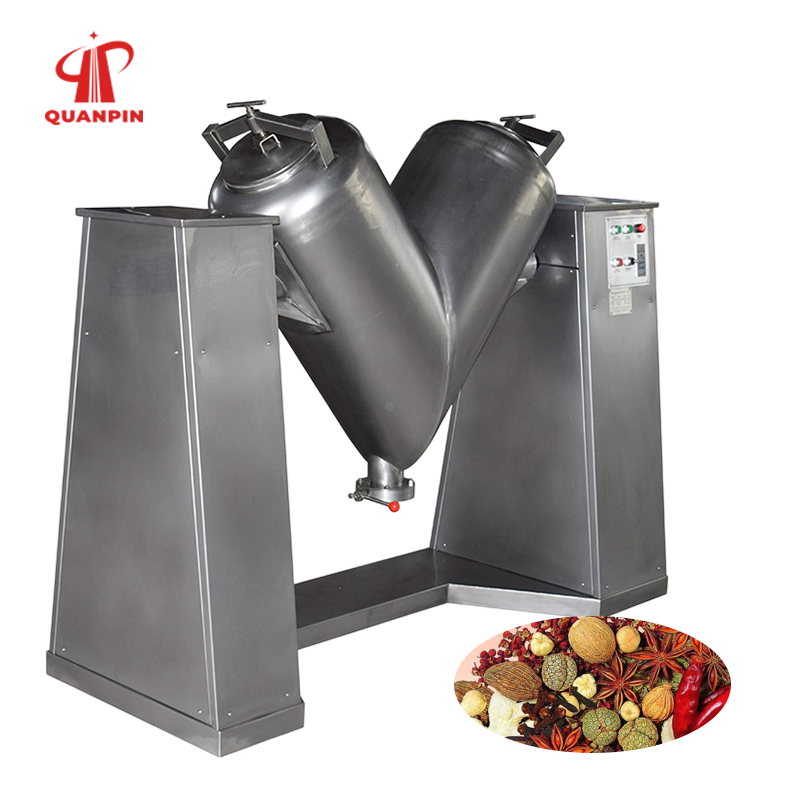
The V blender divides and recombines compatible dry material as the vessel rotates.
This V mixer action describes the blending mechanism; it does not establish that a sample-preparation method recovers every ingredient adequately. Use product-specific development knowledge to justify the attributes being examined. See FDA ICH Q8 pharmaceutical development.
Equipment Principle and Application Scope
Define the distribution question separately from any concern about the analytical procedure.
Then identify the evidence needed to distinguish process variation from limitations in sample preparation or measurement.
Five Steps for the Review
Process Sample
Identify the formulation and the attribute being measured.
Laboratory Portion
Preserve the location and identity of each process sample.
Preparation Method
Connect each laboratory portion to its parent sample.
Recovery Investigation
Review the analytical preparation and recovery question.
Individual Results
Interpret individual results within the agreed sampling and analytical scope.
Four Evidence Boundaries
A sample taken from the process and a portion prepared in the laboratory are not the same boundary.
Dividing a process sample creates analytical portions rather than new independent observations of the blending operation.
A composite can answer a particular question but can also conceal differences among the samples used to prepare it.
State how results were obtained before comparing them with observations from another sampling plan.
Components and Process Interfaces
Process Sample Evidence
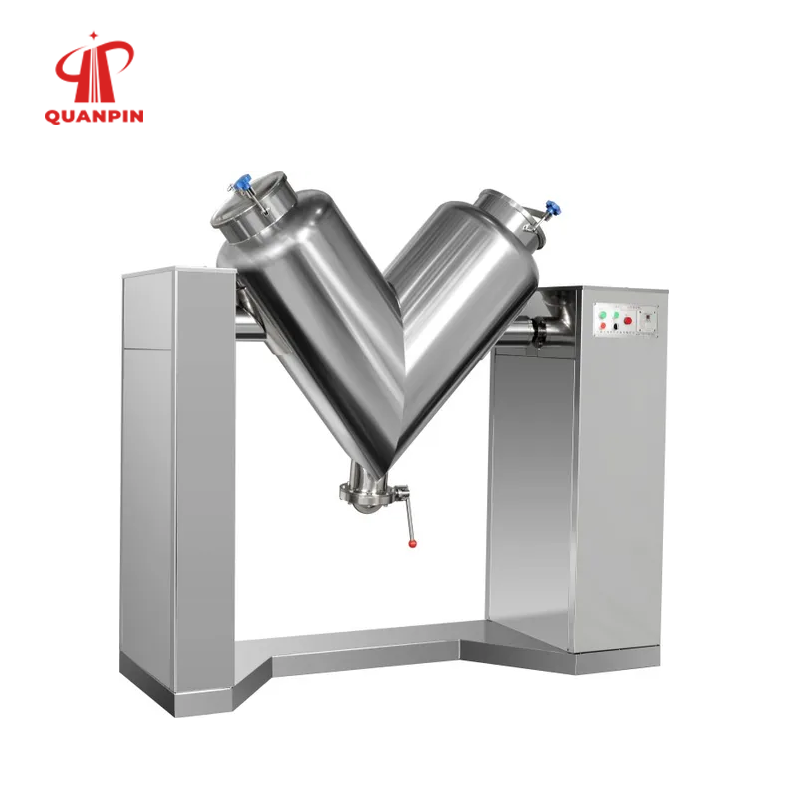
The vessel geometry produces repeated division and recombination.
Laboratory Portion Evidence
The loading arrangement defines how the actual ingredients enter the batch.
Preparation Method Evidence
Rotation supplies the movement reviewed for the formulation.
Recovery Investigation Evidence
Sampling access determines which process observations can safely be obtained.
Individual Results Evidence
Laboratory preparation establishes the material presented to the analytical method.
Interpretation Evidence
The discharge route defines whether later handling is included in the acceptance study.
Comparison Records and Interpretation
Define the Reference
A V cone blender enquiry should describe the ingredient whose distribution or measurement is in question.
Do not assume that a longer mixing interval will correct an analytical recovery problem.
A V type mixer comparison also needs the same interpretation of sample identity and analytical method.
Preserve the Actual Conditions
Where a result is unexpected, preserve the original sample and preparation information through the applicable investigation procedure.
A V powder blender claim should not be supported only by a favorable mean that hides relevant individual observations.
Visual similarity cannot establish the measured distribution of a low-proportion ingredient.
Review the Receiving Process
Likewise, a method-related concern should not erase evidence of actual process variation when that variation is supported.
Review the formulation, process sampling and laboratory evidence as connected but distinct parts of the study.
The final interpretation should identify which question has been resolved and which remains open.
Benefits and Limits of the Review
Separating the questions can prevent an unsupported change to the blending process.
It can also prevent analytical uncertainty from being mistaken for demonstrated product uniformity. A development comparison should not be presented as complete validation of an untested production process. See FDA process validation guidance.
This distinction does not prescribe a particular laboratory method or universal acceptance limit.
Those decisions require the actual formulation, analytical requirements and relevant quality review.
Document the Material and Configuration
Record the complete formulation and relevant ingredient preparation.
Identify each process sample and its stated location or collection stage. Assess relevant quality risks using the actual material and process context. See FDA ICH Q9 quality risk management.
Records, Handling and Safe Access
Preserve the connection to laboratory portions and any composite.
Describe the actual analytical preparation used for the result.
Retain individual results and the rationale for any reported summary.
Explain method or sampling limitations that affect interpretation. Interpret measurements through process understanding rather than treating an isolated instrument reading as product acceptance. See FDA process analytical technology framework.
Collect process samples only through approved access and operating procedures.
An investigation of analytical results does not authorize additional sampling from moving equipment.
Provide QUANPIN with the Application Scope
Send QUANPIN the blending configuration and the process question supported by the available evidence.
Keep laboratory-method questions identifiable so that the appropriate analytical review can address them.
Preserve the Evidence and Its Limits
Request equipment review where the evidence identifies a relevant blending or handling concern.
Retain the agreed interpretation with the sampling plan and actual analytical records. Retain knowledge and manage adopted process changes through the pharmaceutical quality system. See FDA ICH Q10 pharmaceutical quality system.
Frequently Asked Questions
How do homogeneity and analytical recovery differ?
Homogeneity concerns distribution in the sampled material; recovery concerns the measurement procedure’s treatment of the analyte.
Does a low result establish its cause?
A low result alone cannot identify which part of that chain caused the observation.
Are laboratory portions independent process samples?
Laboratory portions from one process sample do not create independent process locations.
What information belongs with a composite result?
A composite result should identify the samples and preparation used to produce it.
Will longer blending resolve a recovery concern?
Longer blending is not established here as a correction for an analytical recovery problem.
What should the blending investigation distinguish?
The enquiry should separate formulation, process samples, laboratory preparation and the evidence supporting the mixing concern.
Discuss the Application with QUANPIN
Discuss the confirmed ZKH(V) V-Type Mixer application with QUANPIN. Use the enquiry form or the contact page to describe your project.
Email sales@qpdryer.com or stacie@qpdryer.com. Call +86 19850785582, or contact us on WhatsApp: +86 15921493205.