Industrial Pulverizer for Pharmaceutical Powders: Compare Open Collection with a Defined Closed-Transfer Proposal
By QUANPIN
An open collection arrangement and a proposed closed transfer create different handling interfaces. Compare their confirmed scope before discussing pharmaceutical powder acceptance.
The pulverizer machine must be reviewed with its actual collection and receiving equipment, not only the grinding chamber. See pharmaceutical applications.
Define Collection And Transfer Scope
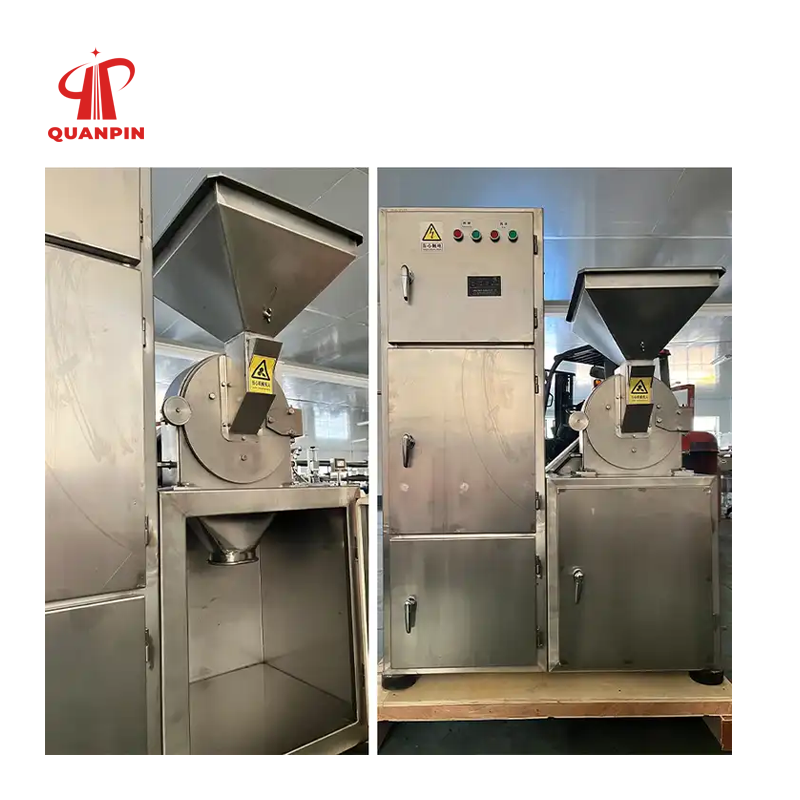
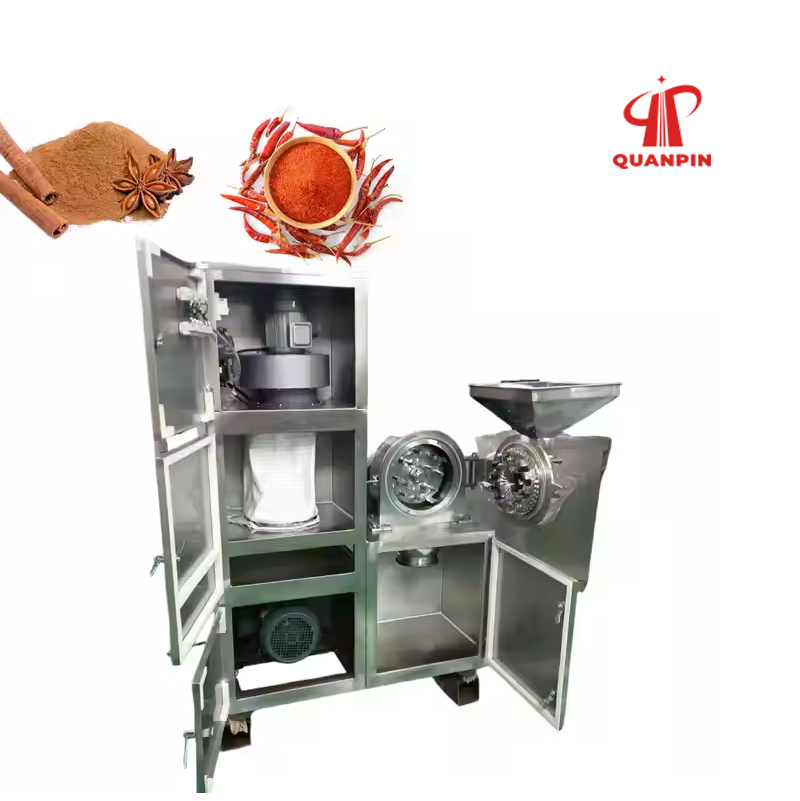
In the verified QUANPIN unit, impact and cutting reduce compatible feed before conveying and collection separate powder from process air.
A universal pulverizer description does not establish that a particular discharge connection provides closed transfer or a measured containment result. Use product-specific development knowledge to justify the attributes being examined. See FDA ICH Q8 pharmaceutical development.
Equipment Principle and Application Scope
Draw the point where collected powder leaves the supplied unit and identify the proposed receiving arrangement.
State whether the enquiry concerns an existing open collection or an engineered alternative that still needs confirmation.
Five Steps for the Review
Discharge Connection
Identify how the accepted powder is collected in the reference arrangement.
Receiving Vessel
Describe the proposed receiving vessel and its product-contact boundary.
Transfer Route
Map each connection, opening and disconnection involved in the transfer.
Sampling Access
Assign cleaning, sampling and operating responsibilities at those interfaces.
Cleaning Boundary
Evaluate the product and handling requirements for the arrangement actually proposed.
Four Evidence Boundaries
An enclosed connection is a physical feature, while demonstrated exposure control requires its own assessment.
Powder may still be exposed during container exchange, sampling or removal of a connection.
Identify those activities explicitly instead of labelling the entire route closed from one photograph.
The review should also identify who supplies the receiving container and any external handling equipment.
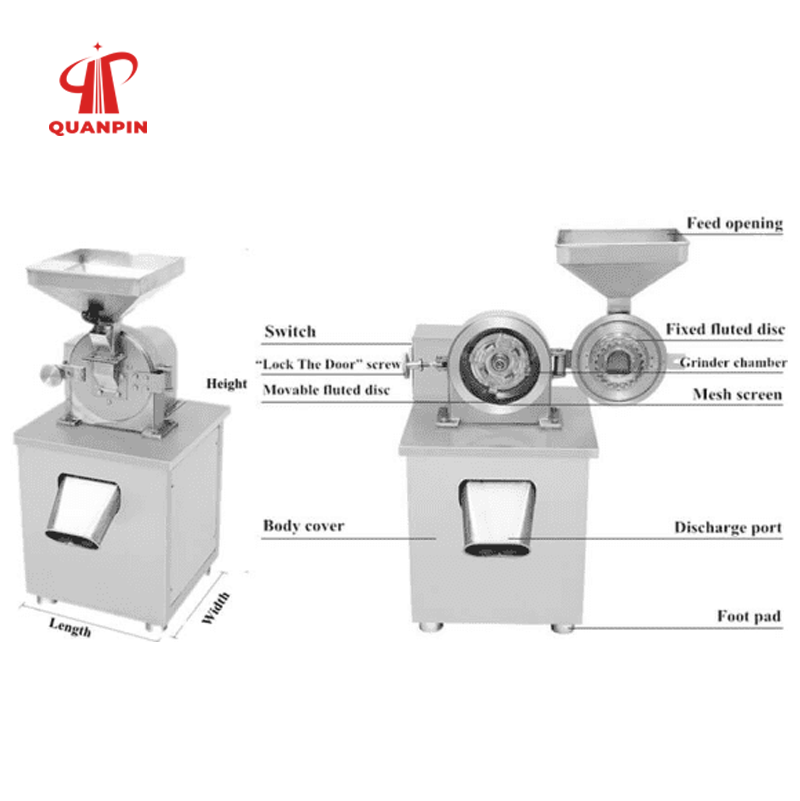
Components and Process Interfaces
Discharge Connection Evidence
The collection discharge determines where powder crosses the pulverizer supply boundary.
Receiving Vessel Evidence
The receiving vessel contributes surfaces and openings that need application-specific review.
Transfer Route Evidence
The transfer connection must be specified for the actual mating interfaces.
Sampling Access Evidence
Sampling access should allow the required observation without an unsupported assumption of in-process access.
Cleaning Boundary Evidence
Cleaning provisions need to address the connected parts, not just the visible grinding unit.
Exposure Review Evidence
The operating sequence should explain what happens when the receiving container becomes full.
Comparison Records and Interpretation
Define the Reference
An industrial pulverizer proposal should distinguish standard supply from connections that require additional engineering.
A description of the existing open collection provides a reference for comparing material handling.
The alternative needs enough detail to identify new contact parts and changed access requirements.
Preserve the Actual Conditions
Consider whether inspection or sample removal introduces an opening that was omitted from the process sketch.
A powder grinding machine cannot establish the cleanliness of an externally supplied container.
Define the accepted powder sampling boundary before comparing results from the two arrangements.
Review the Receiving Process
Do not attribute a downstream handling result solely to milling when the collection route has changed.
Compare industrial pulverizer price quotations only after the receiving and connection scope is aligned.
Any claimed improvement must be supported by evidence appropriate to that claim; an enclosed drawing alone is insufficient.
Benefits and Limits of the Review
An interface comparison can reveal an omitted container exchange or cleaning responsibility before a system is ordered.
It can also prevent a proposed accessory from being described as an established machine function. A development comparison should not be presented as complete validation of an untested production process. See FDA process validation guidance.
The comparison does not certify a containment level or an untested pharmaceutical installation.
Its output should be a clear scope and an evidence plan for unresolved requirements.
Document the Material and Configuration
Record the reference discharge configuration and actual collection activity.
Identify the proposed receiving vessel without borrowing another installation’s dimensions. Assess relevant quality risks using the actual material and process context. See FDA ICH Q9 quality risk management.
Records, Handling and Safe Access
List connection parts and the party responsible for supplying each item.
Describe how samples will be obtained under approved procedures.
State how cleaning and inspection will cover the revised contact path.
Document the assessment needed for exposure, product protection and the intended pharmaceutical use. Interpret measurements through process understanding rather than treating an isolated instrument reading as product acceptance. See FDA process analytical technology framework.
Connections, access and sampling must be reviewed with the equipment’s safe operating and isolation procedures.
Dust and exposure considerations depend on the actual material and installation; this article prescribes no universal control arrangement.
Provide QUANPIN with the Application Scope
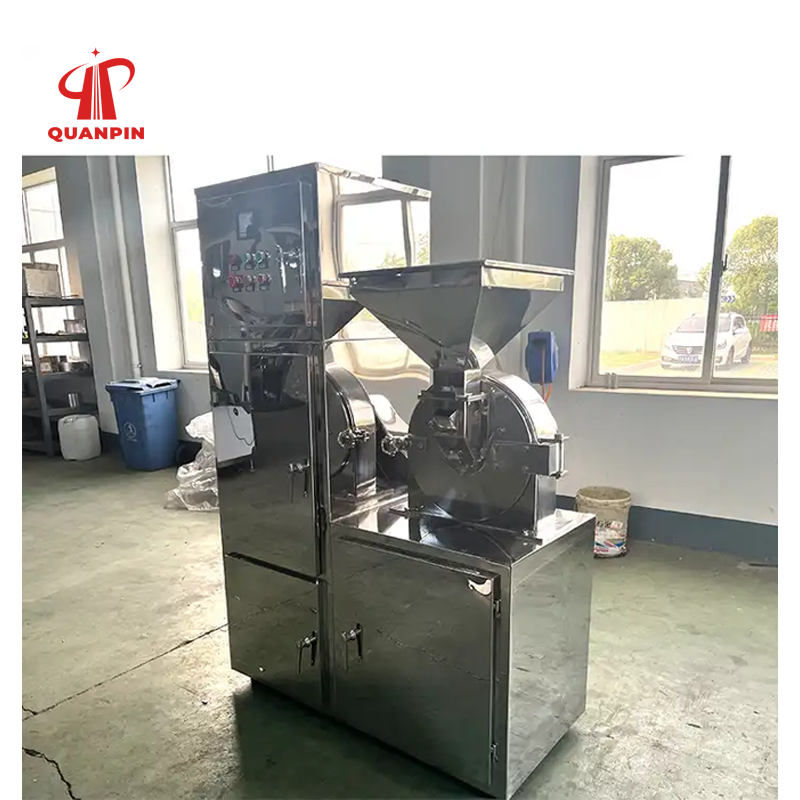
Send QUANPIN the reference collection description and the proposed receiving process.
Include relevant material information, cleaning needs and the functions expected from the equipment supplier.
Preserve the Evidence and Its Limits
Request a confirmed interface drawing and a list of unresolved connection responsibilities.
Retain the agreed scope with the configuration used for any subsequent product or handling assessment. Retain knowledge and manage adopted process changes through the pharmaceutical quality system. See FDA ICH Q10 pharmaceutical quality system.
Frequently Asked Questions
Does an enclosed connection prove containment?
A closed connection does not independently establish a containment or exposure result.
Can a proposed closed route still include open activities?
A collection system can include activities that open the powder path even when one operating connection is enclosed.
Does the receiving container belong in the cleaning review?
A receiving container belongs in the contact and cleaning review whenever it is part of the proposed route.
Does the equipment name confirm accessory inclusion?
The supplier should confirm accessory inclusion rather than infer it from the universal-pulverizer name.
Do product sampling and exposure assessment answer the same question?
Product sampling and occupational exposure assessment answer different questions and need their own relevant evidence.
What should the collection-interface enquiry identify?
The enquiry should identify the discharge, receiving vessel, transfer activities and responsibilities that define the proposed comparison.
Discuss the Application with QUANPIN
Discuss the confirmed High-Efficiency Pulverizer Unit application with QUANPIN. Use the enquiry form or the contact page to describe your project.
Email sales@qpdryer.com or stacie@qpdryer.com. Call +86 19850785582, or contact us on WhatsApp: +86 15921493205.