WFJ Air Classifier Mill or Screen Sizing: Choosing a Pharmaceutical Excipient Milling Duty
By QUANPIN
An air classifier mill combines size reduction with classification; a screen-sizing operation answers a different question. Choose the process around the required excipient distribution and the condition of the incoming material.
The WFJ is evaluated here for compatible dry, sufficiently brittle pharmaceutical feeds. This comparison does not assign one machine to every excipient or replace formulation development. See the corresponding pharmaceutical industry applications.
Which Size-Reduction Duty Does the Excipient Need?
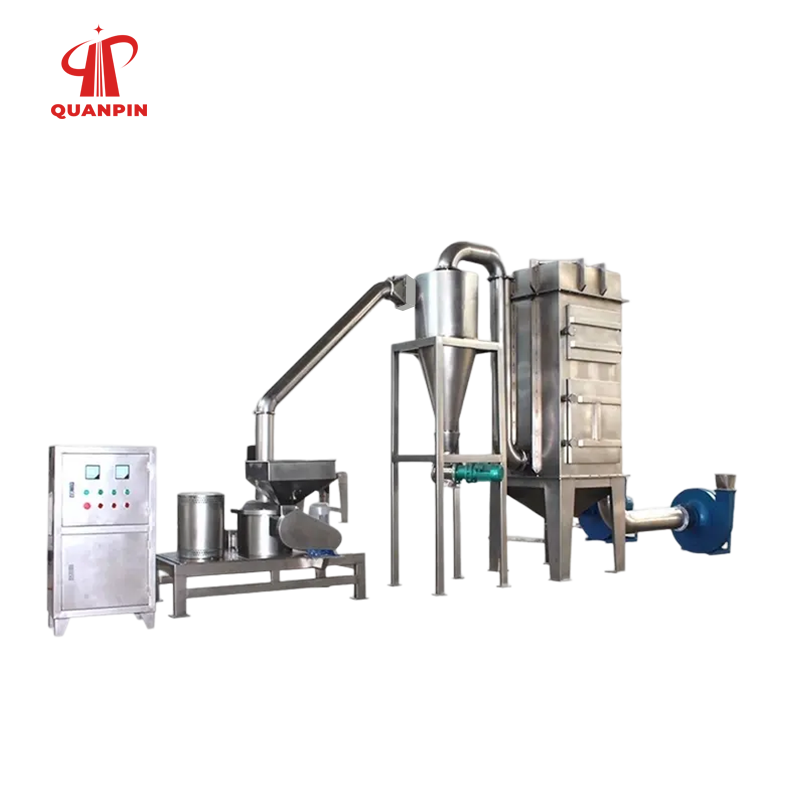
In the verified WFJ arrangement, grinding reduces feed while the classifier separates the finer fraction. Oversize material returns for further reduction before accepted powder reaches collection.
An air classifying mill therefore needs a coordinated review of grinding, classification, air handling and collection. A screen-based operation instead depends on the working mechanism and fitted screen. Use product-specific development knowledge to justify the attributes being examined. See FDA ICH Q8 pharmaceutical development.
Equipment Principle and Material Requirements
Describe whether the incoming feed contains individual coarse particles, weak agglomerates or both. These conditions can require different amounts and types of mechanical treatment.
The term ACM mill does not specify a guaranteed outlet size for an unidentified material. Supply a representative feed and an agreed analytical method.
Five Steps for the Application Review
Specify the excipient use
State the pharmaceutical use and the attributes needed after milling.
Characterize incoming particles
Characterize the feed before selecting a machine by its name.
Compare processing mechanisms
Compare the relevant grinding and sizing mechanisms.
Define product recovery
Collect material across the defined product-recovery boundary.
Test the accepted powder
Test the accepted powder using the agreed method.
Four Process Boundaries to Define
Particle distribution and retained functionality are separate acceptance questions. A finer powder can change handling without automatically improving the formulation.
Compare the complete distribution rather than one favorable reported size. Explain whether a sieve or another analytical method produced each result.
Identify where classifier rejects, collector deposits and accepted product belong in the mass accounting.
Keep later blending and transfer outside the claimed milling result unless those operations were included in the study.
WFJ Air Classifier Mill Components and Interfaces
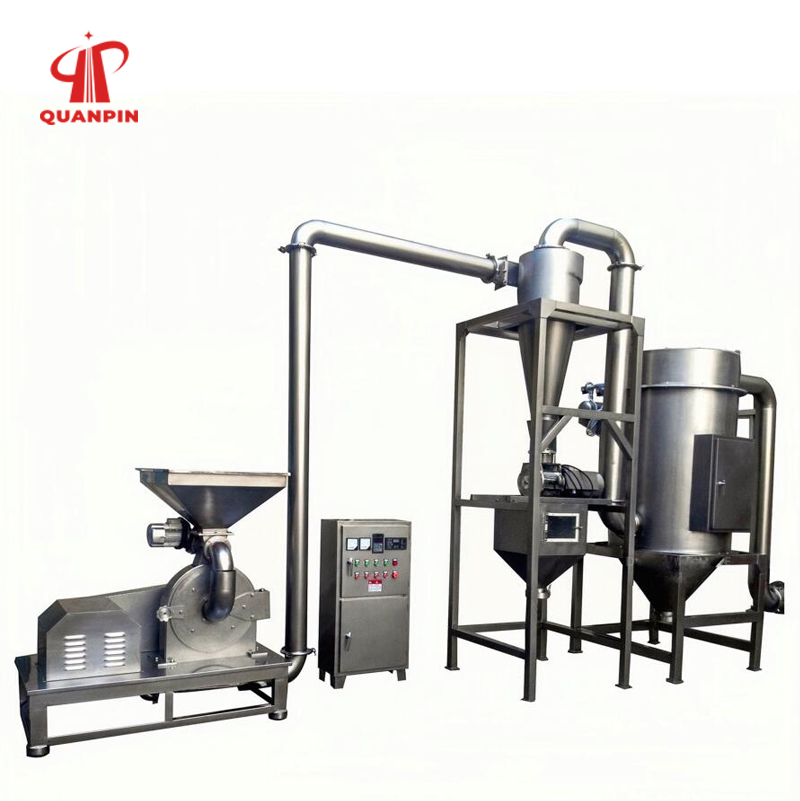
Feed presentation
The feed arrangement establishes how material enters the grinding chamber and should match the actual flow behavior.
Grinding assembly
The grinding assembly supplies the mechanical treatment; material compatibility must be established for the proposed configuration.
Classifier boundary
The classifier forms a separation boundary within the WFJ system, rather than acting as a substitute for every laboratory test.
Process air
Air handling carries material through the reviewed arrangement and belongs within the installation scope.
Powder collection
Collection equipment separates powder from the conveying stream; define which collected fractions are accepted.
Sampling and safe access
Sampling access and safe shutdown provisions need review alongside the process equipment.
Comparison Choices and Application Evidence
Define the Reference Basis
For pharmaceutical excipients, first connect the distribution requirement to the formulation question. Do not select a lower size target solely because the equipment can perform fine grinding.
A fine powder grinder trial should preserve feed identity and document the actual fitted arrangement.
Compare a screen-sizing route when the objective is predominantly to break compatible agglomerates or resize granules.
Keep the Comparison Interpretable
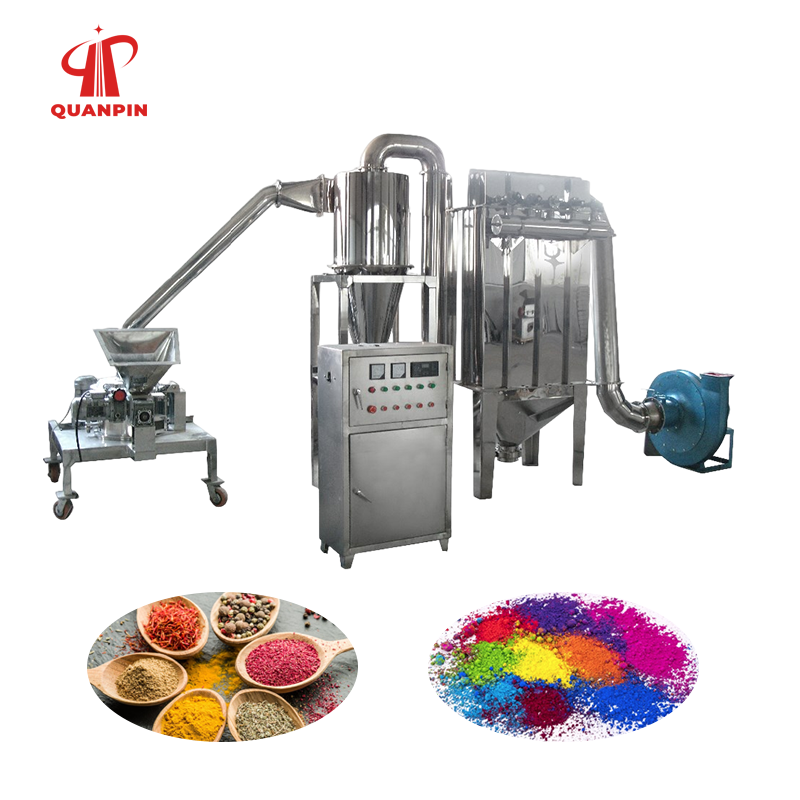
Compare classification-assisted milling when the requirement calls for further size reduction and separation of the fine fraction.
Neither route establishes a universal pharmaceutical release specification.
Use a consistent sample-preparation method when comparing routes; preparation can influence the reported distribution.
Assess the Receiving Process
Document changes in powder flow and downstream handling as separate observations.
An industrial fine powder grinder enquiry should distinguish a development result from a proposed production operating range.
The final choice belongs with the customer’s formulation evidence and the confirmed equipment scope.
Industry Application and Acceptance
Classification-assisted milling can combine connected operations within one system, but it also creates interfaces that must be understood.
A screen route may answer a simpler sizing need; that does not make it an equivalent process for every feed. A development comparison should not be presented as complete validation of an untested production process. See FDA process validation guidance.
Do not compare capacity claims with different fineness targets or collection boundaries.
A meaningful comparison includes acceptable product, required testing and the handling stages actually examined.
Benefits and Practical Limits
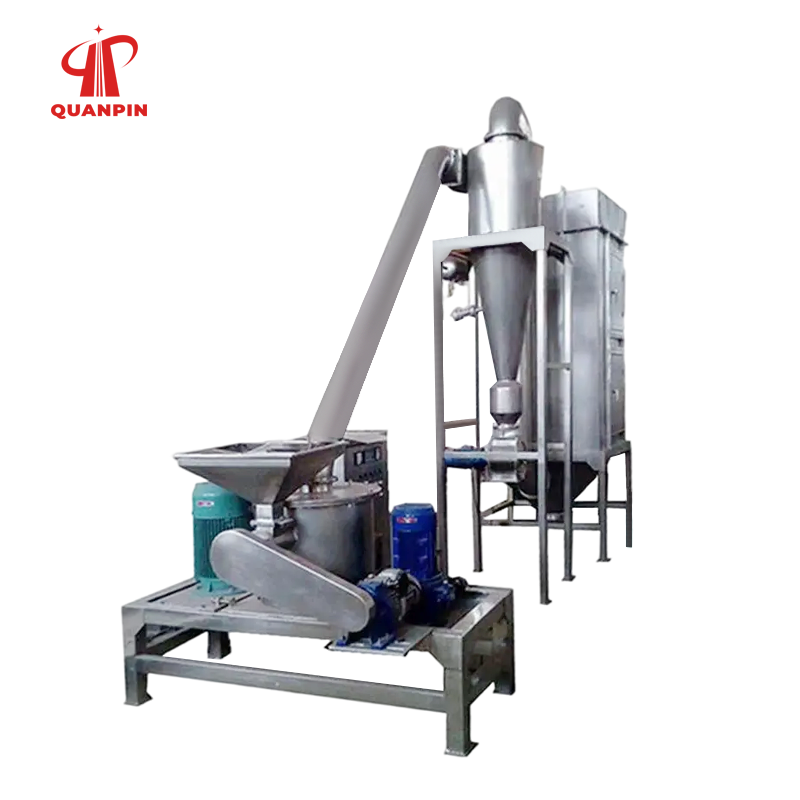
Review dust hazards, exposure and material compatibility before a representative trial.
Sampling or inspection must follow the installed equipment’s isolation and operating procedures. Assess relevant quality risks using the actual material and process context. See FDA ICH Q9 quality risk management.
Six Details for the Equipment Enquiry
Specify the feed identity, relevant physical properties and intended pharmaceutical use.
Provide the incoming distribution and explain how it was measured.
Define the required output distribution and other acceptance attributes.
Identify the proposed collection and transfer boundary. Interpret measurements through process understanding rather than treating an isolated instrument reading as product acceptance. See FDA process analytical technology framework.
List cleaning, installation and containment needs for engineering review.
Record unresolved information explicitly instead of substituting another excipient’s values.
Safety and Operating Requirements
Send QUANPIN the material description, analytical methods and proposed process boundary.
Ask for a configuration review that distinguishes grinding, classification, collection and downstream responsibilities.
Prepare Your Equipment Enquiry
A trial should answer whether the proposed route serves the specified excipient duty.
Retain the resulting evidence with the actual machine configuration and agreed limitations. Retain knowledge and manage adopted process changes through the pharmaceutical quality system. See FDA ICH Q10 pharmaceutical quality system.
Frequently Asked Questions
Does a classifier establish pharmaceutical release?
A classifier separates a fraction within the process; it does not independently establish pharmaceutical product acceptance.
Is screen opening a measured distribution?
A screen opening and a measured powder distribution describe different things.
Do lumps always require fine grinding?
An agglomerate-breaking duty does not automatically require the same treatment as grinding hard primary particles.
Does the product name prove compatibility?
A product name alone cannot establish whether a material is sufficiently brittle or otherwise compatible.
Does one trial establish the full operating range?
A favorable development sample does not demonstrate every untested production condition.
What information should an excipient enquiry include?
QUANPIN needs the actual feed, required powder attributes and collection scope to review the milling duty.
Discuss Your WFJ Air Classifier Mill Application with QUANPIN
Discuss the confirmed WFJ Air Classifier Mill application with QUANPIN. Use the enquiry form or the contact page to describe your project.
Email sales@qpdryer.com or stacie@qpdryer.com. Call +86 19850785582, or contact us on WhatsApp: +86 15921493205.