
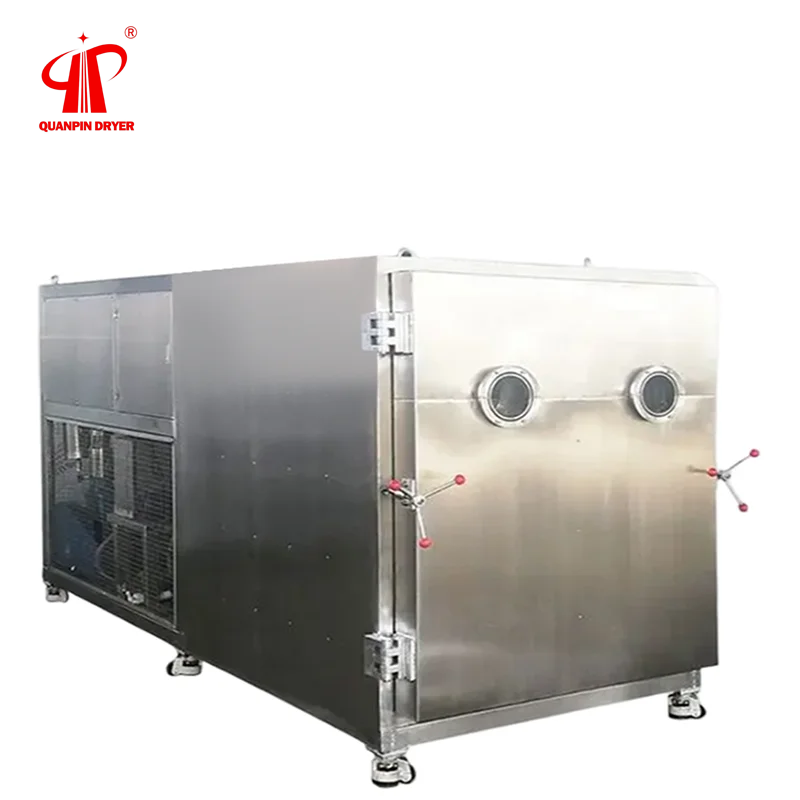
QUANPIN Vacuum Freeze Dryer
Freeze drying removes moisture from a frozen product under reduced pressure. QUANPIN reviews the material, batch requirements and finished-product characteristics to discuss a suitable lyophilization system.
Freezing and controlled vacuum drying
Shelf and tray layout matched to the product
Refrigeration and vapor condensation
Vacuum equipment selected for the process
Temperature and pressure monitoring
Product-specific cycle development
Vacuum Freeze Drying System
Vacuum freeze drying uses freezing, primary drying and secondary drying to remove water from a product. The cycle and equipment must be matched to the formulation, loading pattern and required residual moisture.
How Does a Freeze Dryer Work?
Stage 1 — Freezing
The product is frozen under controlled conditions. The freezing stage prepares the material for primary drying and can influence the structure of the dried product.
Stage 2 — Primary Drying
Under reduced pressure, energy is supplied so that ice passes directly into vapor. The condenser captures vapor removed from the product.
Stage 3 — Secondary Drying
The cycle continues under specified conditions to remove additional bound moisture. Final moisture and product quality are checked against the agreed requirements.
Features to Specify
• Usable shelf area, tray dimensions and loading pattern.
• Refrigeration and condenser requirements for the batch.
• Vacuum system and process pressure range.
• Temperature measurement and cycle-control requirements.
• Contact materials and cleaning access.
• Product unloading and packaging conditions.
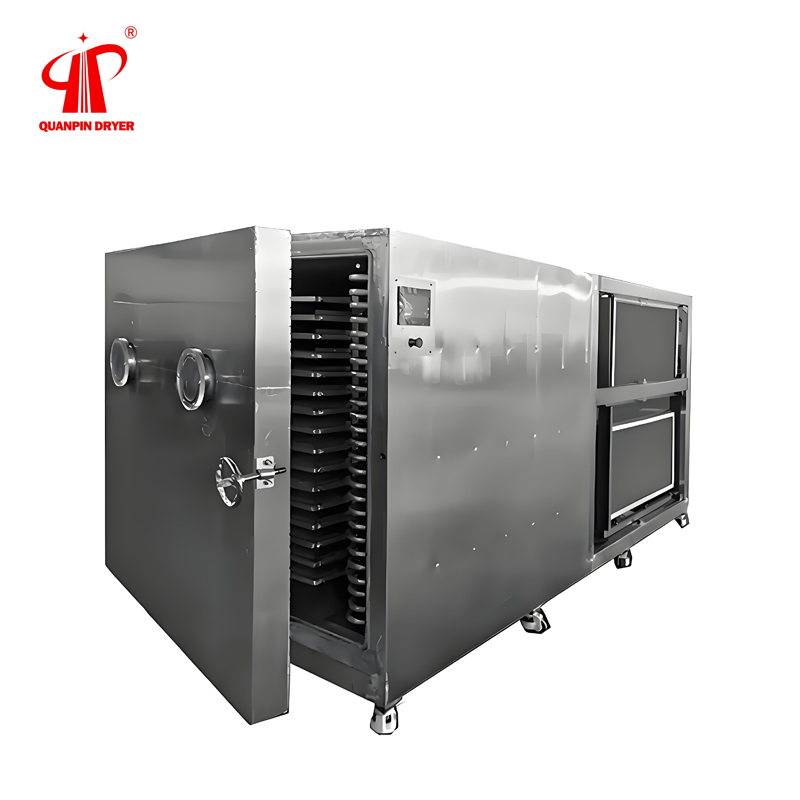
Food Freeze Drying
Review ingredient preparation, loading and desired rehydration properties.
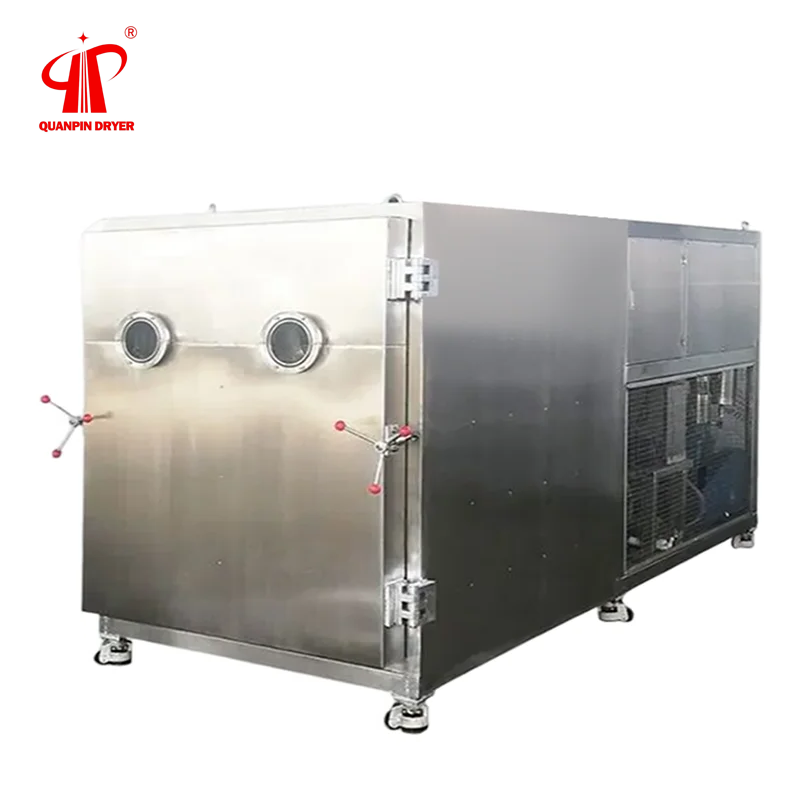
Product Lyophilization
Discuss formulation behavior and the required residual moisture.
Shelf and Tray Configuration
Select shelf area and spacing around the product and batch.
Small Batch Processing
Assess sample quantities and the intended development work.
Vacuum Freeze Drying
Coordinate the chamber, refrigeration, condenser and vacuum equipment.
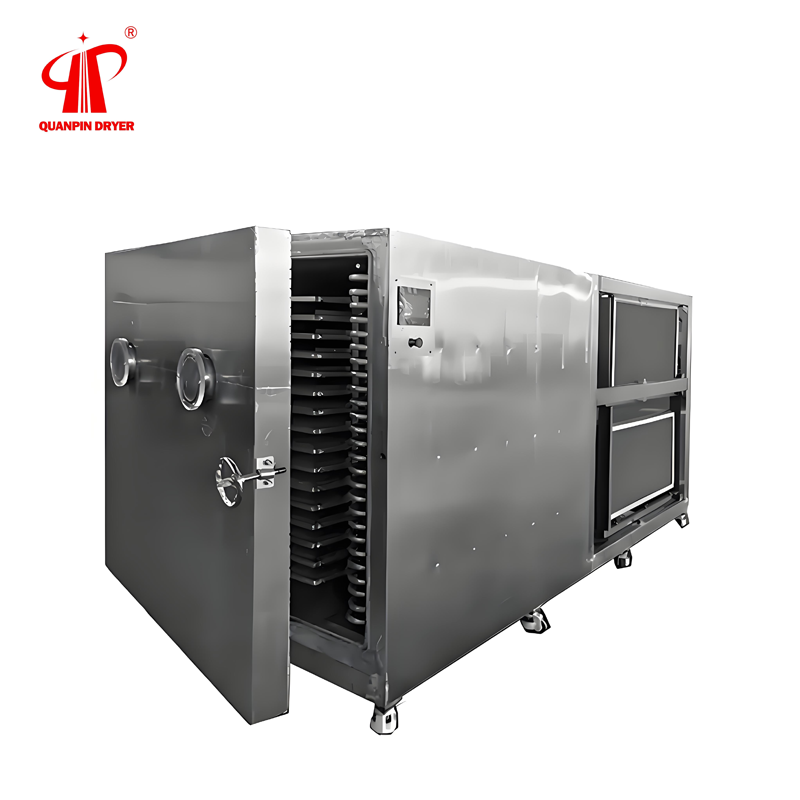
Chamber Configuration
Review chamber arrangement and production workflow.
Industrial Production
Define batch output, cycle scheduling and utility requirements.
Pilot-scale Development
Use representative trials to support process and equipment selection.
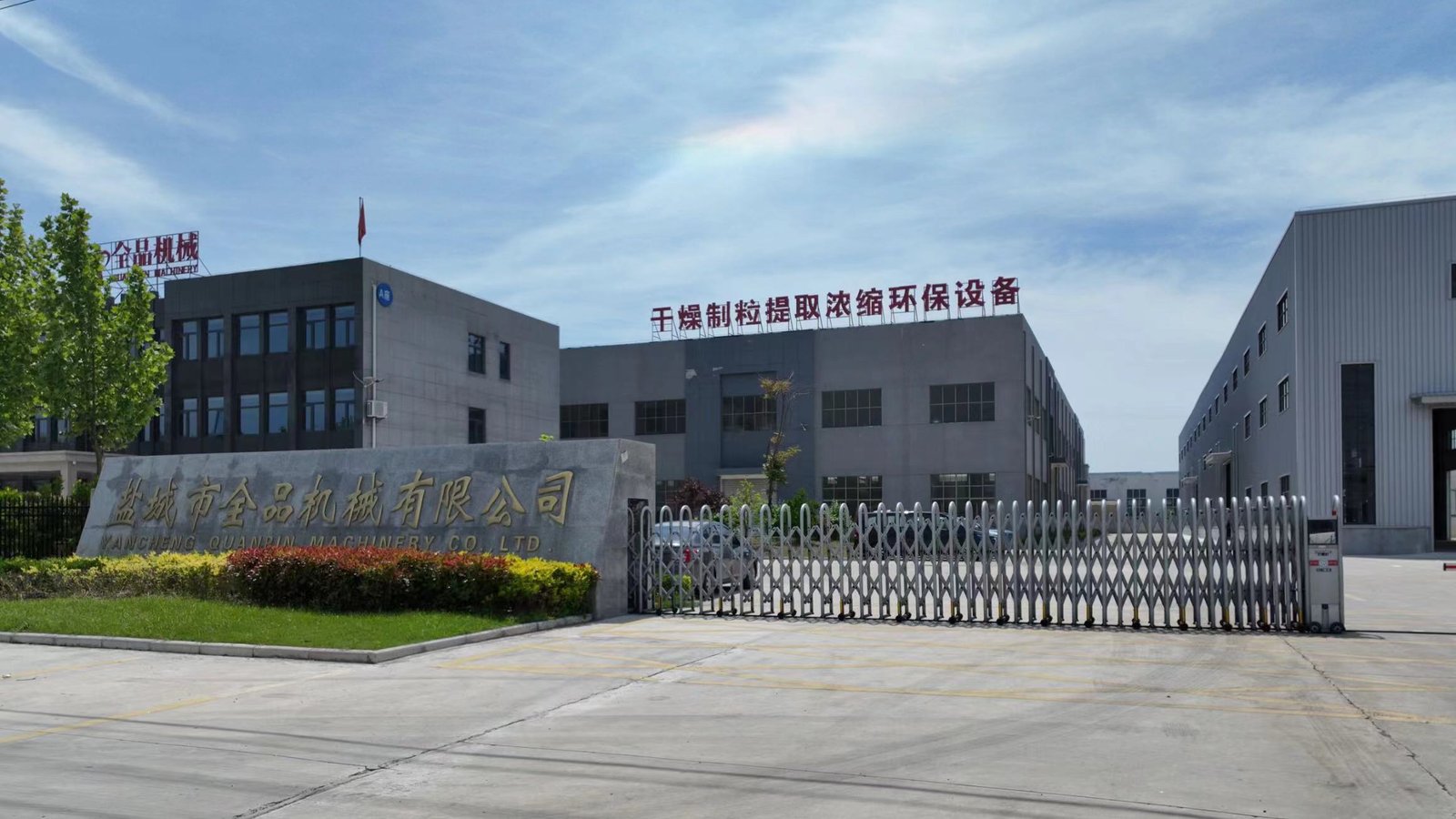
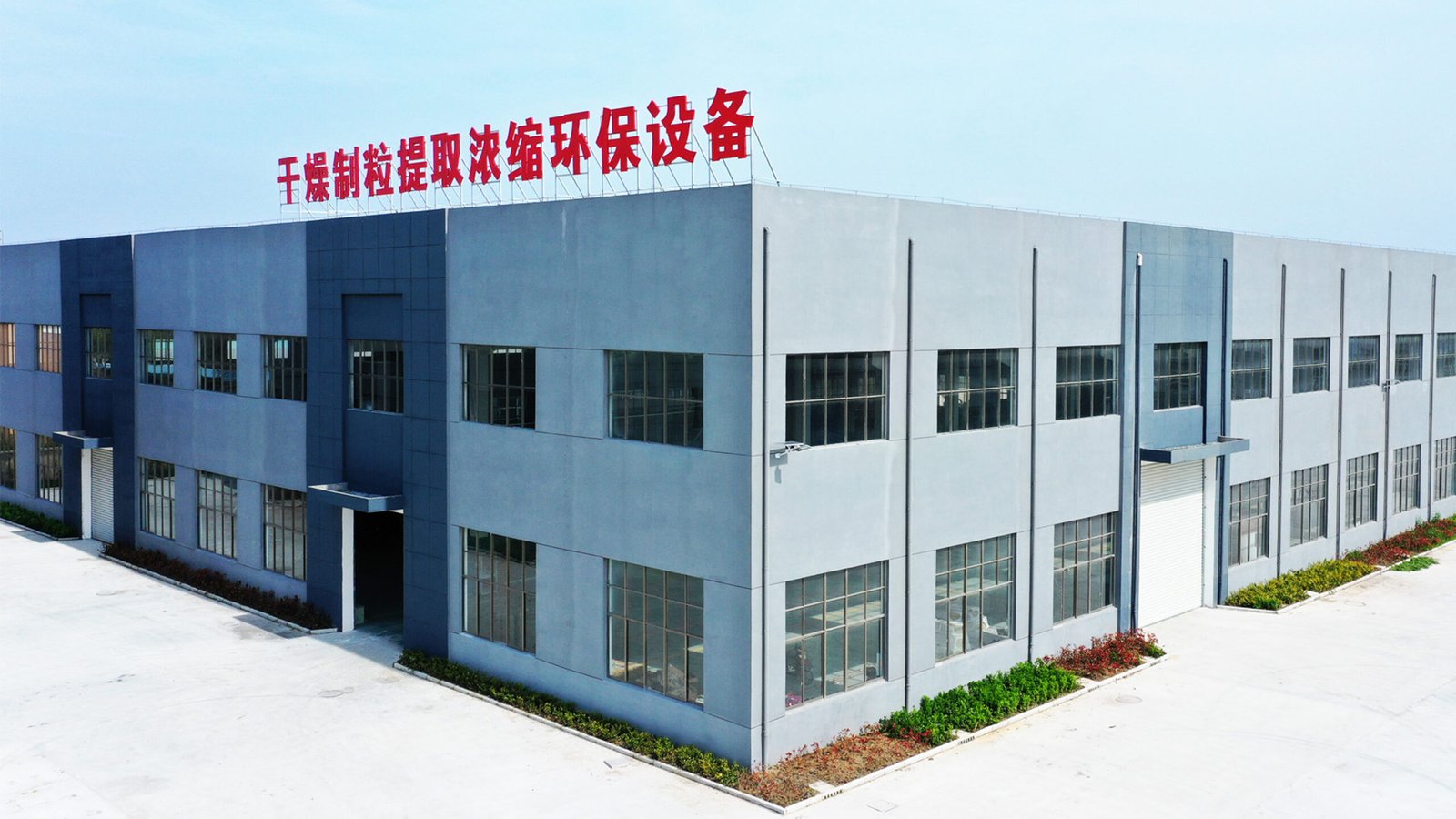
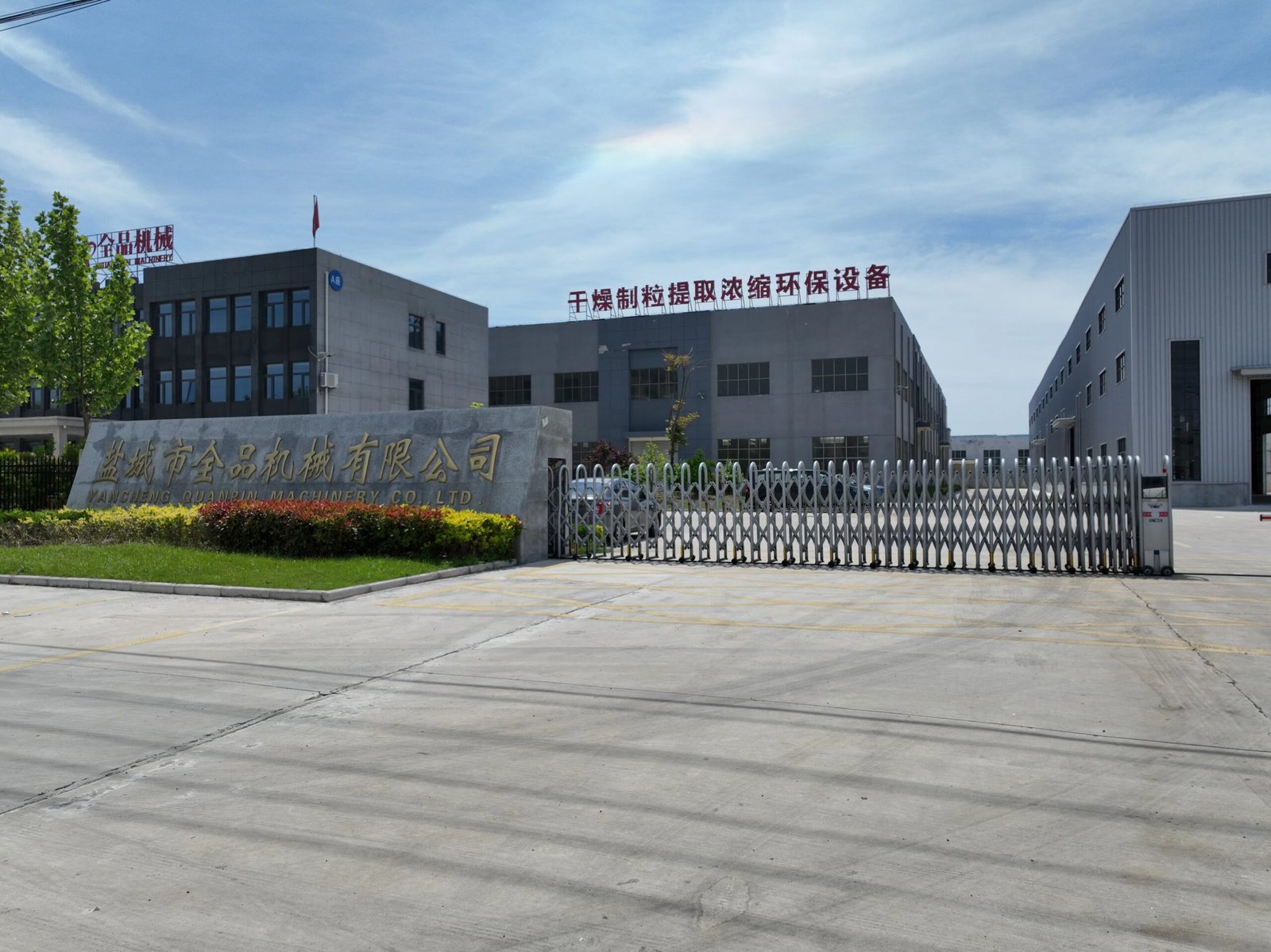
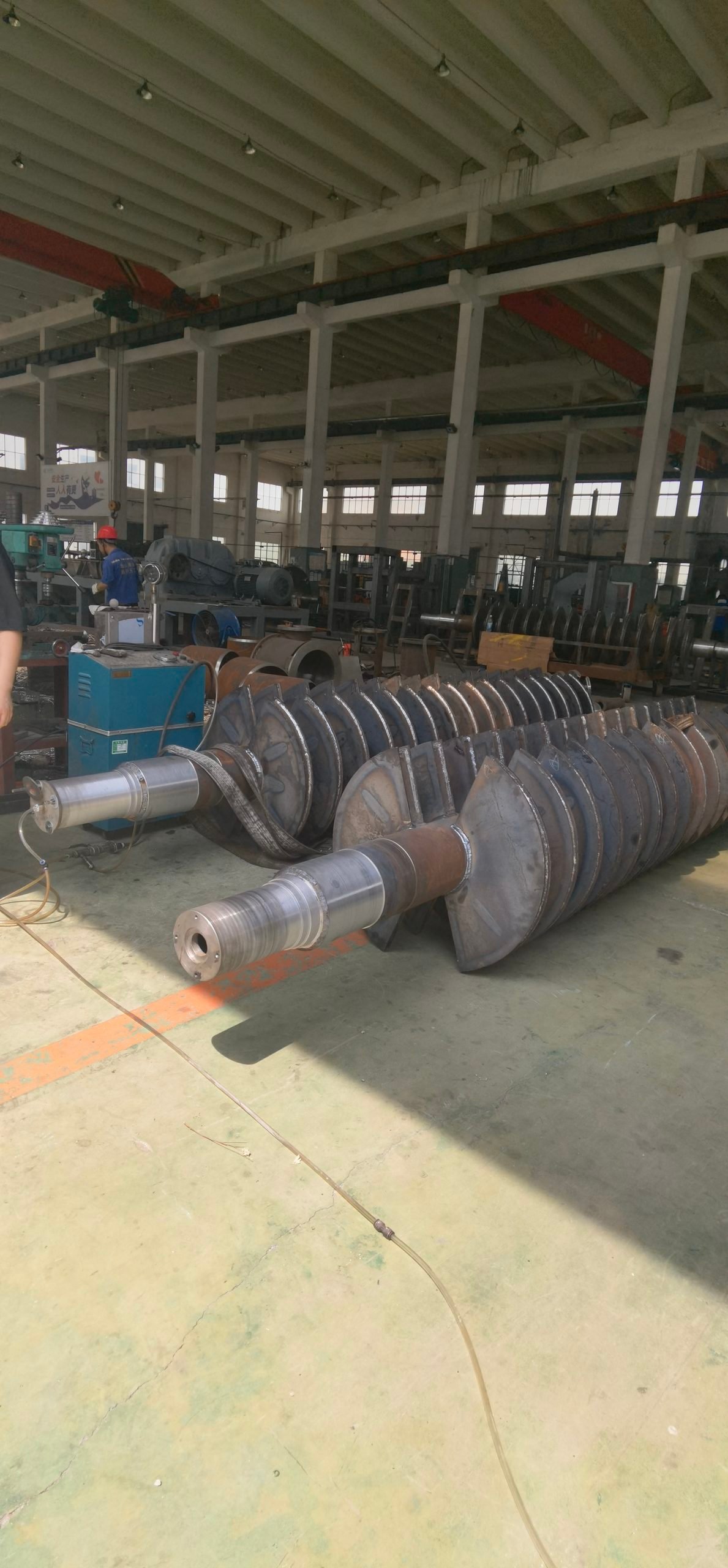
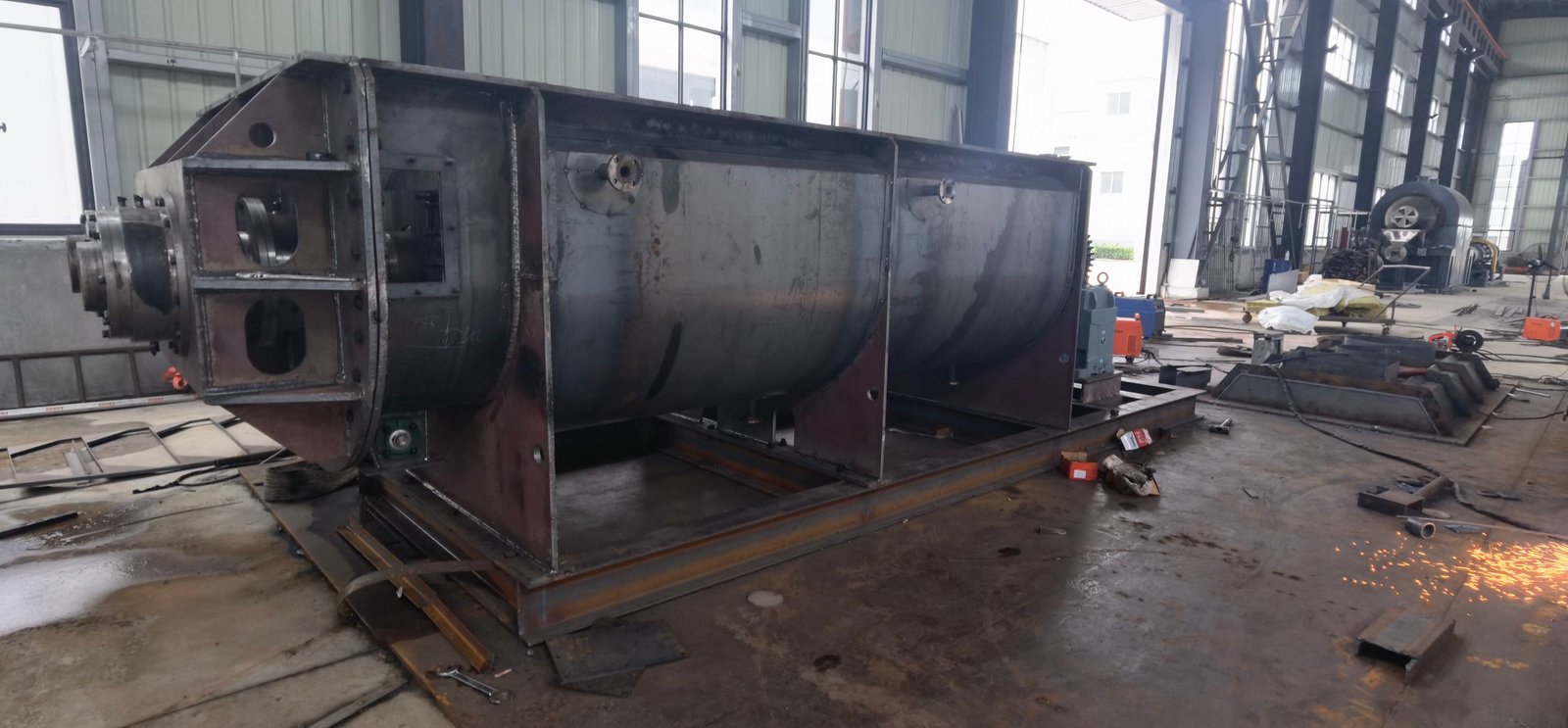
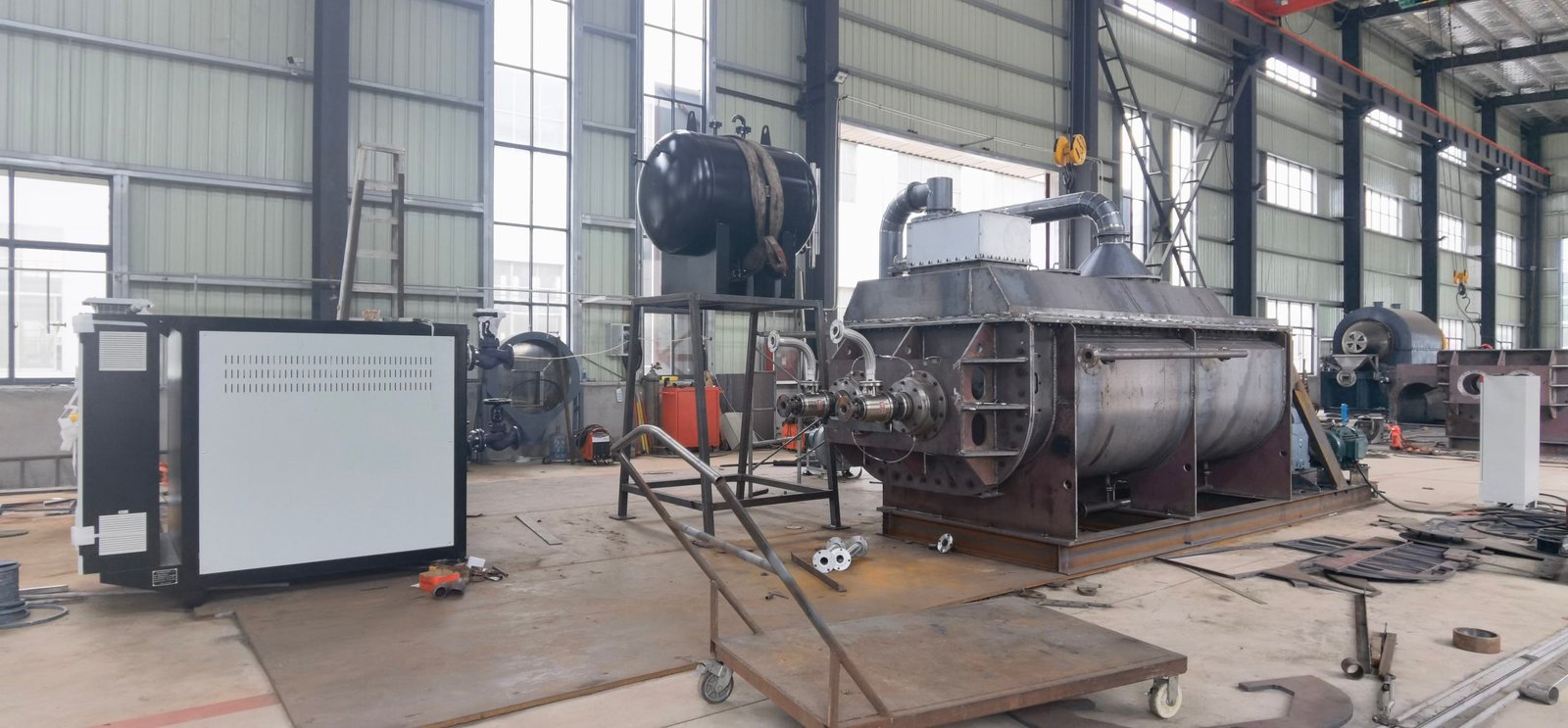
Our Factory
Technical Parameters
| Parameter | Project Information |
| Product | Formulation, initial moisture and temperature limits |
| Batch | Loading quantity and production schedule |
| Shelves | Usable area, spacing and tray dimensions |
| Condenser | Expected water removal per batch |
| Vacuum | Required operating conditions |
| Controls | Cycle development, monitoring and recording needs |
| Installation | Available utilities, space and cleaning requirements |
The final specification is defined in the QUANPIN technical proposal.
Performance Test
A representative product trial provides the basis for assessing the drying cycle. Agree the loading pattern and acceptance criteria before testing.
| Test Item | Record or Assessment |
| Loading | Material, batch mass and tray distribution |
| Freezing | Temperature profile and freezing time |
| Primary drying | Shelf temperature, chamber pressure and duration |
| Secondary drying | Temperature, pressure and duration |
| Final product | Residual moisture, appearance and rehydration where relevant |
| Utilities | Measured consumption under the stated test conditions |
No material-specific performance or energy-saving guarantee is implied by this test checklist.
What is a Vacuum Freeze Dryer?
A vacuum freeze dryer removes water from a frozen product through sublimation followed by further drying. The refrigeration, vacuum and temperature-control systems are coordinated to meet the product’s process requirements.
How Does Freeze Drying Work?
The product is first frozen. Primary drying removes ice under reduced pressure, and secondary drying reduces remaining moisture. Cycle development balances product temperature, pressure and heat input.
Product Characteristics
The process can be useful for materials that require careful control of thermal exposure. Results depend on the formulation and cycle rather than the equipment name alone.
Low-temperature Processing
Set the product temperature limits and review them throughout cycle development.
Product Structure
Freezing and drying conditions influence the resulting structure. Product tests are needed to assess the outcome.
Rehydration
Where rehydration matters, define the test method and acceptance criteria for the finished product.
Storage and Transport
Packaging and storage conditions must be considered alongside residual moisture and product stability.
Shelf Life
Shelf life requires product-specific stability evidence under the intended packaging and storage conditions.
Material Suitability
Provide composition and process requirements so that freeze drying can be compared with other drying methods.
Utility Requirements
Evaluate refrigeration, vacuum and heat input using actual batch and cycle information.
Types of Freeze Dryers
Equipment scale is selected around usable shelf area, loading quantity, condenser duty and the production schedule.
Small-scale Freeze Dryers
Small batches can support product trials and cycle development. Confirm that the equipment offers the measurements required for the work.
Pilot-scale Freeze Dryers
Pilot work can assess representative loading and support a production-scale proposal.
Production Freeze Dryers
Production systems require coordinated planning for batches, loading, unloading, utilities and maintenance.
Main Components
The chamber, shelves, refrigeration system, condenser, vacuum equipment and controls work together throughout the cycle.
Drying Chamber and Shelves
Shelf area, spacing and temperature control should match the product presentation and loading pattern.
Refrigeration and Condenser
These systems freeze the product as configured and capture vapor released during drying.
Vacuum Equipment
Selection depends on the process pressure and vapor-handling arrangement.
Controls
Specify cycle programming, monitoring, data recording and operator requirements.
Applications
Potential applications include suitable food ingredients, biological materials and pharmaceutical products. Suitability and documentation requirements are reviewed for each project.
Selecting a Freeze Dryer
Provide product information, batch requirements, target moisture and installation details. A trial can resolve uncertainties before the equipment specification is finalized.
Send Your Inquiry Now
Start Optimizing Your
Drying Process Today.
Our engineers are ready to assess your material and recommend a reliable, cost-effective drying solution.